Category: NFL

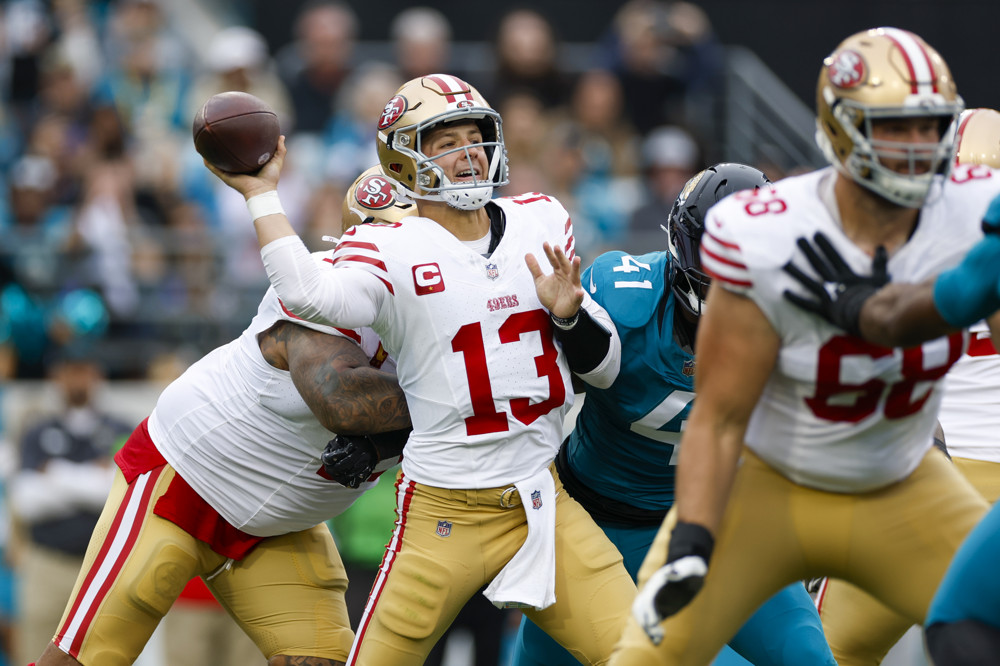
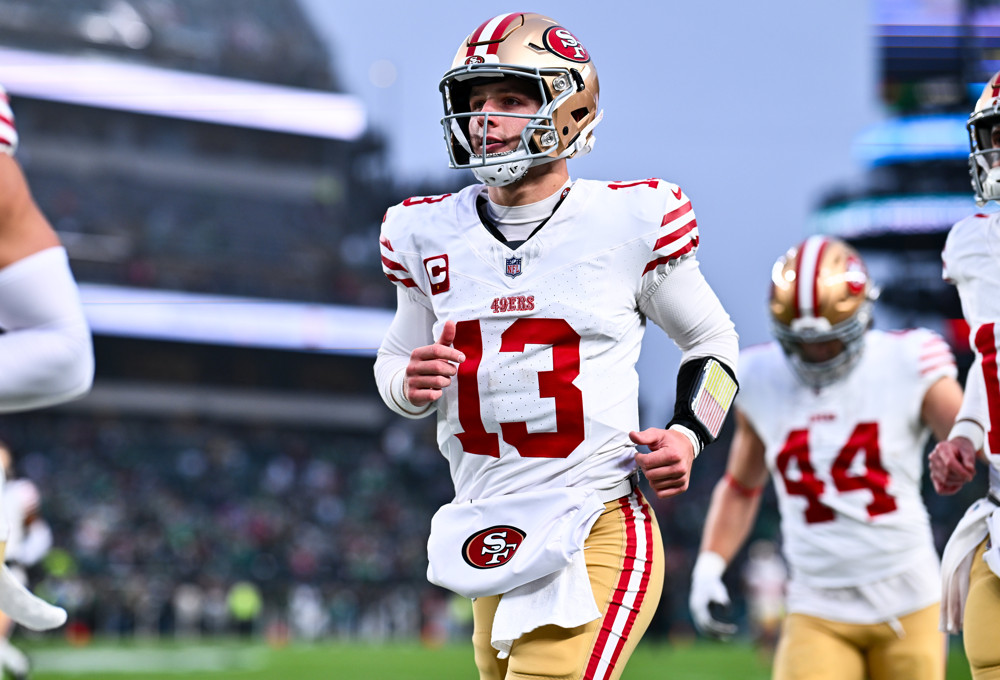
  • Reiterating The Statistical Case Against Brock Purdy for MVP

    Reiterating The Statistical Case Against Brock Purdy for MVP

    Photo: David Rosenblum/Icon Sportswire

    As of this moment, Brock Purdy has the best odds to win MVP at -200. Mr. Irrelevant has had a meteoric rise to being Shanahan’s second MVP-caliber quarterback this decade, and is now the preferred candidate among 49ers fans, aging sportswriters, and Disney adults. And as fun as that narrative arc may be, it should be met with some skepticism (as we pointed out last week). Let’s go even deeper in our analysis today.

    Americans love a good sports underdog story – which is really just a toxic masculinity fairytale, if you think about it – but hate participation trophies, and MVP awards are not participation trophies. They’re given to outstanding players with impressive production who considerably elevate their team, and although Purdy has outplayed his draft slot, he does not fit that bill. But, any good-faith attempt to reconcile his production with his individual skill is met with circular references back to his stats, so let’s dig into those.

    His dropbacks have indeed been very efficient from an EPA perspective, let’s just get that out of the way. A positive play rate of 55% is comfortably first in the league, and, if the season ended today, 0.26 EPA/dropback would be the second-best season in the SIS era behind only 2016 Matt Ryan, which is very interesting considering who called plays for them. He would even rank first in EPA/dropback and yards/attempt this year if you took out his throws past the line of scrimmage, as originally pointed out by Steven Ruiz of The Ringer.

    But, these numbers belong to the 49ers passing offense as a whole, and not just Purdy. There are a lot of good players on that unit. Trent Williams, Christian McCaffrey, and Deebo Samuel are All-Pros, and Brandon Aiyuk – who is currently 2nd in first down percentage, 2nd in yards/route run and 3rd in Total Points/route behind only Tyreek Hill and Samuel – should join them come awards season. Furthermore, they have a pretty good young guard tandem in Aaron Banks and Spencer Burford; Kyle Juszcyk is as valuable as fullbacks can possibly be in the modern NFL; and, to top it all off, they have arguably the best offensive coach in the league in Kyle Shanahan.

    The 49ers do not need, and have never needed, Purdy to be a Top 10 quarterback, and he isn’t. They just need him to not screw things up, and he hasn’t.

    There’s a lot of mythmaking surrounding Purdy’s game, but it is fair to say that he’s accurate. He’s 80th percentile in xOnTgt +/- among qualifying quarterbacks with at least 200 attempts, which is pretty good. But, all this fluff about how he’s such a good processor and manages the game so well is just flat-out embellishment.

    His turnover-worthy throw rate (3.5%) is pretty bad – 26th percentile – and he doesn’t get the ball out particularly quickly, either. His expected snap to throw +/- (xSTT+/-), which approximates how quickly the quarterback should throw the ball based on his drop (among other factors), is 47th percentile. It’s not horrible, but it’s also not great.

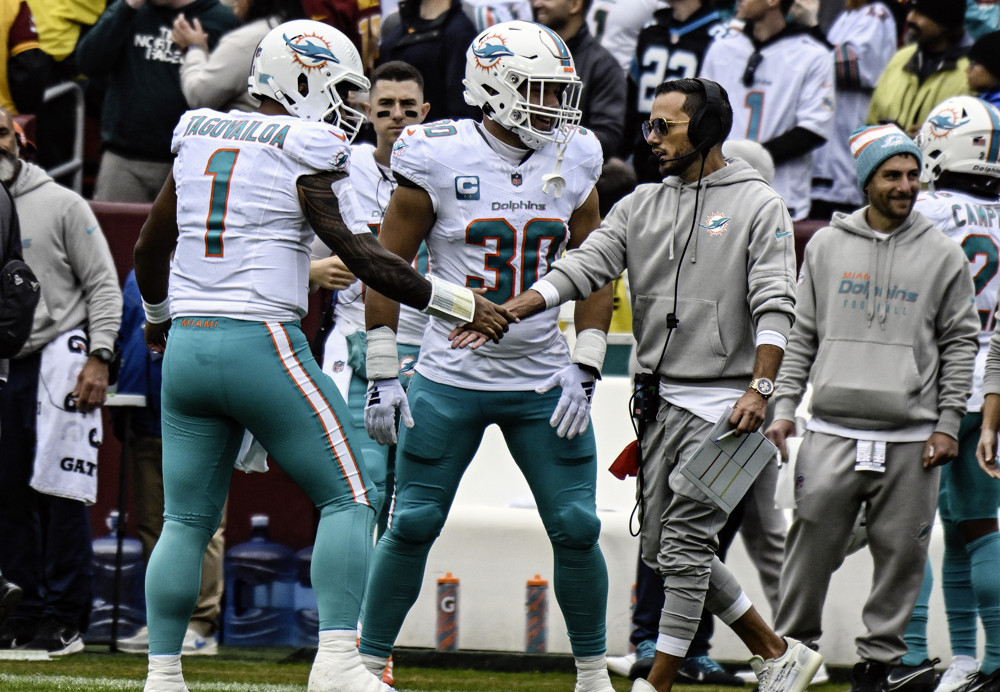
    The fairest comparison here might be another Shanahan-adjacent quarterback in Tua Tagovailoa, who ranks third in xSTT+/- at a full two-tenths of a second faster than Purdy. In fact, you could make the case that Tua predetermines throws and shoots first and asks questions later, but even then, his turnover-worthy throw rate (3%) is 47th percentile – a bit better than Purdy’s.

    However, you don’t need to be an elite processor when you get to make so many gimme throws. Purdy’s attempts have been contested at the second-lowest rate in the league this year at 22%. And, if you’re wondering how that might affect his EPA numbers: contested throws are a terrible value proposition.

    The average EPA on such throws this season has been -0.38. Purdy, meanwhile, is averaging -0.09 EPA on those throws. So, not only does he get to make more easy throws, he’s losing about 25% of the value most quarterbacks do on the difficult throws he does make. That seems very fortunate!

    Some of that is probably just pure luck, but the 49ers receivers deserve a lot of credit in this regard. They rank 7th in contested catch percentage (39%) and 1st in both average yards after catch (6.9) and yards after contact (2.2). In fact, the difference between San Francisco and the next-best receiving corps in average yards after contact, is as big as the difference between the 2nd and 28th ranked teams. And if the season ended today, their average yards after catch would be the 3rd-best we’ve ever recorded, just behind the 2018 Chiefs and the 2018 49ers, and just ahead of the 2021, 2022, and 2019 49ers.

    Which brings us to the next point; a common rebuttal to the notion that Purdy is largely a beneficiary of an excellent playcaller and a star-studded supporting cast, is that Jimmy Garoppolo didn’t perform at this level. Interestingly enough, though, Jimmy G was actually never good.

    Among 49 quarterbacks with at least 500 attempts from 2020-2022, Garoppolo ranked 38th in turnover-worthy throw rate (4%), and 31st in On-Target Rate Over Expectation (xOnTgt +/-). He was also 30th in Passing Total Points/play while getting hit.

    Purdy is tougher and more willing to stand in against the rush, ranking 6th in passing Total Points/play while getting hit this season. He’s also more accurate, ranking 6th in xOnTgt +/-, and those are the big distinctions between the two. The difference we’re seeing is the difference between a warm body and Tom Brady’s sleep paralysis demon. That’s it.

    We could go on and on about splits. EPA/play on third downs is extremely volatile – with Patrick Mahomes being the only player who’s proven the ability to sustain high performance year-to-year – and Purdy’s 0.30 EPA/play on 3rd down is 12th out of 294 quarterbacks with at least 50 3rd-down attempts since 2016, just behind 2018 Nick Foles. His EPA/play on play action is the highest in the league since 2016 and 5.5 times the average EPA on play action during that span, and it’s already a cheat code.

    All this to say, Kyle Shanahan is doing parlor tricks again. Our wins above replacement (WAR) has Purdy 5th – just behind Tua Tagovailoa – at 2.7, and even that might be generous. He’s a decent player capable of functioning within an extremely efficient ecosystem, but that’s not what this award is about. It’s about recognizing players who stand out from all their peers – not just stand out from Jimmy Garoppolo.

  • Should Brock Purdy be NFL MVP? He’s Good But Not That Good

    Should Brock Purdy be NFL MVP? He’s Good But Not That Good

    It was unclear what the 49ers were going to do with Trey Lance prior to the season start, but they gave Brock Purdy a vote of confidence when they traded the former No. 3 overall pick to the Dallas Cowboys back in August.

    Fast forward to now, this turned out to be the right decision for the 49ers. Purdy has put up some impressive numbers and the 49ers have one of the best records in the NFL. The soon-to-be 24-year-old has put himself on the map, to say the least.

    In fact, he’s the betting favorite to win the NFL’s Most Valuable Player award. We still have a long way to go before the winner is announced, but it’s currently Purdy’s to lose.

    The real question is, would he deserve this honor? He’s been playing well enough to at least be in the MVP conversation, but are we sure that he is worthy enough to win and not some industry plant by the oddsmakers?

    As discussed in the latest episode of the Off the Charts Football Podcast, you can make the argument that he’s not even the most valuable player on his own team. It would be a disservice to give the award to Purdy when players like Trent Williams and Christian McCaffrey deserve recognition as well.

    Not only that, but Kyle Shanahan is one of the best offensive minds in the league. His play designs are so good that all Purdy pretty much has to do is not screw it up. When the play doesn’t go as designed, it’s typically McCaffrey, Brandon Aiyuk, Deebo Samuel, or George Kittle who picks up the slack.

    The 49ers rank as the number one team in receiving Total Points (105), our best measure of the pass catchers’ value alone, by a wide margin. That dynamic quartet deserves the most recognition for the team’s production, not Purdy exclusively.

    Also, Williams missed Weeks 7 and 8 for the 49ers and they ended up losing both games to the then 2-4 Vikings and 3-3 Bengals, respectively.

    San Francisco doesn’t have a great record solely because of its offense either. The 49ers’ defense ranks best in points allowed per game (15.8). It’s a lot easier to win in the NFL when you only have to muster up 16 points each week.

    For every statistical category that Purdy is excelling in, there appears to be one that offsets it.

    Category Purdy’s 2023 Stats NFL Rank
    Completion % 70.2% 1st
    On-Target % 75.3% 11th
    Adjusted Net Yards Per Attempt 9.9 1st
    Average Throw Depth 8.0 8th (tied)
    Passing EPA 93.7 1st (by a mile)
    Passing Total Points 100.3 5th

    Purdy is the league leader in completion percentage, ANY/A, and EPA. However, he ranks a little lower when it comes to on-target percentage, average throw depth, and Total Points.

    The latter statistics separate the quarterback from his receivers more than the former group. He rates well, but maybe not MVP level.

    In the end, the MVP award would need to be renamed if Purdy were to win. If you were to take Purdy out of the 49ers’ lineup and insert a replacement-level quarterback, this team is probably still a strong contender.

    I challenge you to apply that same way of thinking to the Chiefs, Cowboys, and even the Texans (and we’ve got an article coming about Dak Prescott). Their quarterbacks do a lot more for their teams with less supporting talent. They are players you win because of, not players you simply win with.

    Purdy is having a great year, but I wouldn’t say he’s the main reason for San Francisco’s success. The MVP award should be given to a player who carries his team to victory, not one whose teammates and coach are giving him a boost.

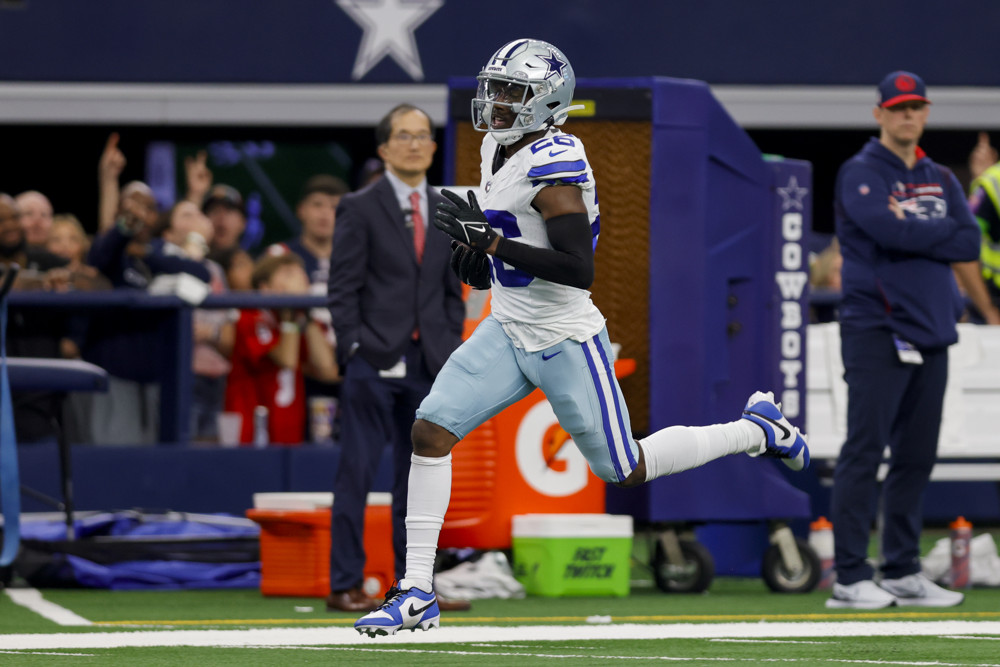
  • DaRon Bland’s Overall Production Makes Him A Strong DPOY Candidate

    DaRon Bland’s Overall Production Makes Him A Strong DPOY Candidate

    Two years ago, I wrote about Cowboys cornerback Trevon Diggs’ ridiculous start to the 2021 season, intercepting six passes in five games. Through that point in the season, he was an obvious Defensive Player of the Year candidate based on that productivity alone. But his value in totality didn’t add up to that, because he was performing very poorly on the other 99% of plays.

    This year, in Diggs’ absence, the Cowboys are again benefiting from a ridiculous turnover season, this time in the form of pick-six record holder DaRon Bland. But this time, that’s resulting in truly elite value (even if the stats that don’t care about interceptions aren’t transcendent). 

    DaRon Bland ranks, 2023 CB (min 30 targets)

    Rank (out of 77)
    Pass Coverage Total Points per play 1st
    Positive% Allowed 39th
    Deserved Catch % 16th
    Yards per Cover Snap T-68th

    Through Week 13, Bland has generated 61 Total Points, which puts him at the top of the list of non-quarterbacks. That’s 40 points—more than three points per game—above an average cornerback. Corners are admittedly more likely to have extreme seasons like this because of their ability to generate defensive touchdowns, but this total already puts him among the most productive non-quarterback seasons Total Points has seen (i.e. since 2016).

    When you think about how pick-sixes work from an Expected Points Added (EPA) perspective, this isn’t shocking. Each one turns a situation where the offense might expect a point or two into one where they’ve locked in negative-six, for a swing of more than a touchdown on average. Just those five plays basically account for the difference between Bland and an average corner.

    The bigger difference between Bland’s 2023 and Diggs’ 2021 is what the former is doing on the rest of his snaps. Diggs was outright bad when he wasn’t ending up with the football, which resulted in his overall numbers looking average.

    Trevon Diggs ranks, 2021 CB (min 45 targets)

    Rank (out of 72)
    Pass Coverage Total Points per play 43rd
    Positive% Allowed 48th
    Deserved Catch % 50th
    Yards per Cover Snap 72nd

    If we break down their Total Points contributions on interceptions versus other plays, we see that Bland has been more valuable regardless of the turnovers.

    Pass Coverage Total Points comparison

    Interceptions Other plays
    DaRon Bland, 2023 52 (on 8 plays) 6 (on 615 plays)
    Trevon Diggs, 2021 39 (on 11 plays) -16 (on 941 plays)

    Bland is generating more than six points per interception (and return), which is insane. That’s like if he scored eight 90-yard touchdowns as a receiver. 

    To put some more context on that production, here is a look at the value defensive backs have generated with interceptions versus other plays through 13 weeks of the last eight seasons. A few outstanding interception seasons are highlighted, including Xavien Howard’s 10-pick 2020.

    Bland blows everyone out of the water on interceptions because of all those touchdowns, blending that with middle-of-the-road production overall. This puts him solidly ahead of Diggs in both respects, and in line with Howard (plus some touchdowns tacked on top).

    We generally don’t see big turnover numbers from true shutdown corners, because the big play guys are often trying to jump routes and bait quarterbacks, which results in a lot of completions when they don’t get there. Bland is keeping his head above water when he doesn’t pick off the quarterback, though, which makes him a legit contender for Defensive Player of the Year.

  • Empirically quantifying the worst NFL one-and-dones

    Empirically quantifying the worst NFL one-and-dones

    Photo: John Byrum/Icon Sportswire

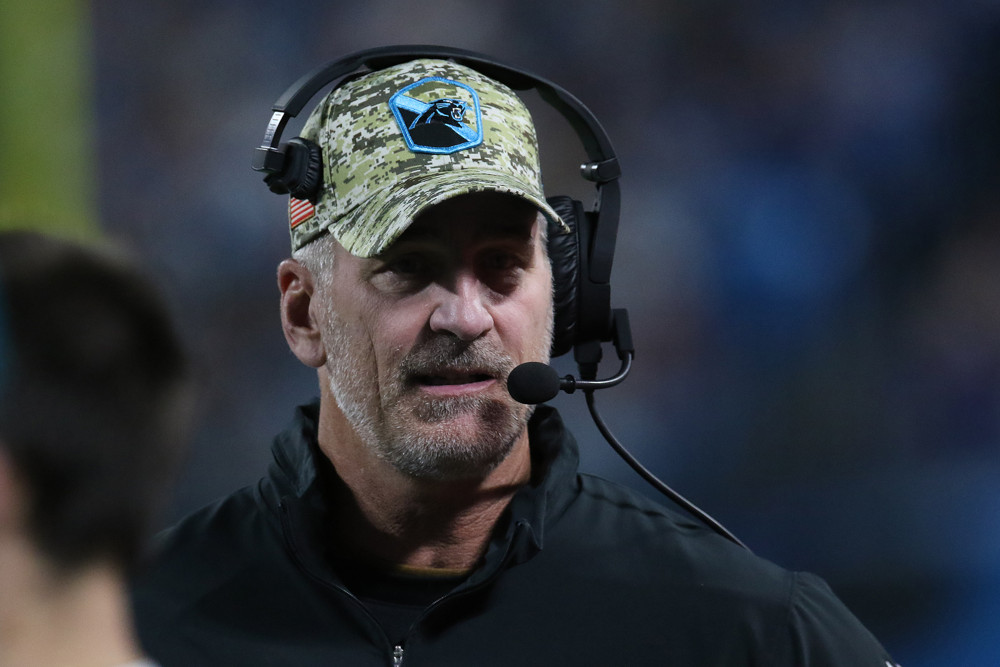
    In the last 10 years, 10 NFL head coaches have been fired in their first season. And Frank Reich, having served as the Panthers head coach for just 305 days, was the fastest among them to be fired. It’s the second-shortest tenure in NFL history, second to only Pete McCulley’s 9 games with San Francisco in 1978.

    To further contextualize how pissed off owner David Tepper must be, please note the general tyranny among the organizations on this list. Two franchises had back-to-back one-and-dones – the 49ers with Jim Tomsula and Chip Kelly, and the Texans with David Culley and Lovie Smith – and a third was responsible for two within 6 years of each other (the Browns). Even Nathaniel Hackett lasted four weeks longer than Reich; Urban Meyer, a full month. All told, there’s a lot of organizational dysfunction among the teams on that list, so this firing would have made the Roman emperor Commodus proud.

    This seems like more of an indictment on Tepper – who has seen five head coaches come and go since he bought the franchise in 2018 – than Reich, especially considering drafting Bryce Young was the former’s decision, but we just might be able to empirically measure how he stacks up against fellow one-and-dones.

    The contestants are:

    Coach Season Time on job Preseason Win Totals Record
    Frank Reich 2023 305 days 7 1-10
    Nathaniel Hackett 2022 333 days 10.5  4-11
    Lovie Smith 2022 335 days 4.5 3-13-1
    Urban Meyer 2021 336 days 6.5 2-11
    David Culley 2021 349 days 4 4-13
    Freddie Kitchens 2019 351 days 9 6-10
    Steve Wilks 2018 343 days 6 3-13
    Chip Kelly 2016 353 days 5.5 2-14

    One way to do this would be to compare the preseason win totals to the coach’s record. This is a bit fraught considering that some of these coaches didn’t even make it a full season (among other reasons), but it can give us some sense for performance relative to expectation. By this measuring stick, Reich and Hackett appear to be the worst, falling 6 games below their preseason Vegas win total odds.

    We can gauge this slightly more robustly using player-level Total Points to compare player performance before and after the coach arrived. This is likewise shaky because of factors like player development, scheme fit, and rookie production, but it’s still worth examining. It is, however, a wash. None of these teams manage to meaningfully distinguish themselves from the others in this regard, with the differences between the team-wide average Total Points/play being a few thousandths of a decimal point. It is worth noting, however, that the 2023 Panthers (0.04) and the 2021 Jaguars (0.04) were the most talented of these teams.

    Perhaps it may be better to just measure how bad they were on the field.

    Among these teams, Carolina has had the second-worst offense by EPA/play (-0.19). Only the 2018 Arizona team (-0.21) was worse, and the Cardinals famously replaced Josh Rosen after just one season. Rosen’s performance that year ranks 310th out of 321 quarterback seasons in passing Total Points/play, and Young currently isn’t too far above at 304th – he’s that bad. None of these offenses were any good, though. The best among them was Freddie Kitchens’ Browns (-0.06), whose unit ranked 23rd that year. 

    Defensively, Reich’s Panthers team was second only to the 2022 Broncos, allowing -0.04 EPA/play, but that’s not saying much considering this collection of teams features Kelly’s 49ers (0.06) and Meyer’s Jags (0.06), who were the 20th- and 21st-worst defenses of the last eight years, respectively. Considering some of the defensive players Reich inherited, this may not come as a surprise, but it’s also disconcerting that an offensive coach by trade was getting carried by the defensive side of the ball (to the extent that a 1-10 team can be carried, anyway).

    Reich’s fourth down decision-making is more directly in his purview, and while he’s had worse seasons by SIS’s fourth down model, he wasn’t particularly good this year. He ranked 120th out of 270 coach seasons since 2016, costing his team an average of -1% expected win probability (xWP) on fourth downs. Among the one-and-dones, only Meyer (188th), Smith (228th) and Hackett (267th) were worse.

    Speaking of win probability, the 2023 Panthers had the third-highest percentage of plays that fell between 40% and 60% win probability – more or less a coin flip– at 30%, so it could be said that his team was more competitive than most of the teams on this list. It’s not by much, though; the average across all these squads is 27%.

    In some aspects, Reich was worse than his one-and-done cohorts. He arguably had the most talented team of all the coaches on this list – which should induce cognitive dissonance among people who say Young has no talent around him – and he obviously failed to meet expectations, regardless of whether or not you believe those expectations were reasonable. 

    It’s not clear if things will get any better next year. Whereas teams like the Broncos and the Texans have seen immediate improvement this year, other teams had to wait years to get back above .500.

    One thing is for certain, though: Frank Reich signed a 4-year contract and will be just fine.

  • Bryce Young Was A College Legend But He’s Not A Good Fit For The Pros

    Bryce Young Was A College Legend But He’s Not A Good Fit For The Pros

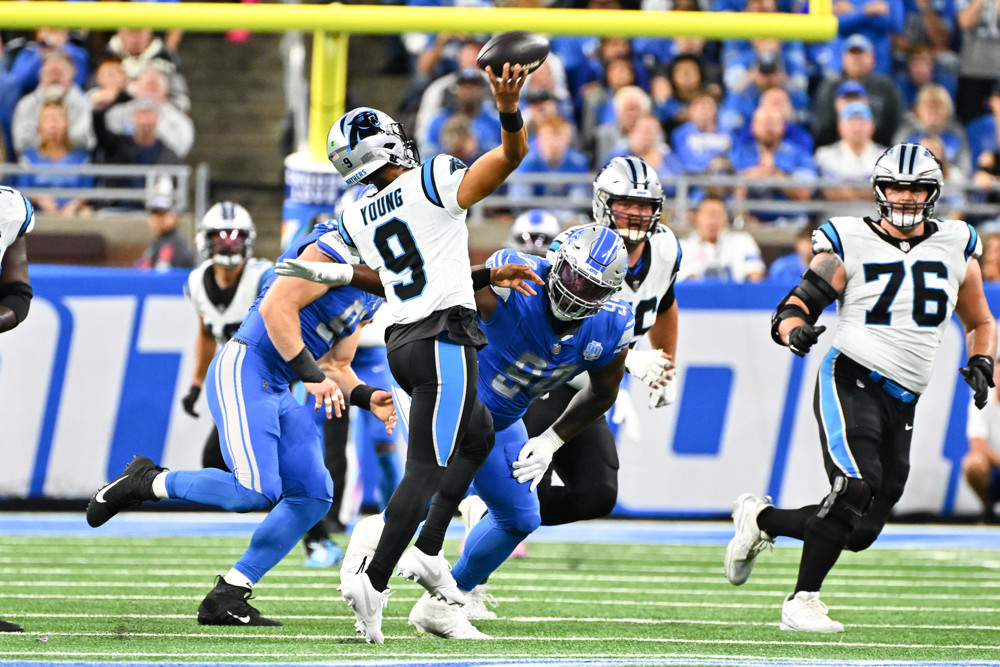
    Thursday, the Carolina Panthers (2-6) and the Chicago Bears (1-7) will square off in one of the worst primetime matchups in recent memory. The only thing really on the line here is draft position, or it would be if Carolina hadn’t traded their pick to Chicago for the right to draft Bryce Young, who currently ranks 31st in Passing Total Points/snap, right below Tyson Bagent. That’s right – Young is arguably not even the best quarterback in a game where his counterpart is an undrafted rookie out of a Division II school in West Virginia. And, if you were curious: just ahead of those two is Mac Jones, whom Young lost a quarterback competition to in college, and who presumably will be out of work come 2024.

    The Bryce Young experiment has failed in Carolina. It would be one thing if Young was struggling early and had some bankable traits, but this is what happens when you take size outliers with no distinguishing qualities outside of collegiate production. Kyler Murray may be tiny, but at least he runs a 4.3 and can throw the football a country mile. What’s Young got up his sleeve? He was a ‘winner’ and a ‘playmaker’ in college? Okay, sure, but there are a lot of guys like that who never pan out in the NFL. Are we even working with any tangible traits here?

    Yes, his supporting cast is bad. Life in Carolina would not be easy for any quarterback, but he is not the only one who has to make the best of a bad situation. Zach Wilson, Jimmy Garoppolo, Josh Dobbs, Mac Jones, and Tyson Bagent have all, to varying degrees, played under suboptimal conditions this year, and they’ve all been more efficient than Young has. The No. 1 pick should be able to do better than this.

    Trevor Lawrence played on the Urban Meyer-led Jaguars in 2021 and struggled quite a bit as a rookie, but he wasn’t below replacement level through the first nine weeks of the season. He wasn’t being outperformed by a 36-year-old Andy Dalton on his fourth team in as many years. And since we’re talking about Dalton, his 58 attempts and 3 sacks have resulted in 79 more EPA than Young’s 252 throws and 26 sacks – entirely because Young is so far in the red.

    So, what the hell, man?

    The receivers aren’t great at getting open, sure. They’re 20th in our receiving Total Points metric as a group, and I’m certainly not gonna go to bat for a unit that’s led by Adam Thielen in the twilight of his career. But, they could be worse, and Dalton has the highest contested throw rate in the league among quarterbacks with 50+ attempts (37%) while Young has one of the lowest at 24%. Part of that is a function of aggressiveness, but why was Dalton able to perform better while a higher percentage of his attempts were contested?

    The answer is in all of our hearts, and it’s that Young is not as well-suited to the NFL as he was to the college game.

    This is not a Josh Allen rookie season we’re talking about. Young is listed at a generous 5’10”, 204 lbs., doesn’t have outstanding arm talent, and is not particularly fast or elusive. If your physical profile sets your floor, his is pretty low. This is a player who drew pre-draft comparisons to Drew Brees, and it’s clear he will have to win in other areas to succeed in the NFL. As of right now, that is very discouraging.

    He’s not seeing the pro game quickly at the moment. He has the fifth-highest expected snap-to-throw +/- time, with scramblers and Jimmy Garoppolo being the only players who get the ball out slower than him. And, in spite of that, he also has the second-lowest ADOT in the league. 63% of his throws travel 5 yards or less downfield, which is the second-highest rate in the league. Taking a long time to check the ball down or execute quick game concepts is not good. Some would even say it’s bad!

    Now, to his credit, his turnover-worthy throw rate is slightly better than average (he ranks 16th). But, as we saw on Sunday against the Colts, he’s not exactly playing mistake-free football, either. And, on that note, his interceptions have been ghoulishly bad. The only quarterbacks whose picks have hemorrhaged more EPA are Sam Howell (who has no object permanence) and Mac Jones (who, as a reminder, beat Young out in college when Young came in as the No. 1 recruit).

    When he finally throws the ball, he hasn’t been particularly accurate. He ranks 32nd in the league in expected on-target over expectation (xOnTgt +/-) at -5%, which is well below average and weighed down by his abhorrent xOnTgt +/- on contested throws (-23%). On throws to open targets, he ranks 22nd. 

    He hasn’t, however, thrown the ball a lot because he’s not been navigating the rush well. He’s been sacked at the 8th-highest rate in the league and he has the 6th-worst sack-to-pressure ratio (i.e. a lot of hurries turn into sacks against him). A good part of that is his offensive line, which is 27th in blown block rate on pass plays, but he has ownership of this, too.

    So, we’re talking about a player who takes a long time to get the ball out, who checks it down a lot, whose pocket presence isn’t great, who isn’t a run threat, who doesn’t have the arm talent to access tight windows or make circus throws, but can deliver the ball accurately at a slightly below average rate if the pocket is clean and his receivers get open.

    That’s not a No. 1 pick.

    That’s not a franchise quarterback.

    That’s terrible.

    All due respect to Bryce Young – he’s a Heisman winner and a legend of the sport. People will remember him for decades to come. He’s immortal. But, this is the NFL. Everybody was good in college, and none of that matters now. On Sundays, he’s a historic size outlier with average traits swimming upstream. I hope he proves me wrong. The NFL is a much better spectator sport when the quarterback play is good, and recently it seems we’re losing more than we’re gaining. I guess we’ll always have college.

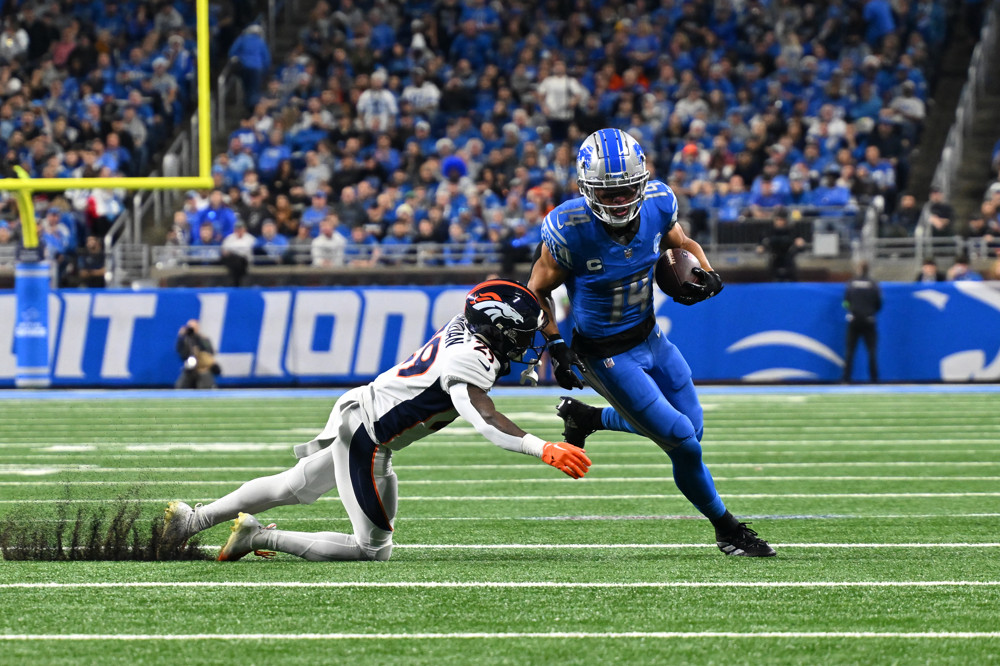
  • Are the Lions For Real? A Resounding ‘Maybe’

    Are the Lions For Real? A Resounding ‘Maybe’

    The Lions are off to their best start in over a decade, and while that’s not saying much, there are plenty of reasons for their fans to be excited. At 6-2, they hold a two-game lead in the division and should cruise into the postseason if their remaining slate of games is to be believed; They have the 4th-easiest remaining strength of schedule by current opponent win percentage (42%), and the easiest by opponent defensive EPA. So, barring a complete meltdown, they should crack double-digit wins (which hasn’t happened since 2014), win the NFC North for the first time ever and return to the playoffs after a six-year drought. And if you don’t know any Lions fans, rest assured: that would be a very big deal for them.

    But, people outside of the fanbase don’t care a whole lot about that. Sure, the head coach is adorable and watching a cursed franchise succeed gives most well-adjusted sports fans – if there is such a thing – the warm fuzzies, but people will never be satisfied and they’ll always want more, and that’s why most of us die with regrets. So, the existential question at hand becomes: are the Lions a legit contender?

    The answer is a resounding ‘maybe.’

    We’ve already covered the back half of their schedule, but it’s also worth noting that most of the teams they’ve played so far have, by NFL standards, sucked. Sure, they beat the Chiefs by a point when Kansas City 1) did not have Travis Kelce, 2) did not have Chris Jones, and 3) dropped 17% of their passes en route to one of the worst offensive performances in the Patrick Mahomes era, but, outside of that, do they really have a signature win? Ending the Baker Mayfield Comeback Player of the Year story arc? Sending Josh McDaniels – who was fired at 1 AM eastern time the day after the trade deadline, by the way – to hell? To borrow a college football term, they ain’t played nobody.

    Furthermore, their games against the current NFC West and AFC North division leaders – the only teams on their schedule with winning records – both resulted in losses. The Seattle game at least could have gone either way, but the Baltimore game was a snuff film. That said, teams are entitled to learning experiences (i.e. horrible losses) and you can only beat who you play, so none of this is sufficient to pass judgment. It is, however, relevant because it muddies the waters a bit.

    We could go a lot of different directions from here, but let’s start with Jared Goff. He’s received a lot of praise for his recent performance and is 4th in the league in passing yards, but his advanced statistical profile paints a very distinct picture of him as a game manager type.

    He is by no means a playmaker; his expected on target rate +/- (xOnTgt+/-) – which measures whether or not a throw was accurate relative to factors like depth of target – is poor on both contested throws (-5%, 26th) and throws made off-platform or outside the pocket (-2%, 24th). He is, however, a relatively smooth operator from within structure.

    He currently has the fifth-lowest turnover-worthy throw rate at 1.6%(a career best for him and about half his average in his last three Rams seasons), and he’s getting the ball out quickly with an expected snap to throw +/- of -0.2 seconds, which ranks 4th. Goff also manages the pocket well and doesn’t take a lot of sacks; he has the 4th-lowest sack rate in the league at 5% and the 7th-lowest pressure rate at 31%.

    That is an unexciting, albeit useful player, and offensive coordinator Ben Johnson has done an excellent job of tailoring the passing game to Goff’s strengths, and that actually doesn’t entail a lot of play action like it did when Goff was in LA. They’re largely a dropback team and – like almost every NFL offense – they run just about every concept under the sun, but they have their preferred flavors. They spam the outside vertical stretch concepts (e.g. Smash), the intermediate high-lows (e.g. Dagger), and the weakside choice plays that Goff does so well on. Johnson has also designed a diverse screen game that they call upon often; the team has called the 5th-most screens in the NFL this year at an average of about 5 per game.

    And all that has gone a surprisingly long way. Despite his limitations, Goff is 8th in passing Total Points/play and 5th in positive play rate (49%).

    There are less talented, more mistake-prone quarterbacks with better statistical output (see: Tua Tagovailoa, Brock Purdy), but we haven’t yet stumbled upon the ‘quarterbacks don’t matter’ variant of hobbyist wage suppression masquerading as analytics, so it’s fair to wonder if you can win a Super Bowl with someone like Goff – especially when he doesn’t have the Space Jam supporting casts of the aforementioned, generic Shanahan quarterbacks.

    He does have some pieces at his disposal, though. Amon-Ra St. Brown ranks 10th in Points Earned/Play (0.07), 8th in YPRR, and 8th in YAC, but he is a bit of an underneath merchant; his average depth of target (ADoT) ranks 127th out of 169 WRs/TEs with at least 10 targets. They’d surely like to be getting more downfield production out of 2022 first rounder Jameson Williams, but Josh Reynolds is picking up the slack with a league-best 96% first down catch rate, and Sam LaPorta is developing nicely.

    The offensive line deserves its flowers, as well. Despite some injuries to that unit, they rank 11th in Blocking Points Earned/snap, and have gotten some excellent performance from their bookends. Right tackle Penei Sewell ranks 2nd in pass blocking Points Earned/snap, and left tackle Taylor Decker ranks 3rd in run Blocking Points Earned/snap. This is an athletic unit that can successfully execute a big menu of moving parts gap runs, and it stands to reason that the run game can improve from 10th in EPA/play and 13th in positive play rate if both the offensive line and the running backs can get healthy.

    The defense has been serviceable as well this year. After a disastrous start to 2022 in which they were on pace to be the worst defense of the SIS era – yes, even worse than the 2020 unit led by Matt Patricia – they leveled out in the second half and have carried that into this season. They rank 11th in EPA/play allowed and they’ve seen encouraging growth from some of their younger players.

    Rookie slot corner Brian Branch appears to be a star-in-the-making; he ranks 5th in Coverage Points Saved/play among corners with 10+ targets and 3rd in Run Defense Points Saved/play among all players with 50+ run down snaps. Second-year edge Aidan Hutchinson has likewise taken a leap and leads the league in pressures and ranks 20th in pressure rate +/-. Third-year corner Jerry Jacobs has also had something of a breakout year and ranks 12th among corners in Points Saved/play, though his historical performance might suggest he’s due for regression.

    They have a few complementary pieces along the defensive line – Charles Harris is 20th in pressure rate among DL, and Alim McNeill is a pretty good pass rusher for a nose tackle – but the aforementioned players constitute the bulk of this team’s passing game impact. They do not, for example, have a linebacker who ranks better than 50th in Coverage Points Saved/play. If defense is a weak-link system, and it is, then there are reasons to be concerned about a Detroit back 7 that is mired by injuries to the secondary and shoddy coverage from its linebackers.

    Their run defense has been good, but weird. They rank 11th in positive play rate and 2nd in explosive play rate, but 28th in stuff rate and 26th in broken/missed tackle rate. They don’t allow many positive runs, much less big ones, but they also don’t generate many negative plays and they also miss a lot of tackles. To their credit, they are a swarming unit so we might allow for some broken and missed tackles, but it’s fair to wonder if this holds up over the course of the season.

    At the end of the day, this team feels like more than the sum of its parts. That’s a credit to Dan Campbell and the rest of the coaching staff, and it bodes well for the franchise that he was able to turn things around relatively quickly. That said, there are other NFC teams with more star power than them, and they’re pretty firmly outside of the triumvirate of leading NFC contenders (San Francisco, Philadelphia, Dallas). A Super Bowl is obviously the ceiling here, but it’s pretty unlikely within the distribution of their probabilities. Are they a contender? Maybe as a dark horse, and that’s fine. For younger Lions fans, this could be the best the team’s been in their lifetime. They haven’t won a playoff game since before I was born, and this looks like the year they’ll do it, Super Bowl be damned.

  • Vikings Defense: More Heat, Same Results

    Vikings Defense: More Heat, Same Results

    The Minnesota Vikings currently sit 0-3, despite Kirk Cousins leading the NFL in passing yards and touchdown passes. Their defense was a sieve last year, and they completely changed personnel and brought in a new defensive coordinator to try and prevent a repeat. Brian Flores has a radically different defensive scheme than his predecessor Ed Donatell, but the results are more of the same.

    There are 3 big differences

    1)Personnel usage. Donatell used a Dime+ package (6 or more defensive backs) a meager 1% of the time last season, while Flores is using a Dime+ package 28% of the time.

    2)Pre-snap look. Donatell used a two-high shell (showing 2 safeties at the deepest level) 67% of the time, while Flores is using a two-high shell only 23% of the time.

    3)Blitz Rate (plays with more than 4 rushers). Donatell had a 22% blitz rate, while Flores has a 64% blitz rate. The last 3 games have the highest average number of rushers per play since the beginning of 2020.

    Donatell did send a little more heat towards the end of 2022, but nearly all of that upwards tail along the average line in 2022 is due to the 2023 Vikings. The Vikings defense sent an astounding average of roughly 5.5 rushers per play against the Chargers. The results? The Chargers went 41/48 (85%) for 454 yards, 4 TDs, 0 INTs, and only 1 sack. Oof.

    This begs the question of whether the increased blitz rate generated more pressure?

    The Vikings standard pressure rate has been steadily declining since early 2021 and has not been impressive so far in 2023. The Vikings rank 31st (next-to-last) in the NFL in Pressure Rate this season and rank 30th in Pass Rushing Total Points Above Average.

    The pressure isn’t the only underwhelming stat as the defense currently ranks 27th in points allowed and 27th in yards allowed. The Vikings are just 1 of 3 teams allowing 250+ passing yards a game and 120+ rushing yards per game. One of the more surprising stats is their lack of improvement in man coverage.

    Despite a “man coverage-heavy” perception around Flores, the Vikings haven’t increased their use of man coverage significantly (23% to 27%), and the opposing offenses are actually finding more success against the 2023 Vikings man coverage compared to last season. Opposing offenses have a Success Rate of 55% this season against Minnesota’s man coverage (ranks 31st), compared to 44% last season (20th).

    A fairly-comprehensive defensive personnel overhaul took place in the offseason, but in order for that to be successful, the players next up need to step up. Akayleb Evans has played almost every defensive snap for the Vikings this season, but hasn’t played very well, giving up multiple touchdowns, a QB Rating Against of 136, and -1.4 Total Points Above Replacement. The rest of the highly-valued additions over the last 2 seasons have barely seen the field (stud Ivan Pace Jr. was undrafted and has been a rare bright spot).

    Below is the number of defensive snaps each player has had in each game this season.

    Player Buccaneers Eagles Chargers Total Defensive Snaps
    Mekhi Blackmon 15 14 18 47
    Brian Asamoah 2 14 0 16
    Jaquelin Roy 0 0 9 9
    Marcus Davenport 0 4 0 4
    Lewis Cine 0 0 0 0
    Jay Ward 0 0 0 0
    Andrew Booth Jr. 0 0 0 0

    While injuries have factored in, the majority of the bench-riding time has been because the players have not performed well. It’s very hard to look at the Vikings 2022 and 2023 draft classes and pronounce them “immediately impactful.” While it is too early to fully evaluate the 2022 draft class (and way too early to evaluate the 2023 draft class), the Vikings surely were hoping for more impact from their defensive players.

    The Vikings offense isn’t blameless by any means. The turnovers have been an absolute backbreaker, injuries along the offensive line have caused problems, and red-zone struggles have stalled the Vikings as well, but the defense continues to be a massive issue, and their draft capital wasn’t maximized. Jordan Addison is doing exactly what was expected of him, a nice piece to the offense, but he hasn’t transformed them into an offensive juggernaut. Joey Porter Jr. on the other hand, has looked impressive with the Steelers in his playing time and would’ve helped shore up the cornerback position.

    The season is long, and there is still time, but with playing 2 of the best teams in football in the next 4 weeks, followed by a trip to Lambeau, the Vikings are entering a crucial stretch in their schedule. If they limp through the next stretch, their season will be in real danger with a difficult final month to the season to look forward to. The preseason prediction of 9-8 without a playoff appearance looks more and more destined if the performance on the field doesn’t improve.

  • Looking For Hope in The Ravens … But Will We Find It?

    Looking For Hope in The Ravens … But Will We Find It?

    The NFL is a what-have-you-done-for-me-lately league, and Lamar Jackson winning the MVP in 2019 feels like it was forever ago. Three NFL seasons is a lifetime for most players, and since then, Jackson has finished 17th, 21st, and 20th in passing EPA/play. That was more than enough to get former offensive coordinator Greg Roman fired, and lots of people, myself included, were bullish on his successor, Todd Monken. And through three games, the results have been middling. 

    Lamar ranks 16th in passing Total Points/play after finishing in the bottom half three years running, and the Ravens rank 13th in offensive EPA/play (-0.04). In short, the new-look Baltimore offense hasn’t looked quite as good as we thought it would coming into the year.

    If you’re a fan of Lamar, it was easy to get excited about the offense this year, even beyond the coordinator change. The receiving group, on paper, is the best it’s been in years. They used a first round pick on Boston College WR Zay Flowers, and they brought a still-effective Odell Beckham, Jr. into the fold. But, this group has been beset by injuries.

    Tight end Mark Andrews missed Week 1 with a quad injury, and now Rashod Bateman and Beckham are dealing with hamstring and ankle injuries, respectively. The team has averaged 0.15 EPA/play with all four of them on the field, but they’ve played just 13 snaps together so far. And at the end of the day, the Ravens receiving corps hasn’t performed as well to start as last year’s rendition did, as they rank 25th in receiving Total Points/play in contrast to a 2022 unit that ranked 2nd through Week 3.

    Lamar also ranked 6th in passing Total Points/play during that span, so this year’s start shouldn’t seem as meaningful as it maybe does, especially in light of the injury issues they’re having. The offensive design is better than it was last year, but that’s a low bar and there are still a few spacing issues in the passing game from time-to-time. Furthermore, this is still not a particularly balanced offense.

    They are balanced in the traditional sense that they skew closer towards a 50/50 run-pass split than most NFL offenses, but that’s generally suboptimal and their hit chart (essentially, what part of the field the ball goes to) is eerily similar to last year’s. In 2022, about 40% of their plays were outside runs; this year, that number is 41%. 35% of their plays last year were short passes (under 10 yards); it’s about a third of plays this year. In both 2022 and 2023 thus far, only 5% of their plays have been passes to the intermediate area of the field. The nuts and bolts – the X’s and O’s – have changed, as have the players who represent them, but philosophically, it’s the same stuff.

    Hit 2022 2023
    Outside Run 40% 41%
    Inside Run 14% 16%
    Short Outside 14% 13%
    Short Middle 21% 20%
    Intermediate 5% 5%
    Deep Middle 4% 2%
    Deep Outside 2% 3%

    Arguably the biggest manifestation of the changes thus far is that Lamar is getting the ball out a lot faster this year than he was last year. His average snap to throw time has dropped nearly a full half-second, and his Expected Snap to Throw +/- is hovering at around league average – that is, he’s getting the ball out more or less when he’s supposed to, per the design of the play. Not Tom Brady fast, not Bryce Young slow, and that’s fine!

    But, that’s what’s so unsettling about all this. The story of the Baltimore offense the past four years has been the story of Lamar Jackson. They have, more or less, only gotten as far as he’s been able to drag them. There have been systemic improvements so far, but this isn’t a unit reborn. 

    It feels like we’ve been here before with the Ravens. In reality, there’s no place for – I don’t know if you could even call it this – superstition in quantitative football analysis, but it just seems like we’re approaching boy-who-cried-wolf territory in regards to hyping the Baltimore offense. Even if the coordinator change proves to be little more than addition by subtraction, I am hopeful that the skill players can get healthy and that these small improvements are enough to allow Lamar to regain his MVP form. The Ravens face a big test this weekend in a Browns unit led by an absolute monster, as well as the No. 1 defense that features an early DPOY favorite in Myles Garrett. An offseason of excitement has been tempered by reality, as reality often does, but an impressive road performance against a divisional rival that allows -0.37 EPA/play on defense would be a dream come true.

  • The Sniff Test: What Metrics From 2022 Provide A Signal For 2023?

    The Sniff Test: What Metrics From 2022 Provide A Signal For 2023?

    On the latest episode of the Off the Charts Football Podcast, Matt Manocherian and James Weaver dove into the SIS Data Hub ($) and uncovered some of the most surprising stats from the previous season.

    The question they asked themselves was: Does this stat pass the sniff test?

    They wanted to figure out if if these stats provide a signal going into the future or if they are just a noisy occurrence.

    Here’s a look at the stats they went through. See if they pass your version of the sniff test.

    Jared Goff was 3rd in Passing Wins Above Replacement (WAR) with 3

    Pass the Sniff Test? – Yes

    Given Goff’s track record of taking an offense to the Super Bowl and how the Lions finished in 2023, James bought into this stat and believed it had staying power.

    “I kind of believe it,” said Matt, who noted Goff was worth only 1.2 WAR in 2021. “It does pass the sniff test for me. But in order for that to repeat this year, a lot of the ancillary items like having a low sack number and having interception luck will have to happen again this year.”

    Sam Darnold was 2nd in the league in IQR from Week 12 onward with 108.1

    Pass the Sniff Test? – Split

    Matt was taken aback when he heard this and does not think this passes the sniff test. He believes that the simplification of the Panthers offense made Darnold’s efficiency look good.

    James responded with some other metrics that support that Darnold might have found something at the end of last season.

    Darnold ranked:

    – 3rd in On-Target Percentage

    – 7th in Average Throw Depth

    – 2nd in Yards per Attempt

    – 4th in Boom Percentage.

    “The sample size was small and he was playing for an interim coach at the end of the season, but he very well might have played the best football of his career,” James said.

    Jawaan Taylor lead all Offensive Tackles in Total Points with 42.8

    Pass the Sniff Test? – No

    “I couldn’t believe he was the leader among all tackles. I thought it would be someone like Tristian Wirfs,” Matt said. “Every year, he has shown out as somebody who is better than we thought he was and if Total Points is right, then him fitting in with Mahomes can be something really good.”

    Matt also discussed the state of the Chiefs offensive line, as they brought Taylor and Donovan Smith in to protect Mahomes on the bookends after the departure of Orlando Brown Jr.

    He doesn’t think Taylor passed the sniff test to be the leader among all tackles but believes that he can be a cornerstone for the Chiefs moving forward.

    The Texans were 4th in Pressure Rate at 37.8%

    Pass the Sniff Test? – Undetermined

    This was another stunner for Matt and it was left for James to counter.

    He pointed out that Christian Kirksey ranked 11th overall in pressure rate, and players like Ogbonnia Okoronkwo and Jerry Hughes contributed positively to that number. The Texans ranked 13th in sack percentage and 26th in Pass Rush Points Saved.

    “So they were generating pressure, but couldn’t bring down the quarterback when they got to him,” James said.

    Matt brought up that the roster has a lot of good young players, including Will Anderson who can absolutely make an impact this season.

    In terms of deciding if this sticks, James thought that it will be hard to find a signal in this stat due to the turnover in Houston, as the team looks very different compared to a year ago.

    Josh Uche led all players in Pressure Rate at 20% among players with 100 Pass Rushes

    Pass the Sniff Test? – Yes

    “Interestingly, even with the limit set at 100, he had 256 rushes. I definitely would not have expected that,” Matt said.

    James thought that this might be due to having a Defensive Player of the Year candidate in Matt Judon on one end and that Uche might be a beneficiary of that. However, he does believe that Uche is a solid player.

    Matt thinks this has a big signal and has a big upwards arrow heading into 2023.

    The Pittsburgh Steelers were 7th in Blocking Total Points

    Pass the Sniff Test? – Yes

    Overall, the Steelers were 4th in Blown Block Percentage and 9th in Wins Above Replacement,

    “Not a lot of people thought that this was a Top 10 offensive line last year.” James said.

    The Steelers were a super-heavy zone running team and had a positive EPA when doing so. The system credits the o-line for all the yards before contact that the RB’s accrue in this scheme.

    Matt noted that they protected better than expected, but he wasn’t blown out of the water by that No. 7 ranking.

    On an individual basis, James Daniels (14th in Total Points), Mason Cole (40th in Total Points), and Kevin Dotson (18th in Total Points) were a solid trio on the interior of the line that helped the Steelers achieve that ranking.

    The Philadelphia Eagles allowed 0.07 EPA/A against the Run and -0.16 EPA/A against the Pass

    Pass the Sniff Test? – Maybe

    Both James and Matt were blown away that there was such a great discrepancy between the two. James pointed out that after the Commanders game, the Eagles brought in Ndamukong Suh to fill in on the D-line and that they don’t pay linebackers.

    Matt said “They really want you to rush against them so that you can’t pass efficiently against them. The only way you can keep up with their offense is to be really effective passing against them, so they will defend that more than the run. You can’t beat us at our game, you can’t out run us.”

    The Baltimore Ravens were 30th in Receiving Total Points

    Pass the Sniff Test? – Undetermined

    There was no receiver over 1.5 Yards Per Route Run on Baltimore, with Demarcus Robinson coming the closest at 1.4, 25th in Yards Per Target, the 6th-highest Drop Percentage, and 18th in On-Target Catch Percentage.

    “The receivers did the quarterbacks no favors in helping them out,” James said

    Matt pointed out that this won’t tell us anything going forward, as Zay Flowers and Odell Beckham Jr. should erase what happened the year before.

    Saquon Barkley led the NFL in using the Designed Gap

    Pass the Sniff Test? – Yes

    Matt brought up how Barkley would never hit his gap in college or in the early years of his career, so it was interesting to see him doing so regularly in the NFL.

    “It is good to see that from a player who is that powerful and that strong that can hit the gap as quick as he can,” James said.

    Matt provided more context behind Saquon’s changes. Barkley was hit at the line 41% of the time, which he gauged to be a little high

    “He is still not high on the Yards Before Contact per Attempt leaders. He’s still responsible for a whole lot of what he’s earning out there. But he got his Stuff Percentage down to 17% which is good to see.”

    Matt believes that a part of the Giants success can come down to Saquon hitting the gap in his contract year for this upcoming season.

    To listen to the episode and hear more of Matt and James’ thoughts, check out the podcast link below.

  • Breaking Down The AFC Win Total Over/Unders, Team-By-Team

    Breaking Down The AFC Win Total Over/Unders, Team-By-Team

    Recently on the Off The Charts podcast, our panel of football experts – Matt Manocherian, Alex Vigderman, Bryce Rossler, and James Weaver – compared the Vegas over-unders on team win totals for what the Sports Info Solutions projection model came up with for each team.

    They then drafted from each conference based on how much confidence they had in each projection. In other words, they selected the Steelers No. 1 and the Patriots No. 2 because they were most confident in the Steelers being over their 8.5 win projection and the Patriots being under their 7.5 win projection.

    The results of the Draft are below along with highlights from the dialogue and reasoning for each pick.

    If you’re interested in listening to the podcast episode, click the link at the top of the article.

    Team Over/Under (Model) Team Over/Under (Model)
    1. Steelers 
    8.5 (Over) 9. Titans 7.5 (Under)
    2. Patriots 7.5 (Under) 10. Jaguars 9.5 (Under)
    3. Chiefs 11.5 (Over) 11. Texans 6.5 (Under)
    4. Raiders 6.5 (Over) 12. Dolphins 9.5 (Over)
    5. Jets 9.5 (Under) 13. Ravens 9.5 (Over)
    6. Broncos 8.5 (Under) 14. Colts 6.5 (Under)
    7. Chargers 9.5 (Over) 15. Bengals 11.5 (Over)
    8. Bills 10.5 (Over) 16. Browns  9.5 (Over)

    Steelers – Over 8.5 (Model = 10.5)

    Matt (over): The line that we were given was 8.5. The model projects them for 10.5. A lot of my methodology was where did my intuition match the largest differences that our model presented. And this was one of those spots.

    Bryce: Does the model know Kenny Pickett is the quarterback?

    Matt: The model sees everything. 

    The TJ Watt injury affected their performance during the season last year, but the model just looks at the depth chart and says, who are the players who are going to get the most snaps and who’s going to make the most impact? And if we expect him to play a full season, that’s a pretty big impact on the defense. It’s not like we’re betting on Kenny Pickett advancing as a passer.

    James: And the schedule’s pretty easy. They play the NFC West and the AFC South this year. The team-level metrics go back on a 7-game weighted rolling average. So, the last 7 games for the Steelers last year resulted in a 6-1 record in taking care of some of their opponents in their division and gaining momentum into the season. So you’ll see that with this team and as well as a few other teams, that a good end of 2022 translates to a potentially higher win total in 2023 

    Patriots – Under 7.5 (Model = 4.5)

    Alex (under): So I am #trustingtheprocess and taking the New England Patriots under 7.5. Idiot. James is shaking his head and he’s responsible for my decision here. 

    I don’t necessarily believe that they would get three games under, but having some amount under I would believe in terms of division competition. The division got better with Aaron Rodgers moving to the Jets. I think the Dolphins are risky because of Tua, and he’s one injury away from that team looking totally different. The Bills are pretty solid, obviously. So I’d be nervous about betting (the Patriots). 

    And so the competition in the division is tough. And the team has made a lot of lateral moves the last couple of years. And really, I don’t necessarily see Mac Jones taking a big step forward with the rest of the offense around him.

    James: I was shaking my head in disgust because they were going to be my first pick. Their schedule is brutal and I don’t know how much I consider Bill O’Brien an upgrade at offensive coordinator.

    Chiefs – Over 11.5 (Model = 12.5)

    Bryce (over): This one’s easy. I’m taking Chiefs over 11.5

    Matt: That’s a great pick as long as Mahomes doesn’t get injured.

    Bryce: The model had them at 12.5, so one win over what the Vegas total is. I don’t have any really intricate reasoning for this beyond they have Patrick Mahomes, and that James’ betting model thinks they’re actually a win better than the Vegas total would suggest. It’s hard to see them losing six games with Patrick.

    Alex: Yeah, I don’t think we need to belabor that point too much.

    Raiders – Under 6.5 (Model = 8) 

    ** We went against the model here**

    James (Under): This has already seen some sentiment in the market, being bet down from 7.5 at -181 to 6.5 -135 at Pinnacle.

    I just can’t trust any of the moves they made in the offseason. Bringing in Jimmy G. I don’t know if, like, they’re trying to stand in limbo. And I just don’t trust McDaniel as the coach.

    Matt: This is one I was back and forth on. I probably would have gone over mostly because of the model. And because 6.5  isn’t a lot, but it’s hard to be inspired about where the Raiders are right now.

    Jets – Under 9.5 (Model = 7)

    James (under): This was the model’s second-biggest discrepancy. We have them around 7 wins.

    Obviously the finish to last year is a reason why the model brought down; scoring 6, 6 and 3 points in your last three doesn’t exactly scream competence.

    Aaron Rodgers, obviously, he can scare you. He can scare you by being a Top 3-5 quarterback in this league. And he can scare you by not wanting to play football anymore. And from last year playing in Green Bay, he wasn’t as great.

    Matt: The counterpoint is that the model is taking into account that the Jets stunk at the end of last year, but it is also taking into account that they have Aaron Rodgers performing at basically last year’s level, correct, which is not top quarterback in the league, but it was sort of good.

    Broncos – Under 8.5 (Model = 6.5)

    Bryce (under): They were what, like a 5-win team last year? I get that Sean Payton’s in the building now. You no longer have a circus clown running the show. That’s probably good for at least a win. Their off season moves… Well, first of all, they didn’t have a first-round pick, so there’s not a lot of immediate impact talent coming through in the draft because they gave up so much for Russell Wilson, who I’m famously not a believer in.

    I think the offensive line got a little bit better, but I think that Wilson neutralizes a lot of the opportunity for those guys to make an impact in pass protection.

    I don’t see this team being four wins better than what they were last year. Even with Payton on board, I can’t get behind Russell Wilson. 

    Chargers – Over 9.5 (Model = 10)

    Alex (over): I feel nervous because they’re the Chargers and something always goes wrong. But we talked last week about where Herbert stands in terms of the pantheon of current quarterbacks; and the skill position players are good; the offensive line is not as good as it has been in the past, but looks all right at this point in time.

    The defense has some interesting players and some guys that you’re not sure what to get, but just a change in coaching philosophy and a division that’s maybe a little bit has, as I mentioned before, like the division could be very good, but also does definitely have some vulnerability to it. 

    At the end of the day, I’m sort of banking on Herbert being the quarterback that he has shown to be at least capable of in stretches.

    Bills – Over 10.5 (Model = 13)

    Matt (over): I feel really good about betting on the Bills to go at least 11-6. 

    There is a scenario I think this year where things really sort of fall apart in Buffalo. I just think it’s not a likely scenario. And so, like, maybe there’s some really bad cases for them, I just think that more of the cases end up with 11 wins or more, than the bad cases. So I like the over here a lot, the model likes the over here a lot at 13.

    I’m sort of concerned about whatever’s been going on with Stefon Diggs and how that figures into everything. But I’m mostly encouraged. I think they’re a well-run team, a smart team, well-coached, well-managed and I’m expecting a bit more balance and diversification of the offense this year.

    Titans – Under 7.5 (Model = 6.5)

    Matt (under): Their line was 7.5, our model projects them for 6.5. And our model nailed it. 

    They’ve got 16 quarterbacks on the roster. They all stink. I don’t care that they signed an old receiver to try to make up for their past sins.

    They’ll try hard, which is like the worst thing about this. And they’ve hit this number before, but I think they stink and I’m happy to take the under on them. 

    Alex: Yeah, the Titans have been teetering on dropping out into irrelevance, and Derrick Henry has sustained production that I think a lot of people were not assuming would happen. And he’s  the exception to the rule of being able to drive team-level production with running back production. 

    Jaguars – Over 9.5 (Model = 9)

    Alex (over): As Matt so eloquently pointed out – the Titans: not good. The Texans: not good. The Colts: I guess we don’t really know, but probably not great. And so that drives a lot of it, but also just the Trevor Lawrence advancement year-over-year. 

    The defense has some guys on it. I don’t know if I expect them to do a ton in the playoffs, but I expect that given the situation they find themselves in that they’re going to have a pretty strong regular season.

    Texans – Under 6.5, Over 6.5 (Model = 6)

    Bryce (under): They were a three-win team last year. They added quite a bit of talent this year, but it’s young talent. 

    Matt (over): I do like their secondary.

    Bryce (under): Yeah. I think Stingley is going to be great. Desmond King’s an underrated player. I like Jimmy Ward and Jalen Pitre. I’m a little bit concerned about their front six. I like Stroud going forward, but I don’t know if he’s going to an amazing Year 1 player. I just have a hard time seeing them being four wins better than last year.

    Matt (over): Well, all they got to do is steal some games against the other crappy teams in their division. I think that the division’s terrible. I think that the young players that they brought on should be able to help them relatively quickly.

    I talked about how I like their secondary. I think they finally have some better management in the building there and so I’m bullish on them. I think they can keep games close on the strength of their secondary and what Demeco Ryans can cook up front. Offensively, it’ll be a slog, but I’m really betting on them having the schedule that can help get them there and just the fact that they’re still going to be trying to win games late in the year when other teams might have otherwise laid down.

    Dolphins – Over 9.5 (Model = 10)

    James (over): If the Patriots aren’t gonna win games, the Jets aren’t gonna win games, and the Bills are gonna win the amount of games that they should win, that means the Miami Dolphins are gonna win a lot of games in that division.

    I think bringing in Vic Fangio was a huge get for them, as well as bringing in Jalen Ramsey to solidify the defense. You have Jalen Phillips, who took a step forward last year, with Bradley Chubb there as well on the D line. And the Dolphins offense, obviously a lot of it comes down to Tua’s health. But, if they stay healthy, the Miami Dolphins can very much go over a win total of 9.5

    Bryce: I think Tua is mid, but there’s a ton of talent everywhere else on this team, and I think the coaching on the offensive side of the ball is phenomenal, so I don’t think it’ll matter whether or not Tua himself is a world beater.

    Ravens – Over 9.5 (Model = 10.5)

    James (over): With the Ravens, it obviously, as it has the past two or three years after his MVP season, comes down to Lamar. Can he stay healthy and take a step forward in this offense?

    Obviously this division is no joke, I already talked about the Steelers and then the Bengals and Browns are bona fide teams that can push for playoffs and if things go right, play for a Super Bowl. Luckily, with the division, with the schedule breakdown, just like how the Steelers get the NFC West and the AFC South, the Ravens also get the AFC South and the NFC West.

    Colts – Under 6.5 (Model = 5)

    Bryce (under): Our model’s got them at five. I myself am a bit skeptical of them, particularly that secondary. I’m a believer in Anthony Richardson long term. I think  there’s potential for Year 1 to look kind of ugly for him.

    I know it’s a weak division. They might steal some games. I don’t know. Quarterback is such a driving force and Richardson is definitely not the most polished coming out of school. I think it’s hard for them to get seven wins. I think they’re going to get passed on, and I don’t know how well they’re going to be able to pass.

    Matt: I have no idea what to think of that team this year. I thought they had a nice draft. I think they’re kind of in a rebuilding mode. I think that Richardson is less of a project than people think he is, but still a great project.

    Bengals – Under 11.5 (Model = 12)

    Alex (under, despite the model projecting over): I acknowledge that the team is good and that I don’t expect them to tank relative to expectations. We just talked about the Steelers potentially being an over candidate; the Ravens being an over candidate; Browns, who knows what to expect with Deshaun Watson, but theoretically could pick things up after last year. So the schedule might be kind of tough.

    I’m still not entirely sure that the way that Joe Burrow plays quarterback is conducive to consistent success because of the sacks and that kind of stuff. And there’s still a little bit of uncertainty about what that offensive line is going to look like. And the defense has kind of been picked apart a little bit. 

    I still think they’ll be good, but I’m not sure if they’ve sort of hit their ceiling already 

    Matt: I’ll take it further. I love the Bills over 10.5. If you had set them at 11.5, I don’t love it. The Bengals were set at 11.5. But if you switched them, I get just as excited to take the over on the Bengals.