Category: Football

  • How Would Our Expansion Team Do?

    How Would Our Expansion Team Do?

    Recap

    This is the final article in our series of pieces imagining an NFL Expansion Draft scenario.

    In our first article, we laid out Protection Lists for each NFL team. In the following article, we detailed my picks with analysis and featured all 21 roster submissions we received.

    Before we get into how the team would do based on our numbers, here’s a reminder of who I picked with the picks by NFL team and the projected depth chart.

    Pick-by-Pick


    Expansion Draft Recap – By Team
    Team Player Pos
    Arizona Cardinals Chase Edmonds RB
    Arizona Cardinals Zach Allen DE
    Atlanta Falcons Jacob Tuioti-Mariner DE
    Atlanta Falcons Jaylinn Hawkins S
    Baltimore Ravens Marquise Brown WR
    Baltimore Ravens Alejandro Villanueva OL
    Buffalo Bills Devin Singletary RB
    Buffalo Bills A.J. Klein LB
    Carolina Panthers Pat Elflein OL
    Carolina Panthers Joey Slye K
    Chicago Bears Mario Edwards Jr. DE
    Chicago Bears Bilal Nichols DT
    Cincinnati Bengals Drew Sample TE
    Cincinnati Bengals Mike Hilton CB
    Cleveland Browns Rashard Higgins WR
    Cleveland Browns Joel Bitonio OL
    Dallas Cowboys Michael Gallup WR
    Dallas Cowboys Jourdan Lewis CB
    Denver Broncos Teddy Bridgewater QB
    Denver Broncos Bryce Callahan CB
    Detroit Lions John Penisini DT
    Detroit Lions Jack Fox P
    Green Bay Packers Jordan Love QB
    Green Bay Packers Robert Tonyan TE
    Houston Texans Desmond King II CB
    Houston Texans Jon Weeks LS
    Indianapolis Colts Zach Pascal WR
    Indianapolis Colts Tyquan Lewis DT
    Jacksonville Jaguars Gardner Minshew II QB
    Jacksonville Jaguars James Robinson RB
    Kansas City Chiefs Mecole Hardman WR
    Kansas City Chiefs Tershawn Wharton DT
    Las Vegas Raiders Foster Moreau TE
    Las Vegas Raiders Nicholas Morrow LB
    Los Angeles Chargers Justin Jackson RB
    Los Angeles Chargers Oday Absouhi OL
    Los Angeles Rams Austin Corbett OL
    Los Angeles Rams Taylor Rapp S
    Miami Dolphins Jesse Davis OL
    Miami Dolphins Byron Jones CB
    Minnesota Vikings Adam Thielen WR
    Minnesota Vikings Josh Metellus S
    New England Patriots Isaiah Wynn OL
    New England Patriots Chase Winovich DE
    New Orleans Saints Adam Trautman TE
    New Orleans Saints Cesar Ruiz OL
    New York Giants Tae Crowder LB
    New York Giants Xavier McKinney S
    New York Jets Vinny Curry DE
    New York Jets Sheldon Rankins DT
    Philadelphia Eagles Eric Wilson LB
    Philadelphia Eagles Rodney McLeod S
    Pittsburgh Steelers Chuks Okorafor OL
    Pittsburgh Steelers Terrell Edmunds S
    San Francisco 49ers Kyle Juszczyk FB
    San Francisco 49ers Samson Ebukam LB
    Seattle Seahawks Alton Robinson DE
    Seattle Seahawks Cody Barton LB
    Tampa Bay Buccaneers Ryan Jensen OL
    Tampa Bay Buccaneers Carlton Davis CB
    Tennessee Titans Rashaan Evans LB
    Tennessee Titans Jayon Brown LB
    Washington Football Team Cole Holcomb LB
    Washington Football Team Jimmy Moreland CB


    Projected Depth Chart

    (click to enlarge)

    How Would This Team Do?

    Alex Vigderman, Lead Football Researcher at SIS, crunched the numbers to see how our team would fare.

    Obviously this team doesn’t have a real schedule, so he assumed their strength of schedule to be league-wide average at .500. He used WAR per snap from the last three seasons to project each player’s WAR for this season and used a Marcel-based system where he weighted 2020 performance as a 5, 2019 as a 3, and 2018 as a 1.

    Additionally, he regressed everyone by one full season’s worth of replacement-level snaps both to downweight small-sample performances and to account for everyone being on a new team.

    When all the numbers were crunched, this team would accumulate 9.1 expected wins in a 17-game season based on SIS-WAR.

    While this may not make the playoffs, the team is competitive and does have a chance. An above .500 record would be a major win for an expansion team and something to build upon for the future.

    Looking on an individual level, the top five players in Total WAR for this hypothetical season are: 

    1) Teddy Bridgewater 

    2) Carlton Davis 

    3) Bryce Callahan 

    4) Adam Theilen 

    5) Chase Winovich. 

    Out of the 56 players I had getting snaps during the season, 46 players finished with a positive WAR.

    While I would love to assume all of my starters will play 100% of the snaps, we based snap counts on last year’s, making adjustments as to whether they would get more or less playing time on this team based on the projected depth chart, and also took into account that if a player has an injury history, they would likely miss time.

    Looking Ahead

    When looking at this roster, the focus was put into building a strong defense that can rush the passer and cover on the back end, and an offense that is strong along the offensive line. 

    This team was assembled with a win-now mentality, but also with a look ahead to the future. With this roster, the team could go out and compete right away, but it also has the flexibility to make changes after Year 1, if needed. As it currently stands with these 64 players under contract, the team has just over $8 million of cap space.

    There are some things to consider moving forward. 

    First, some of the middle to back-end of the roster will likely be traded to accumulate future draft picks. The team automatically is given the No. 2 overall pick in the next draft, so using early picks and gaining more is definitely a priority. 

    Additionally, a 16-man practice squad means there are still 5 spots that would need to be filled. That means the waiver wire will be watched closely and unsigned UDFAs will be signed to compete in camp and eventually fill out the practice squad.

    Of the current roster, only 37 players are under contract for 2022. The 2022 Salary Cap ceiling has been set at $208.2 million, which leaves the team with more than $56.7 million in cap space going into the 2022 offseason. 

    With a rookie salary pool that will cost approximately $16 million for 10 draftees, that leaves about $40 million to re-sign some key free agents, make a splash on one big UFA, and then fill out the back end of the roster. The team will definitely become much younger beginning in 2022.

    If this was your team, how happy would you be with it? How well do you think they’ll do?

    Tweet us at @sportsinfo_SIS and @ncoopdraft  and let us know

  • NFL Mock Expansion Draft: Who We Picked

    NFL Mock Expansion Draft: Who We Picked

    By NATHAN COOPER

    Rewind

    In our previous article, we referenced the NHL’s most recent Expansion Draft for the Seattle Kraken and wondered, what if the NFL had an Expansion Draft and what would it look like? We set guidelines for each team to create a list of protected players that the new expansion team couldn’t select and devised protection lists for each team.

    Then, we gave you the opportunity to create your own expansion roster based on the remaining players.

    Draft Rules

    Every player who wasn’t a 2021 rookie, already injured for the entire 2021 season, or was part of the 12-player protection lists was available to be selected. However, there were rules the team needed to adhere by in order to be compliant.

    The guidelines are as follows:

    1. A total of 64 players will be selected, 2 from each NFL team
    2. There are minimum requirements for each position
    3. The team must also be salary cap compliant, meaning the entire team cannot exceed the current NFL Salary Cap of $182.5 million (all cap numbers were provided by spotrac.com) 

    These are the rules for the players. Here are the coaches.


    Coaching Staff


    Head Coach: Eric Bieniemy (Chiefs Offensive Coordinator)

    Bieniemy has been one of the most popular head coach candidates over the past few years, getting to the Super Bowl the last two seasons, winning once. The characteristics of his Chiefs teams were 11 personnel with plenty of motion and play action. This team will do likewise.

    Offensive Coordinator: Mike Kafka (Chiefs QB Coach/Passing Game Coordinator)

    Kafka, a former NFL QB, has been with the Chiefs since 2017. He coordinated a passing game that led the NFL in passing yards in 2020.

    Defensive Coordinator: Teryl Austin (Steelers Sr. Defensive Assistant/Secondary Coach)

    Austin is a former NFL Defensive Coordinator who spent four seasons in Detroit from 2014-17 and then part of a season in Cincinnati. In 2020, the Steelers defense allowed the third-fewest passing yards and intercepted the second-most passes.

    While the Steelers run a 3-4, Austin deployed a Base 4-3 while a DC in Detroit and Cincinnati, and that’s what he’ll bring to this team along with a lot of man coverage on the outsides.


    Before we get into our team, let’s reference the reader submissions.


    Roster Submissions

    We received 21 roster submissions, plus this one, to make a total of 22. Not only will we mention the top players selected at each position throughout, but we wanted to reward everyone who put in the time to create their own team and allow everyone to see your work. You can see all of the teams submitted on this spreadsheet

    There are three tabs. The first tab features the teams who adhered to all guidelines and are salary cap compliant. The second tab is for those teams who aren’t salary cap compliant. Either way, we still wanted to show them off and reward everyone who put in the time to make a roster. The third tab is a list of the two most frequently selected players from each NFL team. We thank and appreciate everyone who took the time to contribute.

    Now that we know the Draft rules, coaches and have seen your submissions, let’s take a look at who I chose to be running out onto the field on Sundays by position and projected depth chart order.

    You can find an explanation of Total Points (TP/60)at this link.

    Quarterback

    Player Tm TP/60 Yrs Left-2021 Cap Hit
    Teddy Bridgewater Broncos 4.8 1-$4.4M
    Jordan Love Packers N/A 3-$2.8M
    Gardner Minshew II Jaguars 3.8 2-$897K

    There wasn’t a ton to choose from at this position. That’s mainly by design as most teams aren’t going to give up their starting quarterbacks. That leaves mostly back-end starting talent and back-ups up for grabs.

    Teddy Bridgewater has endured his fair share of ups and downs in the NFL. In Carolina in 2020, he started 15 games and threw a career-high 15 touchdowns with 3,733 yards. 

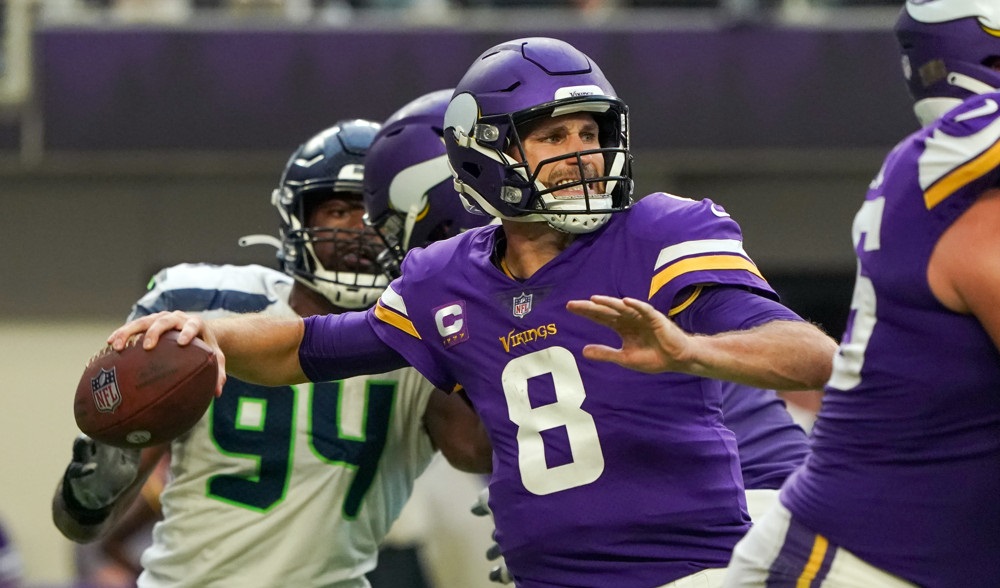
    Among QBs with a minimum of 200 attempts, Bridgewater tied Kirk Cousins with an On-Target Rate of 82.4%, the highest in the league, but to be fair, his average throw depth was 9th-shortest at only 7.2. He also ranked 19th in IQR. Bridgewater is on a one-year deal and is intended to be a bridge quarterback unless he comes out and puts up another career year.

    Jordan Love could arguably be the best young quarterback on the list. A former 1st-round pick, Love’s first game action will be this week’s preseason game against Houston. Bieniemy and staff like Love’s upside and feel like they can mold him into a Mahomes-esque type of player. Plus, he most likely is under contract for four more years.

    The only quarterback who was on the list of available players that had a higher IQR than Bridgewater in 2020: Gardner Minshew. Minshew brings 20 starts of experience in the NFL with a 3.4 TD-to-INT ratio.

    The idea behind this QB room is to get someone in on a one-year deal who can bridge the gap before finding the future leader of the team.  Love could be that guy, but he still needs development. Minshew likely isn’t the future, but he’s someone who works hard and will bring competition to the position.

    The quarterbacks selected most often in the submissions were Jordan Love – Packers (77%) and Gardner Minshew II – Jaguars (36%).


    Running Back

    Player Tm TP/60 Yrs left-2021 Cap 
    James Robinson Jaguars 0.6 2-$782K
    Devin Singletary Bills 2.3 2-$1.1M
    Chase Edmonds Cardinals -0.1 1-$1.0M
    Justin Jackson Chargers 3.4 1-$920K
    Kyle Juszczyk 49ers 0.5 5-$2.275M


    Though his Total Points number doesn’t show it, James Robinson performed very well in 2020. His 1,414 scrimmage yards were the most by an undrafted rookie in the common-draft era. With his success combined with his cap hit, it’s hard to argue against taking him. Plus, he’ll only be a Restricted Free Agent when his contract is up.

    In two seasons, Devin Singletary has amassed over 1,400 yards and averaged 4.8 YPA. While his touchdown numbers are down, he still brings plenty of production and elusiveness out on the field. 

    In addition to his 22 Total Points in 2020, he ranked 4th among RBs with 100 carries in Broken/Missed Tackle Rate at 12%. He’s still learning in the passing game, but as he becomes more adept in that aspect, Singletary is poised to turn into an all-around back real soon.

    In 16 games in 2020, Chase Edmonds averaged 4.6 YPA on 97 rushes, but he made strides in the passing game. He caught 53 passes for over 400 yards and 4 TD. He also showed the ability to return kicks, averaging over 23 YPR on 18 returns. With just one year left on his deal at 25 years old, Edmonds still has the potential to be a change-of-pace contributor.

    The last running back on our depth chart is Justin Jackson, who has averaged 4.9 yards in limited duty the last three seasons. 

    As the lone fullback on the roster, Kyle Juszczyk is one of the best. He can run, catch, and block. His versatility allows him to line up all over the field and play special teams. Plus, he just signed a new deal and is under contract through 2025. 

    Bieniemy’s offenses don’t feature the fullback much, but with the skill and versatility of a guy like Juszczyk, he’ll be able to get him in enough of a prominent role to warrant the cap hit.

    The running backs selected most often in the submissions were James Robinson – Jaguars (41%) and Chase Edmonds – Cardinals (36%). The fullback selected most often in the submissions was Kyle Juszczyk – 49ers (41%).


    Wide Receiver

    Player Tm TP/60 Yrs left-2021 Cap
    Adam Thielen Vikings 1.4 4-$5.9M
    Michael Gallup Cowboys 0.8 1-$2.67M
    Marquise Brown Ravens 0.5 2-$3.2M(+option)
    Mecole Hardman Chiefs 1.1 2-$1.36M
    Zach Pascal Colts 1.1 1-$3.38M
    Rashard Higgins Browns 1.9 1-$1.128M


    Adam Thielen is one of the biggest WR names on the list, and while he’s about to turn 31 and the 2022 cap hit jumps up to almost $17 million, it’s hard to match his consistent production from the past five seasons. 

    Adam Thielen – 2020 Stats

    Stat Value Rank
    TD 14 3rd
    Receiver Rating 119 T-11th

    Thielen’s production still isn’t too far behind where it was in his career-year of 2018, assuming he can stay healthy.

    A 3rd-round pick in 2018, Michael Gallup has been a reliable target in Dallas. In 2020, Gallup hauled in 90% of on-target throws, gained a 1st Down nearly 75% of the time, and drew 6 DPI penalties.

     While his 2020 numbers are a step down from 2019 when he amassed 1,107 yards and 2.2 Yards Per Route Run, that can likely be attributed to Dak Prescott’s injury. Plus he took a positive step from Year 2 to Year 3 by limiting his drops and becoming a more physical receiver.

    Marquise Brown is the only Ravens receiver to see 50 targets over the last two years and he did both seasons. Brown’s On-Target Catch Rate did fall from 96% in 2019 to 86% in 2020, but his ADoT went up by almost two yards to 13.4. His 2020 Broken/Missed Tackle Rate of 14% is respectable, and something that he’ll likely be counted upon for his new team.

    Two spots behind Adam Thielen in Receiver Rating in 2020 is Mecole Hardman at 116. While he doesn’t see a lot of balls come his way in an offense that features Tyreek Hill and Travis Kelce, Hardman is a gadget player who excels with the ball in his hands and can stretch the field vertically. 

    He needs to continue to improve upon his 14% Drop Rate which ranked 5th-worst last season, but his speed, quickness, and versatility can’t be taught. Plus, having been with Bieniemy, he’ll have little to learn about the offense.

    Zach Pascal and Rashard Higgins make good depth receivers. 

    Pascal ranked in the Top 40 in receiver rating, broken/missed tackle rate, and on-target catch rate last season. 

    Higgins ranked second in Yards Per Target, matched Thielen in Receiver Rating, and was one of two receivers with at least 50 targets who didn’t drop a pass in 2020 (Allen Robinson).

    The wide receivers selected most often in the submissions were Michael Gallup – Cowboys (77%), Mecole Hardman – Chiefs (55%), and Adam Thielen – Vikings (55%).


    Tight End

    Player Tm TP/60 Yrs left-2021 Cap 
    Robert Tonyan Packers 1.5 1-$1.5M
    Drew Sample Bengals 0.2 2-$1.5M
    Adam Trautman Saints 0.8 3-$1.0M
    Foster Moreau Raiders 0.7 2-$972K


    The 27-year old Robert Tonyan had a breakout season in 2020. Tonyan registered 586 yards on 52 receptions in 2020 and his 11 touchdowns tied for most in the league among TEs, and he also had a 98% On-Target Catch Rate with 0 drops. Additionally, his 148.3 Receiver Rating led all TEs.

    In 2020, Drew Sample carved out more of a receiving role than he previously had by catching 40 passes with a 95% On-Target Catch Rate and a 17.5% Broken/Missed Tackle Rate on 53 targets. 

    Should Tonyan leave after 2021 and Sample continues his progression, he’s likely to be the all-around player that the Bengals thought he could be when they selected him in the 2nd round in 2019.

    With Jared Cook on the Saints roster, it’s clear Adam Trautman wasn’t going to get too many looks from Drew Brees in 2020. A 3rd-round pick just last season, Trautman was limited to just 16 targets. However, on those 16 targets, he had 15 catches, averaged 10.7 Yards Per Target, and dropped 0 passes. 

    There’s still development to be had, but a team can do much worse at their TE3.

    Check out the Film Breakdown we did on Trautman before the 2020 season here.

    Foster Moreau rounds out the Tight End room. He has 28 catches, 7 for touchdowns with no drops the last two seasons. 

    The tight ends selected most often in the submissions were Robert Tonyan – Packers (45%) and Hayden Hurst – Falcons (36%).


    Offensive Line

    Tackle
    Player Tm TP/60 Yrs Left-2021 Cap 
    Alejandro Villanueva Ravens 1.7 2-$4.75M
    Isaiah Wynn Patriots 2.3 2-$3.64M
    Chuks Okorafor Steelers 2.0 1-$2.39M
    Jesse Davis Dolphins 1.9 2-$4.585M
    Guard
    Player Tm TP/60 Yrs left-2021 Cap 
    Joel Bitonio Browns 1.9 2-$10M
    Cesar Ruiz Saints 2.1 3-$2.88M + option
    Oday Absouhi Chargers 2.2 1-$1.6M
    Austin Corbett Rams 1.8 1-$1.5M
    Center
    Player Tm TP/60 Yrs left-2021 Cap
    Ryan Jensen Buccaneers 1.7 1-$10M
    Pat Elflein Panthers 1.3 3-$1.357M


    The term “Blown Block Rate” is going to get used a lot here. If you’re looking for a better understanding of what it means, check out this article that explains it.

    The offensive line was a focal point during this draft, as the Total Points numbers indicate. It includes some solid young stars in the making with a strong, veteran presence.

    We’re going to take a quick-hitter approach to breaking them down.

    Alejandro Villanueva is a consistent, reliable, and durable lineman who started every game the past five seasons for the Steelers. 

    Key Stat: He ranked Top-15 in most pass blown blocks in 2020 with 22, but only had 5 run blown blocks after having none in 2019.

    Isaiah Wynn came into the league in 2019 as a 1st-rounder and while he’s started all 18 games he’s played in, injuries have derailed his season both years.

    Key Stat: In 10 games during 2020, his 0.4% Adjusted Blown Block Rate on Runs ranked 2nd-best among Tackles with at least 200 run snaps.

    After playing sparingly as a depth lineman his first two seasons, Chukwuma Okorafor started 15 of 16 games for the Steelers at RT in 2020.

    Key Stat: His 1.5% Adjusted Blown Block Rate ranked 9th-best among Tackles with at least 200 pass snaps.

    Jesse Davis has started 46 of 47 games for the Dolphins in the past three seasons and he’s played every line position except for center during that time. 

    Key Stat: His blown block numbers have been a bit high during his career, but his 1.8% Adjusted Blown Block Rate on Passes while at right guard in 2020 was the best of his career.

    Joel Bitonio is regarded as one of the best guards in football and hasn’t missed a snap for the Browns in the last four years while playing almost exclusively at left guard.

    Key Stat: While he’s effective in the run game, his 0.9% Adjusted Blown Block Rate in 2020 ranked 5th among guards with at least 200 pass plays.

    As a 1st-round pick in 2020, Cesar Ruiz played in 14 games and started 9 of them at right guard. A center in college, the Saints slid Ruiz to guard with center already occupied by Erik McCoy.

    Key Stat: The versatile interior lineman’s 1.1% Adjusted Blown Block Rate on Runs ranked 13th among guards.

    Oday Aboushi is already the definition of a journeyman, being a part of five teams in seven seasons and just signed a one-year deal in 2021 with the Chargers, his sixth team.

    Key Stat: His 0.9% Adjusted Blown Block Rate on Passes in 2020 ranked 6th among guards with at least 200 pass plays.

    Austin Corbett played in 14 games with just a single start for the Browns, however, since coming to LA, he started 23 of 24 games, playing every snap for the team in 2020.

    Key Stat: He only had 7 Run Blown Blocks and his 1.4% Adjusted Blown Block Rate on Runs ranked 19th among guards.

    After playing sparingly his first three seasons in the league, Ryan Jensen has started every game in the past four seasons between Baltimore and Tampa Bay, helping lead the Buccaneers to a Super Bowl victory last season.

    Key Stat: His 1.3% Adjusted Blown Block Rate on Passes ranked 19th among centers with at least 200 pass snaps.

    Pat Elflein started 43 of 44 games for the Vikings from 2017-20, but finished off the 2020 season starting all 6 games he played with the Jets. With his contract up, he signed a three-year deal with Carolina in the offseason.

    Key Stat: At center in 2018, he had a 1.0% Adjusted Blown Block Rate on Passes in 535 pass snaps.

    The offensive linemen selected most often in the submissions were Cesar Ruiz – Saints (45%), Wyatt Teller – Browns (41%), La’el Collins – Cowboys (36%), Isaiah Wynn – Patriots (32%), and Kevin Zeitler – Ravens (32%).


    Defensive Line

    Defensive End
    Player Tm TP/60 Yrs left-2021 Cap 
    Vinny Curry Jets 1.9 1-$1.2M
    Chase Winovich Patriots 2.9 2-$1.1M
    Mario Edwards Jr. Bears 3.2 3-$1.7M
    Zach Allen Cardinals 1.9 2-$1.17M
    Jacob Tuioti-Mariner Falcons 2.2 1-$850K
    Alton Robinson Seahawks 2.7 3-$868K
    Defensive Tackle
    Player Tm TP/60 Yrs left-2021 Cap 
    Bilal Nichols Bears 1.8 1-$2.26M
    Sheldon Rankins Jets 1.3 2-$4.455M
    Tershawn Wharton Chiefs 1.7 2-$782K
    Tyquan Lewis Colts 1.9 1-$1.389M
    John Penisini Lions 1.3 3-$823K


    This is a deep defensive line that brings good production, especially rushing the passer, at a low cap hit.

    Though he had a bit of a down year in 2020, Vinny Curry brings consistency to the edge. In just 11 games, Curry was still able to amass 3 sacks and 24 pressures. His Pressure Rate of 15% ranked 6th among DEs with at least 20 pressures. 

    He misses a few too many tackles and is inconsistent in the run game, but he’ll be counted upon to get to the passer first and foremost.

    Chase Winovich recorded 5.5 sacks in both seasons and improved his pressure numbers from 29 in 2019 to 53 in 2020. His 18% Pressure Rate in 2020 was tops among all DEs with at least 20 pressures. 

    Additionally, he saw 43 snaps in coverage, showing his versatility and range as an edge defender.

    Mario Edwards Jr. has worn a new uniform each of the last four seasons, but has still produced multiple sacks in each. 

    Even though he’ll miss the first two games of 2021 with a suspension, Edwards is coming off a year in which he amassed a career-high 4 sacks to go along with 18 pressures.

    Zach Allen is a big, strong defender who can play against the run and rush the passer. 

    While he lined up nearly 58% of the time in a 5-technique or wider, he has the ability to play anywhere along the defensive line, something he showed in 2020 by lining up at least once at every technique.

    Jacob Tuioti-Mariner doesn’t have the size to play over the center, but can play 3-technique and out, while also standing up on the edge, playing as an off-ball linebacker, or even sliding into the slot when the formation requires it. As a pass rusher in 2020, he racked up 20 pressures and a 11% Pressure Rate.

    As a 5th-round pick in 2020, Alton Robinson contributed to the Seahawks defense as a pass rusher on the edge. In just 195 pass rush snaps, he had 4 sacks and 16 pressures.

    At the defensive tackle spot, it all starts with Bilal Nichols. He had his best season in 2020, a season in which he recorded 40 tackles, 5 sacks, and 29 pressures. 

    He has some work to do in the run game, but he’ll give opposing offenses a tough time if he’s able to get push and rush the passer from the interior.

    Sheldon Rankins is a 2016 1st-round pick who started every game of the 2017 and 2018 seasons, but has had his season cut short in 2016, 2019, and 2020 due to injury. He just signed a two-year deal with the Jets after spending his first five seasons in New Orleans. 

    In 12 games last season, Rankins racked up 18 pressures. If he can stay healthy, his career year of 8 sacks and 39 pressures in 2018 isn’t far off.

    Tershawn Wharton is another undrafted rookie that surpassed expectations in 2020. As a part of the defensive line rotation in Kansas City, Wharton recorded 2 sacks and amassed 20 pressures, which ranked 3rd-best on the team. 

    Wharton may be undersized as an interior defender, and that’s likely a reason he struggles with consistency against the run, but he’s a solid rotational defender that plays with a high motor.

    Tyquan Lewis is a former 2nd-round pick who can play the edge or reduce down and play the 3-tech. He finished 2020 with 4 sacks and 18 pressures, while appearing in all 16 games.

    Lastly, at 335 pounds, John Pensini is more run stuffer than pass rusher. He totaled 35 tackles as a rookie for the Lions last season. 

    When looking at the defensive line group as a whole, it’s clear there needs to be improvement against the run, but with the emphasis put on the passing game in today’s NFL, it’s important to have linemen who can rush the passer, and that’s what we have here.

    The defensive ends selected most often in the submissions were Jadeveon Clowney – Browns (36%) and A.J. Epenesa – Bills (32%). The defensive tackles selected most often in the submissions were Vita Vea – Buccaneers (50%) and Sheldon Richardson – Vikings (36%).


    Linebacker

    Player Tm TP/60 Yrs left-2021 Cap
    Eric Wilson Eagles 2.2 1-$1.38M
    Rashaan Evans Titans 1.3 1-$3.68M
    Nicholas Morrow Raiders 2.1 1-$4.5M
    A.J. Klein Bills 2.5 2-$6.4M
    Jayon Brown Titans 1.5 1-$3.45M
    Samson Ebukam 49ers 2.7 2-$3.75M
    Cole Holcomb Washington 3.9 2-$909K
    Tae Crowder Giants 1.8 3-$799K
    Cody Barton Seahawks 1.2 2-$1.07M


    Depth and production was a key cog in the drafting at the linebacker position. There are plenty of rotational pieces who can rush the passer, cover, and stop the run. Not only are they adept on defense, but many of them are key special teams players as well.

    While the starters have only one year left on their contracts, the team has the financial flexibility to bring them back or can move on to roll with the guys down the roster and/or replace them with free agents or draft picks after 2021.

    Let’s start with one of the better cover linebackers, Eric Wilson. Wilson signed a one-year deal with the Eagles in the offseason after spending his first four seasons in Minnesota. 

    Wilson did it all in 2020, his first season as a full-time starter. He amassed 118 tackles (tied-13th among LB), 13 TFL, 3 sacks, 13 pressures, 3 interceptions (tied-most), and rated among the top linebackers in yards allowed per coverage snap.

    Though he isn’t going to thump in the run game, he’s one of the better cover linebackers out there.

    Rashaan Evans has played nearly 1,800 snaps in the past two seasons on defense for the Titans. In those two seasons, he’s accumulated 203 tackles, 15 TFL, and 3 sacks. One of the most impressive stats is his Broken/Missed Tackle Rate went from almost 14% in 2019 down to just 4% in 2020

    Evans struggled some in coverage, but did improve in 2020. The Titans didn’t pick up his 5th-Year Option, so he’s just on a one-year deal to show what he can do with his new team.

    Las Vegas Raiders Linebacker Nicholas Morrow rounds out the starting three. Undrafted in 2017 out of Greenville College, Morrow has played in all but two games since. 

    In 2020, he had his best all-around season to date with 77 tackles, 9 TFL, 3 sacks, 12 pressures, and  a 42.5 Passer Rating Against (7th among LBs with min 10 targets).

    Morrow is another versatile linebacker who can do just about anything asked of him.

    A.J. Klein has been a key rotational linebacker and special teams player throughout his career with the Panthers, Saints, and Bills. While he took a step back as a run defender in 2020, he still produced in coverage and as a pass rusher. 

    In coverage, his 4 passes defensed ranked tied-5th among LBs with at least 10 targets and he ranked in the Top 20 in yards per coverage snap. As a pass rusher, he recorded 5 sacks with a 7% Sack Rate (6th among LBs with min 10 pressures) and 16 pressures with a 24% Pressure Rate (14th).

    The team chose linebacker for both selections from the Titans in the Expansion Draft by also taking Jayon Brown. Brown started all 24 games he played in the past two seasons, but was limited to just 10 in 2020 after an elbow injury forced him to miss the rest of the season. 

    After recording 103 tackles in 2019, he was still able to make 75 in limited action in 2020. Additionally, in 28 pass rush snaps, he forced pressure 15% of the time

    However, he’s at his best in coverage, where he allowed a Deserved Catch Rate of just 79% on 30 targets.

    Samson Ebukam just signed a two-year deal with the 49ers, but joins the team after spending his first four seasons in LA where he was a standout special team’s player and effective pass rusher for the Rams.

    While his overall tackle numbers were down in 2020, he still tied a career high with 4.5 sacks and added a 16% Pressure Rate with 24 pressures.

    Cole Holcomb was a surprise contributor for Washington after being drafted in the 5th round of the 2019 NFL Draft. Not only did he make the team, but he started 15 of 16 games and racked up 104 tackles as a rookie. 

    A knee injury forced him out of five games at the beginning of 2020, but he still managed to total 70 tackles, 8 TFL, and 2.5 sacks. His 5.4% Broken/Missed Tackle Rate was 13th-best among LBs with at least 25 solo tackles. 

    Though he had a 100% Deserved Catch Rate in coverage, his 41.7 Passer Rating Against ranked 6th.

    The 2020 Mr. Irrelevant pick of the NFL Draft was anything but irrelevant in his rookie season. Tae Crowder worked his way onto the field for 11 games, starting 6 of them, while dealing with a hamstring injury. 

    He totaled 56 tackles, 3 TFL, and a sack. While he didn’t rush the passer often, he registered a 19% Pressure Rate when doing so.

    Cody Barton is the definition of depth at the linebacker position. Barton has played in all 32 games since coming into the league as a 3rd-round pick in 2019 and has played about 70% of special teams snaps during that time. He’s still improving as a defender, but guys who can play on nearly every special teams unit usually find a way to make a team.

    The linebackers selected most often in the submissions were Melvin Ingram – Steelers (41%), Jayon Brown – Titans (41%), and Danny Trevathan – Bears (36%).


    Cornerback

    Player Tm TP/60 Yrs left-2021 Cap Hit
    Byron Jones Dolphins 2.2 4-$16.1M
    Carlton Davis Buccaneers 3.6 1-$2.75M
    Bryce Callahan Broncos 4.4 1-$8.5M
    Mike Hilton Bengals 3.3 4-$5.35M
    Jourdan Lewis Cowboys 2.4 3-$2.64M
    Desmond King II Texans 2.0 1-$3.19M
    Jimmy Moreland Washington 2.4 2-$874K


    This cornerback group as a whole excels in man coverage. Not to mention all of the Total Points put up in 2020 between them. With the NFL becoming more of a passing league, it’s likely Nickel and Dime coverages will be used more and more, so the thought was to make sure there is plenty of depth at the position, especially in the slot.

    Byron Jones is one of the biggest names that went unprotected. Although the Dolphins were happy to get his contract off their books, he has four years left on his deal. Not many times will one of the better corners in the league in recent years be up for the taking. 

    While Jones had a down year by his standards in 2020, he still managed two interceptions and three passes defensed.

    Carlton Davis had the biggest 2020 season of the group, en route to a Super Bowl victory for the Buccaneers. Davis had the most 2020 Total Points on this team aside from Bridgewater. He put up good numbers even being targeted 4th-most in the league.

    Carlton Davis in 2020

    Stat Value Rank
    Interceptions 4 T-3rd
    Deserved Catch Rate 78.3%
    Passer Rating Against 73.1 27th*
    Passer Rating (Man) 63.0 T-24th**

    * Minimum 30 snaps

    ** Minimum 15 attempts

    For a Denver secondary that had a plethora of injuries in 2020, Bryce Callahan stepped up in a big way. 

    Among CBs with at least 15 targets in man coverage, he had the best Passer Rating Against of just 23.6, and his 3.4 Yards Per Attempt ranked 2nd.

    MIke Hilton has been regarded as one of the best slot corners in the game over the last few seasons for the Steelers, which is why he just signed a big four-year contract with rival Cincinnati in the offseason. 

    Overall, Hilton’s 53.3 Passer Rating Against ranked 4th-best in 2020 among CBs with at least 30 targets. 

    Jourdan Lewis is another slot corner who has played well in Dallas the past few seasons. Not only can he cover, but he’s been solid as a tackler and pass rusher from the slot as well. In the last two seasons, Lewis has registered 6 sacks and 9 pressures. 

    While he needs to limit the pass interference penalties, he brings strong depth to the slot position.

    Desmond King II is another one of those slot corners that can do a bit of everything. Since coming into the league in 2017, he has 8.5 sacks and 36 pressures. Additionally, he’s been an effective punt and kick returner.

    Rounding out the group is Jimmy Moreland from Washington. Since coming into the league as a 7th-round selection out of James Madison, Moreland has played in 30 of 32 games, starting 10 of them. His 63.0 Passer Rating Against in 2020 tied for 15th. 

    When looking at his man coverage, his 52.1 Passer Rating Against was 13th.

    The cornerbacks selected most often in the submissions were Desmond King II – Texans (41%), Donte Jackson – Panthers (36%), and Steven Nelson – Eagles (36%).


    Safety

    Player Tm TP/60 Yrs left-2021 Cap
    Rodney McLeod Eagles 2.5 1-$1.76M
    Terrell Edmunds Steelers 1.0 1-$3.4M
    Xavier McKinney Giants 0.7 3-$1.91M
    Taylor Rapp Rams 2.7 2-$1.27M
    Josh Metellus Vikings -3.4 2-$780K
    Jaylinn Hawkins Falcons 1.3 3-$946K


    Even at 31-years old, Rodney McLeod has been considered one of the better safeties in the league. With McLeod, injuries are a concern. He’s had knee surgery in 2018 and 2020 and post-season shoulder surgery in 2019. 

    Despite the injuries, he’s registered 14 interceptions during his career. In 2020, even though he only played in 13 games, he was outstanding in coverage. His 56% Deserved Catch rate was best among all safeties with at least 15 targets. 

    Additionally, McLeod’s 41% Completion% Allowed ranked 2nd-best

    If injuries remain an issue in 2021, he’s only got one year left on his contract, but if he can stay healthy, he will be a force to contend with on the back-end of this defense.

    Terrell Edmunds also just has one year left on his deal after Pittsburgh declined to pick up his 5th-Year Option in the offseason. Edmunds had 103 tackles in 2019 and while that number fell to 66 in 2020, he still registered a career-high 2 interceptions. 

    Edmunds is the only safety of the group who saw at least 5 targets in man coverage last year, and he ranked 6th out of 78 safeties with just a 41.8 Passer Rating Against.

    2020 2nd-round pick Xavier McKinney saw action in just six games last year due to a broken foot. When he was in the lineup, he recorded 24 tackles and an interception with just a 7.7% Broken/Missed Tackle Rate. He’s young and has plenty of talent, so he’s worth taking a chance on for depth at the position.

    Taylor Rapp is another former 2nd-round pick who also saw time on IR in 2020. He’s seen action in 24 games over the past two seasons with 3 interceptions and 6 passes defensed. 

    In limited 2020 action, he allowed a 50.0 Passer Rating Against.

    Josh Metellus and Jaylinn Hawkins are young safeties who saw very limited snaps on defense in 2020, but were special teams contributors. Metellus played over 50% of special teams snaps for the Vikings, while Hawkins played over 30% of them for the Falcons.

    The safeties selected most often in the submissions were Xavier McKinney – Giants (36%) and Marcus Williams – Saints (36%).

    Specialists

    Kicker
    Player Tm TP/60 Yrs left-2021 Cap
    Joey Slye Panthers 3.3 1-$850K (RFA)
    Punter
    Player Former Team TP/60 2021 Cap Hit
    Jack Fox Lions 8.7 1-$780K (ERFA)
    Long Snapper
    Player Former Team TP/60 Yrs left-2021 Cap
    Jon Weeks Texans N/A 1-$988K


    The theme at the specialists positions is that these three players came from teams that were slated to pick in the top 8 selections of last year’s NFL Draft. These rosters had a little less talent to choose from, hence why the specialists came from these teams and not a better team with a higher talent pool.

    Joey Slye is a young kicker with a huge leg. He’s still improving his accuracy (he ranked in the bottom half of the league in success on field goals and extra points), but the power is there.  

    While he was only 1-of-6 from 50+ in 2020, he was 8-of-11 in 2019. Another plus is his kickoff ability, where he posts a career Touchback Rate of nearly 91%.

    In 2020, Jack Fox softened the blow of losing Sam Martin and was a pleasant surprise for the Lions. The rookie Pro-Bowler’s highlight was tying for the league lead in Net Punt Average (47.0).  Fox is the type of punter that can flip field position and pin offenses deep in their own territory.

    While there isn’t a lot to discuss at the long snapper position, Jon Weeks is an 11-year pro who hasn’t missed a single game for the Texans. The 35-year old, and 2015 Pro Bowl selection, should help with the continued development of two young kickers.

    The kicker selected most often in the submissions was Younghoe Koo – Falcons (55%). The punter selected most often in the submissions was Michael Dickson – Seahawks (23%). The long snapper selected most often in the submissions was Morgan Cox – Titans (18%).

    Conclusion

    While we don’t think this is the exact way the NFL would go about doing an Expansion Draft, this would be an interesting concept and a way to allow the expansion team an opportunity to be relatively competitive within its first few years.

    During the 2002 Expansion Draft for the Texans, all teams were forced to only put up five players for the team to draft. Even with some guidelines given as to who teams could list, it doesn’t feel like that’s a way to allow a new team to be competitive. 

    Houston went 7-9 its third season, but didn’t go over .500 until going 9-7 in 2009 and didn’t make the playoffs until 2011. You can find out more about the guidelines for the 2002 Expansion Draft and the list of available players here.

    An expansion process is an intriguing form of roster building. Fantasy Football takes households by storm every fall, and in essence, drafting for an expansion team is much like Fantasy Football, just with a limited player pool and dealing with every position. Maybe one day, an expansion draft concept will become as commonplace as Fantasy Football Leagues, Mock Drafts, and Big Boards. 

    We’ve got one more article to come. Next week, we’ll take a look at how this team would do.

  • What if The NFL Had A 2021 Expansion Draft?

    What if The NFL Had A 2021 Expansion Draft?

    The NHL’s newest team, the Seattle Kraken, were welcomed into the league on July 21 during their Expansion Draft. Four years following the successful Expansion Draft of the Vegas Golden Knights, the Kraken were allowed to select one player from each team, minus Vegas, to begin compiling their inaugural roster. 

    Without getting too deep into the guidelines, basically every NHL team was allowed to protect a certain number of players, with others automatically protected due to them only being in the league for a year or two. Each team was allowed to protect either 9 or 11 players depending on how many of each position they chose to protect. 

    What if the NFL did something similar? How could it look? We decided to try it out – and you can too.


    Roster Submission Form


    Protection Rules

    In a perfect world, this would take place in March before the NFL Draft and Free Agency gets started, like the NHL, but that’s not the case. So, using the current Training Camp rosters (as of approximately July 28), we came up with a set of guidelines to protect players for each team.

    The guidelines are as follows:

    1. All players who entered the league in 2021, drafted or undrafted, are automatically protected and are not counted toward protection limits
    1. Players who already have season-ending injuries (e.g. Cam Akers) are automatically protected and are not counted toward protection limits
    1. Aside from those players, 12 total players can be protected
      • 6 must be from the offensive side of the ball, which includes Kicker
        • Only 1 QB can be protected
      • 6 must be from the defensive side of the ball, which includes Punter
        • There are no positional restrictions for defense

    It’s that simple. With those guidelines, we took our best shot at protecting twelve players from each team, taking into account salary, remaining years on contracts, age, and other factors. It’s not a perfect science, and I’m sure teams or you, the reader, would choose differently in some cases.

    In fact, we’re going to give you the chance to build your own team by going to this link, using the protections lists below, and following the listed guidelines.


    Roster Submission Form


    Protection Lists

    Now that the rules are set, who was protected? Let’s go in alphabetical order and start with the Arizona Cardinals. The number in parentheses is their Total Points number in 2020.


    Arizona Cardinals

    Offense Defense
    QB Kyler Murray (87) DE J.J. Watt (38)
    WR DeAndre Hopkins (37) LB Chandler Jones (8)
    WR Christian Kirk (5) LB Isaiah Simmons (15)
    OL D.J. Humphries (30) LB Markus Golden (34)
    OL Rodney Hudson (31) CB Byron Murphy Jr. (24)
    OL Kelvin Beachum (41) S Budda Baker (50)

    Arizona has a good mix of offensive weapons and line talent, and that’s apparent in its protection list. A.J. Green just signed to give Kyler Murray another weapon, but it’s only a 1-year deal and he’s 33 with injury concerns. Second-Round pick Rondale Moore would help ease the blow if Green were to get selected. 

    J.J. Watt is a top player in the league when healthy, so Arizona chooses to protect him and hope that’s the case. Malcolm Butler put up respectable numbers in 2020, but was targeted by far the most in the NFL as a member of the Titans, and his 1.3 Yards Allowed Per Coverage Snap was among the worst in the league.

    Atlanta Falcons

    Offense Defense
    QB Matt Ryan (107) DT Grady Jarrett (28)
    RB Mike Davis (25) LB Deion Jones (38)
    WR Calvin Ridley (30) LB Foyesade Oluokun (61)
    OL Jake Matthews (31) CB A.J. Terrell (15)
    OL Chris Lindstrom (26) CB Kendall Sheffield (4)
    OL Kaleb McGary (14) S Duron Harmon (11)

    The Julio Jones trade was a blow to the Falcons receiving corps, but it allowed them to protect newly acquired starting RB Mike Davis, who broke out last year with Carolina, filling in for the injured Christian McCaffrey. Additionally, 1st-round pick Kyle Pitts should soften the blow of losing Jones. 

    On defense, Dante Fowler Jr. is a consistent pass rusher that puts up numbers, but a bit of a down year in 2020 and a large cap number turn the organization away from him being on the list. Atlanta feels it has enough depth on the front seven that it chose to keep three players in the secondary to pair with 2nd-round safety Richie Grant.

    Baltimore Ravens

    Offense Defense
    QB Lamar Jackson (75) LB Patrick Queen (34)
    RB JK Dobbins (10) LB Tyus Bowser (40)
    TE Mark Andrews (12) CB Marlon Humphrey (57)
    OL Ronnie Stanley (12) CB Marcus Peters (47)
    OL Bradley Bozeman (43) S Chuck Clark (39)
    K Justin Tucker (22) S DeShon Elliott (29)

    On the offensive side, Gus Edwards and Marquise Brown are two vital pieces to the offense, but Dobbins is younger and the team just drafted Rashod Bateman. 

    On defense, the Ravens led the league in sacks by DBs and were Top-2 in pressures while blitzing, but were 5th-lowest in sacks and pressures by DL and 40% of those pressures came while the team was blitzing. So even though the Ravens do have rushers that they value, most of their pressure value comes from their blitz packages. Combine that with the Ravens propensity to play man-to-man defense and it makes sense to focus their defensive protections on the secondary.

    Ravens protection list provided by: Segev Goldberg

    Buffalo Bills

    Offense Defense
    QB Josh Allen (155) DT Ed Oliver (26)
    WR Stefon Diggs (49) LB Tremaine Edmunds (22)
    WR Gabriel Davis (10) LB Matt Milano (23)
    TE Dawson Knox (3) CB Tre’Davious White (61)
    OL Dion Dawkins (28) S Micah Hyde (30)
    K Tyler Bass (13) S Jordan Poyer (35)

    Tyler Bass is questionable here, but he made the SIS All-Rookie Team this past season with consistent production. Gabriel Davis had a good rookie season and will be a featured weapon for years to come. Other possibilities would’ve been choosing an average offensive lineman or protecting one of the backs with injury concerns. 

    On defense, with five easy selections, Oliver got the sixth spot due to his youth over some of the aging veterans along the defensive front.

    Bills protection list provided by: Evan Butler

    Carolina Panthers

    Offense Defense
    QB Sam Darnold (-8) DE Yetur Gross-Matos (13)
    RB Christian McCaffrey (7) DE Brian Burns (39)
    WR DJ Moore (29) DT Derrick Brown (21)
    WR Robby Anderson (19) LB Haasan Reddick (46)
    OL Taylor Moton (30) LB Shaq Thompson (35)
    OL Matt Paradis (21) LB Jeremy Chinn (29)

    The offense in Carolina doesn’t have a ton of pieces to build around. Outside of the six protected players, there weren’t many others who warranted being protected. 

    On the defensive side, the tough choice came down to picking two of the three between Reddick, Thompson, and Donte Jackson. Jackson has been solid for the Panthers, but gave up five touchdowns in 2020 and was outside the Top 100 in Yards Allowed Per Cover Snap. Carolina instead chooses to make sure the front seven is rock solid.

    Panthers protection list provided by: Jordan Edwards

    Chicago Bears

    Offense Defense
    RB David Montgomery (30) DE Akiem Hicks (25)
    WR Allen Robinson II (26) DT Eddie Goldman (N/A)
    WR Darnell Mooney (17) LB Khalil Mack (47)
    TE Cole Kmet (10) LB Roquan Smith (64)
    OL James Daniels (8) CB Jaylon Johnson (32)
    OL Cody Whitehair (26) S Eddie Jackson (8)

    With Justin Fields now on the roster, the organization decides not to protect a QB knowing they’ll at least roll out with Andy Dalton or Nick Foles if Fields isn’t ready. In addition, they’re able to keep a trio of young playmakers in Montgomery, Mooney, and Kmet with the hope they can convince Robinson to sign back on after 2021. 

    There’s a lot of talent on the defensive side of the ball in Chicago. It is able to keep their top guys, but have to offer up Bilal Nichols, Danny Trevathan, and Robert Quinn to the expansion team. Eddie Goldman is back after opting out and the team expects big things from him.

    Cincinnati Bengals

    Offense Defense
    QB Joe Burrow (49) DE Trey Hendrickson (24)
    RB Joe Mixon (-2) DE Sam Hubbard (28)
    WR Tyler Boyd (17) DT D.J. Reader (7)
    WR Tee Higgins (24) LB Logan Wilson (11)
    OL Jonah Williams (10) CB Chidobe Awuzie (10)
    OL Trey Hopkins (31) S Jessie Bates III (29)

    The Bengals have a strong starting group of playmakers. The questions come on the offensive line. While they look to be improved, it’s clear why four of the six players protected were skill players. 

    The defense has a couple of strong, core players at each level of the defense. Big names such as Trae Waynes and Vonn Bell in the secondary are possible protection list candidates, but it’s likely they view a younger player with more contract control in Chidobe Awuzie a better option for the long-term outlook.

    Cleveland Browns

    Offense Defense
    QB Baker Mayfield (83) DE Myles Garrett (38)
    RB Nick Chubb (44) LB Anthony Walker (20)
    WR Jarvis Landry (33) CB Denzel Ward (43)
    TE Austin Hooper (10) CB Troy Hill (30)
    OL Jedrick Wills Jr. (21) S John Johnson II (42)
    OL JC Tretter (25) S Grant Delpit (N/A)

    The biggest question involving the Browns offense is: Odell Beckham Jr. or Jarvis Landry? Both have high cap numbers and both are solid NFL receivers, but Odell missed half of last season while Landry has only missed one game in his entire career. While Odell is a Top 10 receiver in the NFL when healthy, the Browns opt for consistency here. Unfortunately, that still leaves stalwarts Joel Bitonio and Jack Conklin exposed, as the team protects Wills and Tretter instead.

    On defense, the secondary stays strong and guys like Jadeveon Clowney, Sione Takitaki, and Ronnie Harrison are left off the list. Grant Delpit missed all of last season due to injury, but the Browns feel like he could replace Harrison at safety if he were to be selected.

    Dallas Cowboys

    Offense Defense
    QB Dak Prescott (22) DE DeMarcus Lawrence (40)
    RB Ezekiel Elliott (-4) DE Randy Gregory (23)
    WR Amari Cooper (26) DT Neville Gallimore (10)
    WR CeeDee Lamb (6) LB Jaylon Smith (28)
    OL Zack Martin (23) LB Leighton Vander Esch (9)
    OL Tyron Smith (6) CB Trevon Diggs (21)

    The Cowboys offense is littered with weapons. Even with injuries taken into account all six of these players are staples in the offensive plans of the future. There are questions about Smith and Vander Esch on that defense with injuries and underperformance, but Dan Quinn wants them in the middle. 

    Trevon Diggs had plenty of trouble as a rookie last year, but still managed 21 Total Points. Randy Gregory has had his fair share of issues, to say the least, but could finally be turning the corner and hitting his stride.

    Cowboys protection list provide by: Chad Tedder

    Denver Broncos

    Offense Defense
    WR Courtland Sutton (-3) DE Dre’Mont Jones (18)
    WR Jerry Jeudy (6) LB Bradley Chubb (24)
    TE Noah Fant (20) LB Von Miller (N/A)
    OL Garett Bolles (35) LB Alexander Johnson (38)
    OL Dalton Risner (24) CB Kyle Fuller (54)
    OL Graham Glasgow (21) S Justin Simmons (31)

    In the midst of a quarterback battle, the Broncos choose not to protect either one of Drew Lock or Teddy Bridewater, opting to take the stance of “if one is selected, it helps make our decision.” Melvin Gordon III is on the block, but 2nd-round pick Javonte Williams eases that blow if selected. 

    On defense, Shelby Harris and Josey Jewell go unprotected, as well as rising young pass rusher Malik Reed. This protection list allows for most of the front seven to stay strong while plenty of youth and depth in the secondary could handle the blow if the expansion team looks in that direction.

    Detroit Lions

    Offense Defense
    QB Jared Goff (51) DE Michael Brockers (20)
    RB D’Andre Swift (5) LB Romeo Okwara (31)
    TE T.J. Hockenson (13) LB Trey Flowers (11)
    OL Taylor Decker (34) CB Jeff Okudah (10)
    OL Jonah Jackson (24) CB Amani Oruwariye (24)
    OL Frank Ragnow (30) S Tracy Walker (15)

    With as bad as the roster is in Detroit, there aren’t many other options on the offensive side of the ball. Vaitai is a possibility, but he underperformed in 2020 with an injury. Plus, the large contract from a previous regime likely steer the Lions away. 

    The defensive side features talented young starters in John Penisini and Will Harris with a rookie Pro Bowl punter in Jack Fox, but the last spot goes to Oruwariye with his size, length, and potential at the cornerback position.

    Green Bay Packers

    Offense Defense
    QB Aaron Rodgers (155) DT Kenny Clark (13)
    RB Aaron Jones (31) LB Za’Darius Smith (29)
    WR Davante Adams (37) LB Krys Barnes (8)
    WR Allen Lazard (12) CB Jaire Alexander (63)
    OL David Bakhtiari (30) S Adrian Amos (41)
    OL Elgton Jenkins (30) S Darnell Savage (32)

    If the Packers protect Rodgers in our hypothetical scenario, that exposes their 1st-round pick from a year ago. If they protect Love, they undoubtedly lose Rodgers for nothing in the Expansion Draft. They opt to protect Rodgers so they can ensure a return if they do trade him after 2021. The organization keeps all the main pieces together with this list, though recently acquired Randall Cobb is unprotected. 

    On defense, De’Vondre Campbell would be tough to lose, but his 12.6% Broken/Missed Tackle Rate and the play of rookie Krys Barnes in 2020 makes Green Bay feel better about it.

    Houston Texans

    Offense Defense
    QB Deshaun Watson (173) DE Shaq Lawson (26)
    RB David Johnson (6) DE Charles Omenihu (11)
    WR Brandin Cooks (26) DE Whitney Mercilus (3)
    OL Laremy Tunsil (26) DT Ross Blacklock (0)
    OL Max Scharping (13) LB Zach Cunningham (26)
    OL Tytus Howard (25) S Justin Reid (20)

    Even if the team decides to trade Deshaun Watson, it guarantees it can get a return by protecting him. A possible suspension is a concern but in our scenario, the Texans keep him. They did trade for Marcus Cannon during the offseason, but opt to protect their younger line talent and Cannon’s returning after opting out last season is a concern. 

    There are a few different ways the team can go on defense. Christian Kirksey is a reliable linebacker, Vernon Hargreaves III leads a depleted corner group, and Eric Murray is a young safety with a high cap hit. Hargreaves and his 1.4 Yards Allowed Per Cover Snap (11th worst) make the team feel easier about the decision. Bradley Roby’s cap hit is put up for the expansion team to take it off the books.

    Indianapolis Colts

    Offense Defense
    QB Carson Wentz (-20) DT DeForest Buckner (35)
    RB Jonathan Taylor (37) DT Grover Stewart (20)
    WR Michael Pittman Jr. (11) LB Darius Leonard (30)
    OL Quinton Nelson (33) CB Kenny Moore II (49)
    OL Ryan Kelly (28) S Julian Blackmon (9)
    OL Braden Smith (32) S Khari Willis (31)

    The Colts have a strong, young nucleus on both sides of the ball. T.Y. Hilton has been a mainstay in Indianapolis, but protecting him at 32 years old with only one year left on his deal at nearly $9 million means missing out on a valued key piece to the offense. 

    Darius Leonard is the headliner, but the other five form a strong interior DL tandem and a promising secondary. Xavier Rhodes is another big name not protected, but similar to Hilton, he’s 31 and is on just a 1-year deal.

    Colts protection list provided by: Jeremy Percy

    Jacksonville Jaguars

    Offense Defense
    WR DJ Chark Jr. (15) DE Josh Allen (4)
    WR Marvin Jones Jr. (18) DE K’Lavon Chaisson (7)
    WR Laviska Shenault Jr. (12) LB Myles Jack (44)
    OL Andrew Norwell (24) LB Joe Schobert (29)
    OL A.J. Cann (28) CB CJ Henderson (14)
    OL Jawaan Taylor (13) CB Shaquill Griffin (38)

    With the drafting of Trevor Lawrence, that means international superstar Gardner Minshew II goes unprotected. Breakout rookie RB James Robinson also misses the cut with Travis Etienne coming in. Cam Robinson is a big omission by notoriety, but has consistently been one of the worst OL in the league in terms of blown blocks. 

    With a bunch of turnover on the roster, the organization protects their big pieces, including offseason signing Shaquill Griffin. He was targeted 12th most in 2020 and gave up six touchdowns, but the Jags are betting on his career-high three interceptions.

    Kansas City Chiefs

    Offense Defense
    QB Patrick Mahomes (171) DT Chris Jones (27)
    RB C. Edwards-Helaire (13) DT Jarran Reed (17)
    WR Tyreek Hill (35) LB Anthony Hitchens (19)
    TE Travis Kelce (57) CB L’Jarius Sneed (16)
    OL Orlando Brown (43) S Tyrann Mathieu (44)
    OL Joe Thuney (39) S Juan Thornhill (15)

    It’s obvious the Chiefs have a great offense, with the downfall being they can only protect six of them. Young speedster Mecole Hardman is an odd man out as is Laurent Duvernay-Tardif on the line. The young depth along the line could make the team feel better if someone gets swiped by the expansion team. On defense, Frank Clark is the big name not protected. His recent off-field trouble and $25+ million cap hit make him a tough sell to make the list.

    Las Vegas Raiders

    Offense Defense
    QB Derek Carr (101) DE Maxx Crosby (23)
    RB Josh Jacobs (2) DE Yannick Ngakoue (28)
    WR Henry Ruggs III (-3) LB Cory Littleton (10)
    WR Hunter Renfrow (15) CB Trayvon Mullen (34)
    TE Darren Waller (31) CB Damon Arnette (-1)
    OL Kolton Miller (27) S Johnathan Abram (23)

    One of the big debates here is between Renfrow and fellow receivers Bryan Edwards and John Brown. Derek Carr is comfortable with Renfrow out of the slot and likes knowing he’s there as a security blanket. Edwards had a down year as a rookie and Brown is a 31-year old veteran in on a 1-year deal. It’s clear Clelin Ferrell hasn’t taken the next steps in his progression that a former Top-5 pick should after two seasons. Maxx Crosby has clearly outplayed him and that’s the route the organization goes when selecting its list.

    Los Angeles Chargers

    Offense Defense
    QB Justin Herbert (116) DE Joey Bosa (34)
    RB Austin Ekeler (24) DT Jerry Tillery (10)
    WR Keenan Allen (33) LB Kenneth Murray Jr. (9)
    WR Mike Williams (13) CB Chris Harris Jr. (17)
    OL Corey Linsley (21) S Derwin James Jr. (N/A)
    OL Bryan Bulaga (11) S Nasir Adderley (13)

    There’s not much to dispute here. The Chargers are able to protect their main six players on the offensive side of the ball with 1st-round pick Rashawn Slater stepping in on the offensive line as well. The defense has playmakers, but just needs to stay healthy. 

    The team decides to give Derwin James one more chance to stay healthy and bring the production he did in 2018. Linval Joseph is a consistent, reliable force inside, but is on the last year of his deal as a 33-year old and didn’t record a sack for the first time in his career in 2020.

    Los Angeles Rams

    Offense Defense
    QB Matthew Stafford (88) DT Aaron Donald (50)
    RB Darrell Henderson Jr. (9) LB Leonard Floyd (35)
    WR Robert Woods (14) LB Troy Reeder (26)
    WR Cooper Kupp (33) CB Jalen Ramsey (54)
    TE Tyler Higbee (15) CB Darious Williams (51)
    OL Rob Havenstein (46) S Jordan Fuller (25)

    With Cam Akers going down with injury, the team is able to protect Darrell Henderson to ensure it has a starting-caliber RB in 2021. DeSean Jackson is a popular name available to the expansion team as is starting LT Andrew Whitworth, but both are nearing the end of their careers. Van Jefferson was expected to be the No. 3 receiver, but couldn’t win the job in 2020. The defense has talent, so the organization is forced to leave players like A’Shawn Robinson, Kenny Young, and Taylor Rapp unprotected. Darious Williams had a breakout year in 2020 allowing the 3rd-lowest Passer Rating Against (39.7) and 4th-lowest Completion% (45.2).

    Miami Dolphins

    Offense Defense
    QB Tua Tagovailoa (25) DE Emmanuel Ogbah (40)
    WR DeVante Parker (12) DT Christian Wilkins (26)
    TE Mike Gesicki (18) DT Raekwon Davis (9)
    OL Austin Jackson (16) LB Andrew Van Ginkel (27)
    OL Solomon Kindley (19) LB Jerome Baker (20)
    OL Robert Hunt (21) CB Xavien Howard (67)

    What a draft Miami had in 2020 on the offensive line. Jackson, Kindley, and Hunt all proved to be reliable starters moving forward. Myles Gaskin was productive last season, but not enough for the team to tab him as being protected. DeVante Parker and Will Fuller is an interesting debate, and while Parker has a high cap, he’s put up numbers the last two seasons and is under control until 2024. 

    Xavien Howard wants out and he made that publicly clear. He’s likely to bring a good return in a trade and if unprotected, he’s almost a guarantee to be selected and lost for nothing. Byron Jones is a household name, but the team has the depth at corner and it would be fine with unloading that contract.

    Minnesota Vikings

    Offense Defense
    QB Kirk Cousins (88) DE Danielle Hunter (N/A)
    RB Dalvin Cook (34) DE D.J. Wonnum (11)
    WR Justin Jefferson (45) LB Anthony Barr (2)
    TE Irv Smith Jr. (10) LB Eric Kendricks (53)
    OL Ezra Cleveland (15) CB Cam Dantzler (43)
    OL Brian O’Neill (34) S Harrison Smith (35)

    The big name omitted from this list is Adam Thielen. While it’d be a big blow to lose him, he’s on the wrong side of 30 with an expensive contract and has been subpar as a whole for the last couple of years. With no more Kyle Rudolph, Irv Smith looks to have an expanded role where he has just been scratching the surface of his potential. 

    Outside of the easy Top-4 selections on defense, the Vikings choose to keep Wonnum and Dantzler. Both provided promising rookie seasons in 2020 and look to be part of the future in Minnesota. That means 2021 1st-rounder Jeff Gladney and two impactful interior linemen in Michael Pierce and Dalvin Tomlinson go unprotected.

    Vikings protection list provided by: Jeff Dean

    New England Patriots

    Offense Defense
    RB Damien Harris (8) DE Lawrence Guy (15)
    WR Jakobi Meyers (21) LB Dont’a Hightower (N/A)
    TE Hunter Henry (18) LB Matt Judon (25)
    OL Mike Onwenu (29) CB J.C. Jackson (55)
    OL Shaq Mason (29) S Devin McCourty (13)
    OL David Andrews (22) S Kyle Dugger (14)

    Jakobi Meyers just keeps getting better every year. He’s gone from late-round draft pick to the potential go-to receiver in New England. Even with Mac Jones automatically protected, the Patriots opt to not protect Cam Newton as well. He’s begun to regress and it’s obvious there are concerns about his health. Jonnu Smith was a huge offseason get, but Hunter Henry being protected leaves him as the odd man out. 

    The big name not on the list for the defense is Stephon Gilmore. Though a former DPOY, Gilmore has a huge cap hit with one season left on his contract paired with enough other young stars in the secondary for New England to feel okay with leaving him unprotected.

    Patriots protection list provided by: Stephen Marciello

    New Orleans Saints

    Offense Defense
    QB Taysom Hill (21) DE Cameron Jordan (34)
    RB Alvin Kamara (25) DE Marcus Davenport (18)
    WR Michael Thomas (13) LB Demario Davis (46)
    OL Terron Armstead (32) CB Marshon Lattimore (29)
    OL Erik McCoy (32) CB C. Gardner-Johnson (34)
    OL Ryan Ramczyk (40) S Malcolm Jenkins (58)

    With Drew Brees retiring, the Saints felt good enough about Jameis Winston being their starter they kept him in New Orleans on a 1-year deal. However, they gave swiss army knife Taysom Hill a huge contract and feel he’s too valuable to leave exposed. Hill, Kamara, and Thomas are all must keeps, but that exposes a very good offensive line. Andrus Peat and Cesar Ruiz draw the short end of the stick. 

    On defense, Marcus Williams is a candidate for protection, but ultimately the high cap hit and him being on the last year of his deal factor in. His 3rd-lowest Broken/Missed Tackle Rate among safeties will be a big draw for the expansion team.

    New York Giants

    Offense Defense
    QB Daniel Jones (36) DE Dexter Lawrence (14)
    RB Saquon Barkley (-3) DE Leonard Williams (39)
    WR Kenny Golladay (6) LB Blake Martinez (32)
    WR Darius Slayton (15) CB James Bradberry (48)
    OL Andrew Thomas (17) CB Logan Ryan (28)
    OL Nick Gates (28) S Jabrill Peppers (19)

    Evan Engram has had his troubles catching the ball, and while he finally played a full season in 2020, he had the worst drop rate in his career at 10.6%. It’s clear the organization is ready to move on. Nate Solder is another big name left unprotected on offense, but his regression since coming to New York and him opting out in 2020 help the Giants decision. 

    Offseason pickup Adoree’ Jackson is the odd man out in the secondary, but didn’t prove much in Tennessee to warrant him making the list.

    New York Jets

    Offense Defense
    WR Corey Davis (25) DE Carl Lawson (30)
    WR Denzel Mims (9) DE John Franklin-Myers (18)
    TE Chris Herndon (1) DT Quinnen Williams (33)
    OL Mekhi Becton (21) LB C.J. Mosley (N/A)
    OL Morgan Moses (25) CB Bryce Hall (18)
    OL Connor McGovern (28) S Ashtyn Davis (6)

    The six players on the offensive side of the ball put rookie Quarterback Zach Wilson in the best position to succeed. Additionally, with Alijah Vera-Tucker and Elijah Moore automatically protected as early 2021 draft picks, the offense could see drastic steps forward with this core. Jamison Crowder and Keelan Cole are solid veterans, but are on the outside looking in due to the young playmakers the team must protect. 

    Marcus Maye is the biggest name left off the defensive list, mainly due to a huge cap hit and him likely not being around after 2021 anyway. Franklin-Myers was the selection over Sheldon Rankins and Foley Fatukasi because of his pass-rush versatility.

    Jets protection list provided by: Alec Mallon

    Philadelphia Eagles

    Offense Defense
    QB Jalen Hurts (2) DE Derek Barnett (26)
    RB Miles Sanders (13) DE Brandon Graham (35)
    WR Jalen Reagor (8) DE Josh Sweat (22)
    TE Dallas Goedert (10) DT Fletcher Cox (26)
    OL Andre Dillard (N/A) CB Darius Slay (28)
    K Jake Elliott (5) S Anthony Harris (22)

    The third and final kicker on the protected lists, Jake Elliott has been one of the most consistent pieces for the Eagles offense over the last couple years. In regards to 2020 1st-Round pick Jalen Reagor, the organization feels it can’t abandon him after one season. Andre Dillard’s bicep rehab may have been a blessing in disguise to give him the added strength he’s needed since coming into the league. 

    On defense, the core stays intact with Cox, Graham, Barnett, and Slay. Sweat is due for a breakout season and Harris gives the safety position stability coming off a 2020 campaign where he played every defensive snap in Minnesota.

    Eagles protection list provided by: Ben Hrkach

    Pittsburgh Steelers

    Offense Defense
    QB Ben Roethlisberger (51) DE Cameron Heyward (50)
    WR JuJu Smith-Schuster (8) DT Stephon Tuitt (31)
    WR Chase Claypool (21) LB T.J. Watt (62)
    TE Eric Ebron (12) LB Devin Bush (9)
    OL Kevin Dotson (10) LB Alex Highsmith (23)
    OL Trai Turner (14) S Minkah Fitzpatrick (35)

    This is likely Big Ben’s last year, so the team will protect him to give the team one last shot with him. JuJu and Claypool are the weapons on the offense. Najee Harris was automatically protected and will man the RB position. The offensive line had some turnover during the offseason and Kevin Dotson was a huge get in the draft in 2020. 

    The defense has a lot of pieces, but it’s a mix between aging veterans and young stars. So, the team needed to keep most of their young stars plus Heyward. The team is fine with aging vets Tyson Alualu and Joe Haden being left unprotected, though Haden’s Deserved Catch Rate was Top 20 last season.

    San Francisco 49ers

    Offense Defense
    WR Deebo Samuel (12) DE Nick Bosa (4)
    WR Brandon Aiyuk (23) DE Arik Armstead (19)
    TE George Kittle (18) DT Javon Kinlaw (16)
    OL Trent Williams (29) LB Fred Warner (55)
    OL Mike McGlinchey (27) LB Dre Greenlaw (27)
    OL Alex Mack (19) S Jimmie Ward (38)

    With Trey Lance coming in, Jimmy Garoppolo’s time could be done in San Francisco if he were to be selected. Raheem Mostert is coming off an injury-riddled season, but if he reverts to 2019 form, he could be an intriguing name left unprotected. The do-it-all FB Kyle Juszczyk is left off the list as well, but it’s hard to find a spot for him. 

    Dre Greenlaw up against Dee Ford or Jason Verrett is a tough decision. However, both are 30, Ford is coming off a back injury that cost him most of 2020, and Verrett was middle of the pack in most coverage stats. Plus, Greenlaw is a young, productive linebacker who averaged 6.3 Tackles Per Game last year and only allowed 0.4 Yards Per Coverage Snap.

    Seattle Seahawks

    Offense Defense
    QB Russell Wilson (124) DE Carlos Dunlap II (22)
    RB Chris Carson (18) DE Kerry Hyder Jr. (30)
    WR DK Metcalf (28) LB Bobby Wagner (30)
    WR Tyler Lockett (21) LB Jordyn Brooks (27)
    OL Damien Lewis (16) S Jamal Adams (34)
    OL Gabe Jackson (30) S Quandre Diggs (40)

    The core of the offense is protected with this group. Tackles Duane Brown and Brandon Shell go unprotected, but Brown has a massive cap hit for a mediocre, aging veteran and Shell hasn’t been totally reliable and has battled injuries. 

    Kerry Hyder Jr. is an interesting name that made the list. After a breakout in 2016, Hyder struggled until his career-best season in 2020 in which he amassed 8.5 sacks and a 14% Pressure Rate in San Francisco. Poona Ford gets omitted despite a 1.6 Average Tackle Depth in 2020 which ranked him tied for 11th among DTs with at least 10 tackles.

    Tampa Bay Buccaneers

    Offense Defense
    QB Tom Brady (158) DE Ndamukong Suh (32)
    WR Mike Evans (23) LB Jason Pierre-Paul (52)
    WR Chris Godwin (13) LB Devin White (39)
    TE Rob Gronkowski (23) LB Shaquil Barrett (46)
    OL Tristan Wirfs (36) LB Lavonte David (56)
    OL Ali Marpet (30) S Antoine Winfield Jr. (29)

    The offensive line in Tampa is good, but there are other pieces that need protection. That leaves guys like Ryan Jensen and Alex Cappa as odd men out. Donovan Smith has improved, but has been too inconsistent for the organization to turn a blind eye to his overall body of work. Another big name is O.J. Howard. Howard is an intriguing, young tight end who just still hasn’t put it all together, and the team feels one more go with Tom and Gronk is the right move. 

    The defense is all about the linebackers. None of Vita Vea, Jordan Whitehead, Carlton Davis, or Sean Murphy-Bunting make the cut. Murphy-Bunting had a poor 97.9% Deserved Catch Rate in 2020 which was worst among all corners. Unfortunately with Vea, the team chooses production in Suh and JPP.

    Tennessee Titans

    Offense Defense
    QB Ryan Tannehill (107) DE Jeffery Simmons (25)
    RB Derrick Henry (56) LB Bud Dupree (26)
    WR A.J. Brown (28) LB Harold Landry III (22)
    WR Julio Jones (21) CB Kristian Fulton (7)
    OL Taylor Lewan (5) S Kevin Byard (18)
    OL Nate Davis (28) S Amani Hooker (10)

    With these six selections on the offensive side of the ball, the core pieces stay intact. Though he’s been extremely durable over the last handful of seasons, Rodger Saffold has a hefty cap number and is 33. Nate Davis really took a significant step in his progression in his second NFL season in 2020 and looks to be a star in the making. On defense, Rashaan Evans has been consistent, but is in the last year of his deal. While productive, Jayon Brown is also on the last year of his deal and has missed games recently. The Titans are buying into Kristian Fulton being a strong piece at corner.

    Titans protection list provided by: Dan Foehrenbach

    Washington Football Team

    Offense Defense
    RB Antonio Gibson (11) DE Chase Young (38)
    WR Terry McLaurin (20) DE Montez Sweat (46)
    WR Curtis Samuel (16) DT Jonathan Allen (27)
    TE Logan Thomas (15) DT Daron Payne (38)
    OL Brandon Scherff (26) CB Kendall Fuller (54)
    OL Chase Roullier (32) S Kamren Curl (36)

    Brandon Scherff may not be around after 2021, but the organization franchised him for a reason. Whether he leaves for nothing after this season, Washington delays the inevitable and keeps him around for one more season. Logan Thomas broke out in 2020 leading to a contract extension in recent days, ensuring he’s the likely face of the TE room. 

    The front four is this team’s strength, so they were an easy selection. Kamren Curl was a late-round gem in 2020 who’s a versatile defender that can play as a big nickel, in the box, or as a true safety. Matt Ioannidis is a tough call leaving unprotected, but coming off an injury in 2020 is a factor. Landon Collins is the biggest name omitted, but is on a bad contract and is coming off an Achilles tear.

    Washington protection list provided by: John Todd

    What’s Next?

    Now that the protection lists for each team have been determined, the next step is actually selecting the inaugural roster for the new franchise. 

    The link to do so is at the top of the article as well as here

    Roster Submission Form

    With available stars such as Cam Newton, Odell Beckham Jr., Adam Thielen, Dante Fowler Jr., Jadeveon Clowney, Stephon Gilmore, and Patrick Peterson, just to name a few, who are you going to choose? 

    Our next article will feature our selections and your selections. Please get them in by Sunday, August 8.

    If you love fantasy football, roster building, drafts, or are just a fan of football, this is your chance to put your General Manager hat on and show us if you have what it takes. Good luck!

  • 2021 SIS Football Analytics Challenge Details

    2021 SIS Football Analytics Challenge Details

    The 2021 Football Analytics Challenge to raise money for The Boys & Girls Clubs of America (donate here) will take place Wednesday, August 4 at 8 pm ET, live on YouTube. The updated link can be found here

    The competition will features entrants in the Football Track and feature a best-of from the Gambling Track.

    The question for the football track asked entrants to identify the most popular route concepts in the NFL in 2020, as well as ascertain which concepts perform the best versus the different coverage types.

    The finalists will be Joe Andruzzi, Joseph Chernak, and the team of Keegan Abdoo, Dr. Bud Davis, Joey Ferraiola, and Mark Schofield.

    The gambling track question considered how much of an effect quarterbacks and wide receivers should have on point spreads. Henry Gise will present his entry to our judges.

    Judges will include former longtime coach Rick Neuheisel and ex-NFL player Najee Goode, as well as prominent members of the football analytics community, such as Aaron Schatz of Football Outsiders and Seth Walder of ESPN.

    To make a donation, please visit this page. And to listen to the latest episode of the Off The Charts Football podcast, which previews the competition, click on the link below.

    https://open.spotify.com/episode/0X4sn6Nmr5HpFE5TWgOk44?si=jkDdsZF4SJmNsXOFxuG3JA&dl_branch=1
  • Who will judge this year’s SIS Football Analytics Challenge?

    Who will judge this year’s SIS Football Analytics Challenge?

    Update: The competition will be held August 4 at 8pm ET.  You can make a donation here.

    Watch here!.

    In case you hadn’t heard, the second annual SIS Analytics Challenge is underway. If you’re not already entered, you can learn more about the contest here, but it’s more likely that you’ve come to find out who will be judging your research in the coming weeks.

    We are fortunate to have had so many great industry experts agree to take part in the challenge. Each track will have four judges. Their backgrounds cover a wide spectrum of expertise and we’re excited about the different perspectives they will provide.

    If you’re answering the football research prompt, your work will be judged by:
    Caio Brighenti, Detroit Lions football analyst
    Matt Manocherian, SIS VP of Football & Research and former NFL scout
    Najee Goode, 8-year NFL linebacker and Super Bowl LII champion
    Seth Walder, ESPN sports analytics writer
    And the sports betting track panel is comprised of:
    Aaron Schatz, Football Outsiders editor-in-chief and ESPN+ NFL analyst
    Dan Hannigan-Daley, SIS CEO
    Johnny Avello, Las Vegas legend and current DraftKings Sportsbook director
    Rick Neuheisel, former NFL offensive coordinator and Power 5 head coach for 12 years
     

    While we think you’ll be excited about the opportunity to present to these judges, SIS has other stuff in the works and wants to empanel even more judges before presentations are due. Stay tuned for further updates in the coming days.

  • Jordan Strachan is college football’s clandestine threat to quarterbacks

    Jordan Strachan is college football’s clandestine threat to quarterbacks

    By BEN HRKACH

    Well informed fans understand that college football players jumping from lower-level programs to Power 5 schools are potential gems. These players are often a safer bet than an incoming freshman, even if that freshman is beloved by all of the recruiting services. Players that have a proven track record of success and fit all of the required measurables are often impact players for their new program. When these players play positions that are coveted at the next level, NFL fans should take notice as well.

    Last year’s example of this was Jabril Cox, who played linebacker for North Dakota State, then transferred to LSU. He proved he had the athleticism to hang with blue-chip prospects and proved to the NFL that he was a modern-day linebacker.

    This year, one top candidate to do something similar is South Carolina’s Jordan Strachan.

    Strachan is a prime contender to vault onto the national radar, as well as the early rounds of the NFL draft. Strachan is an edge rusher that plays off the ball occasionally and fits the bill for the next level at 6’4” 220 with long arms and impressive athleticism. After spending the last three seasons with Georgia State, Strachan has decided to transfer to play for the Gamecocks. The jump from C-USA to SEC competition is vast, but Strachan is used to putting in the work and earning his spot.

    Strachan began his career as a walk-on at Georgia State, hoping to make the team as a safety. He was considered a 2-star recruit by 247Sports and received minimal interest from high-level college football programs. After redshirting his first year with the Panthers, Strachan converted to linebacker and continued to add weight. Another setback occurred in 2019 when he suffered a season-ending knee injury in the first game of the season. Strachan continued to work and had a breakout year in 2020, tying for the FBS lead in sacks with 10.5.

    Strachan continued to work and had a breakout year in 2020, tying for the FBS lead in sacks with 10.5

    In addition to leading the country in sacks, Strachan put up other impressive numbers. He had 36 total pressures when rushing the passer, which was tied for 23rd in the country. He also had 3 forced fumbles when rushing the passer, tied for the most in the country. These numbers show that Strachan is consistently a menace to the quarterback and he is looking to take the ball away. With strip sacks becoming more of an emphasis among NFL defensive coaches, Strachan is a long-armed bandit that will be coveted. 

    On top of the traditional counting stats, Strachan produced well from an analytical standpoint. In 2020, he accumulated 43 Total Points (Total Points is an SIS metric that looks at the Expected Points Added on each play and attributes individual players for how much they contributed to that value), while creating 1.5 Total Points per 20 snaps. These numbers ranked 10th and 33rd among all linebackers respectively. Strachan also performed well in Points Saved, with 28 and Points Above Average, with 20, ranking third in the country with both numbers. These are both metrics used by SIS to give statistical value to an individual player’s impact on the Expected Points Added on each play.

    The table below compares the 2020 numbers of Jordan Strachan to those of Will Anderson (widely considered to be a first-round prospect for the upcoming draft), Azeez Ojulari (second-round pick in the 2021 draft), Rashad Weaver (fourth-round pick in the 2021 draft), and Tarron Jackson (sixth-round pick in the 2021 draft).

    Name Total Points Pressures Points Saved
    Jordan Strachan (GAST) 43 36 28
    Will Anderson (ALA) 56 60 33
    Azeez Ojulari (UGA) 39 38 28
    Rashad Weaver (Pitt) 46 45 28
    Tarron Jackson (CCU) 52 59 33

    On top of being a game wrecker as a pass rusher, Strachan performed admirably against the run and his metrics compare well to players drafted highly in the 2021 NFL Draft. In 2020, against run plays, Strachan gained 12 Points Saved with 1 Point Saved per 20 snaps. 

    Azeez Ojulari put up 8 with 1.2 per 20 snaps. Strachan posted an average tackle depth of 0 yards, meaning when he made the tackle, the offense gained a total of 0 yards. That is slightly better than the 0.6 average tackle depth of first round pick Jaelan Phillips. Strachan was also a sure tackler and had a broken or missed tackle on 10.6% of his tackle attempts. This is similar to the 9.6% of third-round pick Chazz Surrat.

    Looking ahead

    Strachan has all of the tools to be a highly sought after player at the next level. He still has two years of eligibility, but could forgo his final year if he remains productive against SEC competition. 

    Strachan displays an explosive first step and bends well when rushing the passer. His technique is raw and he has to learn to take advantage of his length, but this will only be his third full season playing as an edge rusher. He has the requisite size, athleticism, and motor with a knack for finding the ball. He has all of the tools to be a defensive coordinator’s dream and quarterback’s nightmare.

    Photo by Michael Wade/Icon Sportswire

  • Announcing The 2021 SIS Analytics Challenge

    Announcing The 2021 SIS Analytics Challenge

    Update: The competition will be held August 4 at 8pm ET. You can watch it here. 

    Make a donation to The Boys & Girls Club of America here.

    Sports Info Solutions (SIS) has recently made it a priority to make a bigger social impact. One of the initiatives we’ve undertaken has been the SIS Analytics Challenge, which shares some of our proprietary data with prospective researchers if they make a donation to a partner charity.

    Last year’s contest produced some great research projects that considered which defensive line position was the most valuable, and, more importantly, raised $4,382 for the United Negro College Fund.

    The competition’s winner, Emmett Kiernan, is now a full-time data scientist for a startup performing European soccer research and development, and finalists Andrew Rogan and Zach Feldman recently landed jobs with the Baltimore Ravens and Next Gen Stats, respectively. While we at SIS certainly can’t take credit for these individuals’ professional achievements, we do find it exciting that last year’s challenge was able to showcase the work of rising stars within the sports research industry.

    We want this year’s contest to be even more competitive and raise even more money for charity. Our goal is to raise upwards of $10,000 for The Boys and Girls Clubs of America and we think this year’s format will help us reach that target.

    Rather than pose a single question like last year, there will be two separate research tracks this year. In addition to a football analytics question, we’re also presenting a sports betting question.

    For those interested in the football analytics track, we’re asking you to identify the most popular route concepts in the NFL in 2020, as well as ascertain which concepts perform the best versus the different coverage types. We will furnish all the necessary data for you to attack this problem, provided you make a minimum $1 donation to The Boys and Girls Clubs of America.

    If you are interested in developing betting insights, then we’d like you to consider how much of an effect quarterbacks and wide receivers should have on point spreads. SIS will once again provide the relevant data should you choose this track, and we’d like to reiterate that the $1 minimum donation still applies.

    With any luck, one of these tracks will appeal to you and we also hope that the opportunity to compete with other skilled up-and-comers and present your work to some industry titans, will excite you. Last year’s judging panel included our own Matt Manocherian, Football Outsiders’ Aaron Schatz, and the Colts’ Director of Research, John Park. Each track will have a separate judging panel and we’re excited to announce them all in the leadup to the final event. In the meantime, you can learn more about the competition and the datasets here.

    If the competition isn’t for you, then we understand and would just ask you to consider making a donation to The Boys and Girls of Clubs of America. The organization has been providing valuable after-school activities for children for over 150 years. You can donate here.

  • A closer look: Georgia’s high-impact transfer, Arik Gilbert

    A closer look: Georgia’s high-impact transfer, Arik Gilbert

    By BEN HRKACH

    Every player that enters the NCAA transfer portal has their own story. Some have not lived up to expectations and are moving to a situation where they can get more playing time. Small-school players that have outpaced their competition can vault to Power 5 programs and test their mettle against blue chip prospects. A change in the coaching regime will often prompt players to leave a school for a system or environment they desire. 

    It is rare to see a premier prospect be a productive and prominent part of a team and leave after one year, even though everything they bought into has remained the same.

    Tight end Arik Gilbert is walking this path.

    With the normal transfer restrictions that accompany NCAA student athletes being lifted, there is more chaos than ever in college football. This chaos has created unique scenarios that are unlikely to be seen again. One of the more interesting cases is potentially the biggest impact on the transfer market, Gilbert. Arik Gilbert was a 5-star recruit and ranked No. 5 overall in 2020 according to 247 Sports. He was the highest-rated recruit at his position and the No. 2 pass catcher behind Ohio State’s Julian Fleming. 

    There was much speculation that Gilbert, a Georgia native, would stay in state and play for the Bulldogs. He bucked this thought process and signed his letter of intent to an LSU program that was lighting the world on fire offensively and was about to complete one of the most dominant seasons in college football history. One year later, after a year with underwhelming results both in the win column and behind center, Gilbert decided to return home and continue his career in Athens, Georgia.

    Gilbert at LSU

    Gilbert was a productive player and was featured prominently with the LSU Tigers. Gilbert started all eight of LSU’s games in 2020 and ran a total of 255 routes, which ranked seventh among tight ends in the country. He received 55 targets and brought in 35 for completions, both were tied for the 11th most among tight ends. 

    Gilbert accrued 13 Total Points in 2020, which ranked 19th at his position. (Total Points looks at the Expected Points Added on each play and attributes individual players for how much they contributed to that value).

    A deeper dive into Gilbert’s numbers show that his offense was not doing him any favors and he was physically imposing his will as a true freshman in the most difficult conference in college football. The average depth of the targets Gilbert received was 8.2 yards. This ranked 36th among all Tight Ends that had at least 25 targets in 2020. 

    Gilbert finished the year with 368 yards, which ranked 22nd at his position. Gilbert manufactured these yards with his ability to run with the ball in his hands. He finished the season with 139 yards after the catch and 81 yards after contact. Those numbers ranked 26th and tied for 10th respectively among tight ends. Gilbert totaled 7 broken tackles, which was tied for the most among tight ends, and 4 missed tackles, which was tied for 8th.


    Gilbert was highly productive as a first year college player on a floundering team that could never get it together. He posted a positive EPA (expected points added) on 54.5% of plays where the ball was thrown to him, placing him tied for the 21st highest percentage among tight ends with at least 25 targets. As a team, LSU had a positive play 48% of the time, which was 62nd in the country.

    Fit at Georgia

    One interesting aspect of Gilbert’s decision to select Georgia as his new school is the fact that the Bulldogs brought in fellow 2020 5-star recruit Darnell Washington. Washington was considered a 5-star Athlete by 247 sports, but played tight end all of last year for the Bulldogs. Although they play the same position, Gilbert and Washington should thrive on the field together. 

    Washington plays primarily as an Y-Tight End, lining up on the line with his hands in the dirt. Gilbert can be effective both as a Y-Tight End and as an H-Tight End. Of his 548 snaps in 2020, 219 came from either the slot or out wide. While there he gathered 39 targets and 23 receptions, the 6th and 7th most respectively among tight ends. Georgia’s offense is also more conducive to playing two tight ends at once. In 2020 they had 58 pass attempts with two tight ends on the field, which was the 33rd most in the country and 2nd most in the SEC. LSU had only 28 such pass attempts, which ranked 71st in the country and 9th in the SEC.

    Future Outlook

    Although Gilbert will not be eligible for the NFL Draft after next season, he is already on the radar of NFL teams. He fits the bill both physically and athletically and has displayed good savvy in his route running for such a young player. He can be deployed across the offensive formation and gives the versatility that teams at the next level crave. He has shown a Kyle Pitts-like skillset and if he develops his game the way Pitts did, he should be just as sought after in the 2023 NFL Draft.

  • New podcast: The future of football analytics with Michael Lopez

    New podcast: The future of football analytics with Michael Lopez

    On this episode of the Off The Charts Football Podcast, Matt Manocherian (@mattmano) and Mark Simon (@MarkASimonSays) are joined by Michael Lopez (@StatsbyLopez), the Director of Football Data and Analytics for the NFL.

    This week:

    • Michael discusses his role with the NFL and what he’s working on now (0:47)
    • Gives an overview of Next Gen’s evolution (6:07)
    • Talks about using data to evaluate the game of football (7:24)
    • Gives the stat he likes the most (17:06)
    • Talks about the process of presenting data (26:16)
    • Mentions the Big Data Bowl (29:14).
    • Alex Vigderman (@VigManOnCampus) of the SIS Research Team then joins Matt to react to what Michael had to say (30:58).

  • A closer look at transfer QB McKenzie Milton

    A closer look at transfer QB McKenzie Milton

    By BEN HRKACH

    After an unprecedented season of college football, as well as other sports both collegiate and professional, the NCAA has decided that it will allow any student-athlete to transfer from their school to another without any restrictions on when they can play. Along with allowing all players to retain the eligibility they held entering the 2020 season, college football has had an influx of movement that resembles the NFL’s free agency period. 

    While the NCAA traditionally requires players to sit out one full season after transferring to a new school, they have been leaning towards allowing players to move more freely. The 2011 season was the first year that players that had graduated from their current school could transfer to a new program and be immediately eligible to play. 

    This move was most famously executed by Russell Wilson leaving NC State and landing in Wisconsin. In more recent years, an increasing amount of hardship waivers have been granted by the NCAA to players that are leaving a program due to “mitigating circumstances that caused a deficiency”. These waivers allow players to play immediately for a new program.

    Perhaps the most prominent transfer this year is Florida State’s McKenzie Milton. 

    Backstory

    Milton last played for UCF in 2018. After helming a magical undefeated 2017 campaign that caused speculation about whether UCF should be one of the 4 CFP teams, Milton led the Knights to a 10-0 start. Unfortunately, Milton suffered a horrific knee injury against rival USF that left him wondering if he would ever regain use of his leg, let alone play football again. 

    But Milton has now been cleared medically and will be competing for the Florida State Seminoles. Though the distance from Orlando to Tallahassee is not substantial, Milton’s journey from operating table to gridiron and AAC to ACC will be one to observe.

    How he’s fared

    When last on the field in 2018, Milton was one of the most effective QB’s in the country. Per SIS’s IQR (a metric that takes traditional Passer Rating and factors out uncontrollable factors such as dropped passes), Milton was 8th in the country at 124.6. That is one spot behind first-round draft pick Dwayne Haskins and one spot in front of uber-QB Trevor Lawrence. 

    Milton also performed well in another SIS metric, Total Points. Total Points looks at the Expected Points Added on each play and attributes individual players for how much they contributed to that value. In 2018, Milton gained 98 Total Points and averaged 9 Total Points per 60 snaps. Those values rank 32nd and 19th respectively. Ranking 19th in Total Points per snap shows that his value was not simply based on statistical accumulation due to UCF’s up-tempo playing style.

    One potential obstacle to Milton’s impact this season is that he is going to be competing at a higher level. While at UCF, Milton played against four Power 5 teams and had positive overall IQR numbers.

    In 2016 against Maryland, in his first game as a starter at UCF, Milton put up a 92.8 IQR. In 2017, he faced Maryland in the regular season and Auburn in the Chick-Fil-A Peach Bowl and had an IQR of 59.5 and 90.3 respectively. In 2018 against Pitt, Milton had a phenomenal day and managed an IQR of 128.5. These numbers indicate three things: Milton could hold his own against the larger schools, he showed up in big games, and he was getting better through his time at UCF.

    New system

    He will also have to adapt to a new system. In 2018, Milton threw 93% of his passes from the pocket for an IQR of 126.4, which was 9th in the country. On passes outside of the pocket, Milton posted an IQR of 88.6. 91st in the country from outside of the pocket.

    Last year under new head coach Mike Norvell, Florida State QBs threw from within the pocket 72% of the time. While at Memphis, Mike Norvell’s offenses had pass attempts from within the pocket 85% and 77% of the time in 2018 and 2019 respectively.

    Although he is less effective when throwing from outside of the pocket, Milton performs well when pressured. In 2018, Milton had an IQR of 118.8 when there was a pressure present on the play. This ranked 7th-best in the country, one spot behind top 5 pick Tua Tagovailoa.

    Future Outlook

    Looking beyond the upcoming season, Milton’s road to the NFL will be another uphill climb.

    He does not possess the ideal measurables or arm talent desired at the next level, but his game does include everything necessary to carve out a role as a career backup. He can read defenses, throw off-platform, and pick up critical yards on the ground. More importantly, he is resilient, a proven winner, and performs his best when needed.

    Summary

    Milton is primed to have a big year on the field and be one of the most endearing storylines in the national media. His numbers show that he can make the leap to a Power 5 conference and he should only be aided by playing with high-level talent. He could be the driving force behind bringing a former blue-chip program back to heights it hasn’t reached since 2014.