Category: NFL

  • Week 17 Parlay Picks: Jahmyr Gibbs, Kyren Williams, and Dak Prescott

    Week 17 Parlay Picks: Jahmyr Gibbs, Kyren Williams, and Dak Prescott

    Photo: Steven King/Icon Sportswire

    “There is no great genius without a touch of madness.” – Aristotle

    I may have been told by my boss to not be too arrogant, but unfortunately I couldn’t really hear him from up here on my high-horse. For I am the self-described Sultan of Spreads, Lord of Long-Odds, Paladin of Parlays, or more commonly known, the intern who won you $764.00 last week. Kiss the rings.

    To briefly recap; Jake Browning didn’t have his best stuff in Pittsburgh, but still cleared the 221.5 mark with ease after Cincinnati abandoned the run early. Cleveland dominated Houston in a game that was 36-7 midway through the 4th. And Breece Hall, my Underdog of the Week, gouged Washington for 191 total yards, passing his 100+ prop before halftime.

    All three lines saw a ton of movement prior to their respective kickoffs, but we locked in this parlay at +764. Based on a $100.00 weekly wager, that win gives us a running payout total of $864.00 heading into Week 17.

    Each of my parlays will have an underdog (+120 to +245) or superdog (+250), with the remaining 2 legs consisting of a combination of even money (-115 to +115), favorite (-120 to -245), and heavy favorite (-250) lines. I’ll also incorporate teasers to achieve a degree of balance where possible.

    With this format and expected odds, my goal is to hit 20% of these “lottery ticket” style attempts. This is the lineup I’m playing this week.


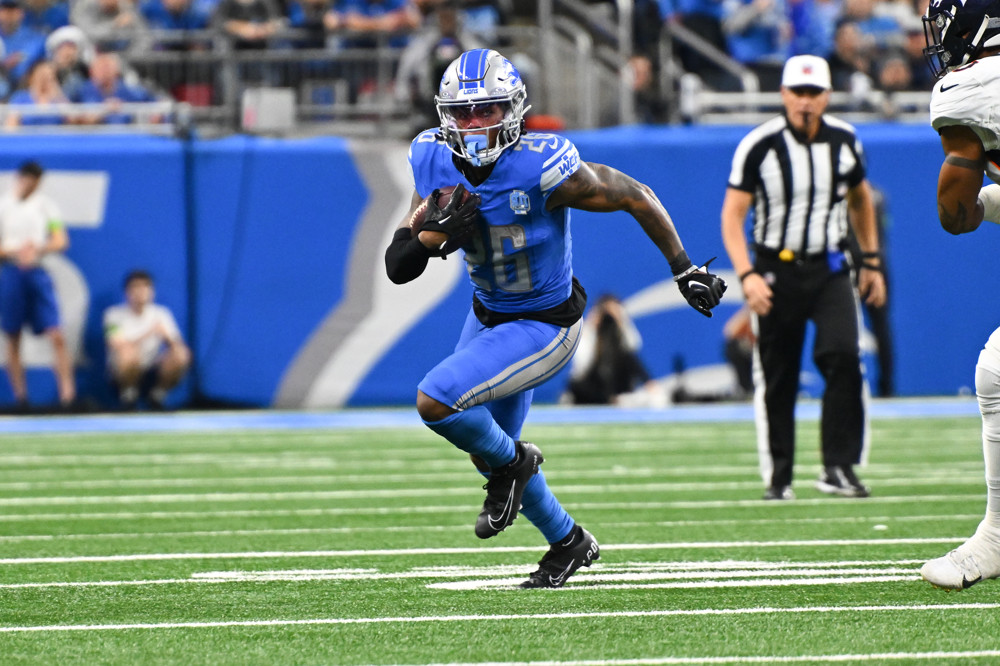
    Underdog – Jahmyr Gibbs Alternate Rushing Yards Over 66.5: +210

    Among running backs with 100+ carries, Gibbs is leading the league in yards per attempt (5.7) by almost half of a yard (.3). Over the last four weeks he’s averaged 6.8 yards per attempt and 76.5 yards per game. 

    Gibbs also has a broken or missed tackle on 27% of his rush attempts and is averaging 3.0 yards after contact per attempt, good enough for 2nd and 6th respectively among running backs with 100+ carries. He’s been better in both metrics over the last four weeks.

    While Gibbs is electric, he’s bankable because of the quality of the offensive line in Detroit. Four-fifths of the Lions’ starting offensive lineman are ranked in the top 25 for run blocking Total Points this season. 

    The only two other teams with four lineman in the top 25 of that list are the Eagles and Bills. Both teams rushed for 100+ yards in all three of their matchups with Dallas, including a 266 yard explosion from Buffalo in Week 15.


    Even – Kyren Williams Rushing Yards Over 94.5: -115

    Williams is averaging a league-best 120.2 yards per game since returning from injury Week 12, clearing 100 in 4 out of 5 contests. For the full season, he’s leading all rushers with 96.1 yards per game and 30 Total Points. He’s also averaging the 4th most yards per attempt among running backs with 100+ carries (5.1). 

    Across the ball, the Giants have given up 3rd most rushing yards (1,709) and the 4th highest yards per carry (4.6) to running backs. Their run defense has the 5th worst Total Points per play this season.

    Our model is projecting Williams to rush for 108.1 yards this week. That’s 13.6 yards above his current over/under line, and the largest such gap currently available on DraftKings.


    Heavy Favorite – Dak Prescott Alternate Passing Yards Over 250.5: -265

    Prescott has cleared the 250 passing yard mark in seven of nine games since the Cowboys’ Week 7 bye. On the year, he’s 3rd in the league in Independent Quarterback Rating (104.8) and 6th in yards per attempt (7.5) among passers with at least 100 attempts.

    According to our model, he’s projected to throw for 284.8 yards, the 2nd highest total this week. CeeDee Lamb is also projected by the same model to lead the league in receiving yardage against Detroit. Lamb is the only receiver projected to top the 100 yard mark, and is 18.5 yards ahead of our 2nd highest projection.

    Detroit, conveniently, is vulnerable to the big play. Their pass defense is allowing big-EPA pass plays at the 2nd highest rate and is allowing the 5th highest average air yards per game to opposing quarterbacks (284.5). Overall, the Lions are allowing the 11th worst passer rating against and 8th most pass yards per attempt (7.6).


    Total Parlay Odds: +621

    All odds available through DraftKings and current as of 10:47 AM 12/28/2023

    Sports Info Solutions is not an online gambling website or gambling operator. If you choose to wager on sports, we encourage you to do so responsibly. If you or someone you know has a sports betting or gambling problem, please call 1-800-GAMBLER or visit The National Council on Problem Gambling for more information and further assistance.

  • The NFL’s Best Pass-Catching Groups By Total Points

    The NFL’s Best Pass-Catching Groups By Total Points

    In the ever-evolving landscape of the NFL, the importance of a dynamic and potent receiver corps cannot be overstated. As teams strive for offensive excellence, pass catchers – whether they be wide receivers, tight ends or running backs – play a pivotal role in creating explosive plays, stretching defenses, and ultimately putting points on the board. 

    Who have been the top receiving groups?

    To delve into the comparison, we’ll assess each team’s pass catchers based on a set of criteria: Total Points, Boom%, and depth, with an eye on how these factors contribute to the overall success of the team.

    Total Points Rank Team Total Points Boom%
    1 49ers 117 33%
    2 Seahawks 85 23%
    T3 Lions 74 27%
    T3 Texans 74 29%
    5 Chiefs 71 24%
    6 Titans 69 25%
    7 Dolphins 68 28%
    8 Buccaneers 67 26%
    9 Bears 63 22%
    10 Ravens 61 25%
    11 Cowboys 61 24%

    Here’s our rundown of the Top 5.

    1. San Francisco 49ers

    The 49ers boast a wide receiver corps led by the dynamic trio of Deebo Samuel, Christian McCaffery, and Brandon Aiyuk. Their creative play caller and efficient quarterback reveal a group that consistently challenges defenses, earning them the top spot. They’re the runaway leaders in Total Points.

    Future Outlook: So long as the injuries don’t pile up and the offense can keep clicking on all cylinders the 49ers are all but certainly the best corps in the playoff picture. 

    2. Seattle Seahawks

    The Seahawks corps is led by the strong and physical trio of DK Metcalf, consistent veteran Tyler Lockett, and the young and rising Jaxon Smith-Nijigba. Factor in a confident quarterback in Drew Lock the Seahawks find themselves No. 2 on this list. 

    Future Outlook: The Seahawks have a good starting WR corps. However, some of their woes might come from the lack of consistent production from Lockett or Smith-Nijigba. So long as those two can contribute at a decent clip they are a force to be reckoned with.

    T3. Detroit Lions

    Jared Goff’s return to his old self has boosted the effectiveness of his young receivers. Amon-Ra St. Brown and Sam Laporta make up about two-thirds of the Total Points receiving contribution.  

    Future Outlook: A tip of the hat should be awarded to GM Brad Holmes. He came in and revitalized the WR corps, drafting St. Brown and snagging a handful of other significant WR pieces. Aside from the possible age of Goff in the distance, the Lions wide receivers should be one of the best in the playoffs this year and to come.  

    T3. Houston Texans

    CJ Stroud and the Texans have done a great job of spreading the ball around their young wide receiver corp. Their up-and-coming stud receivers Nico Collins and Tank Dell have carried the team’s Total Points significantly. 

    Future Outlook: The Texans have a bright future with a young and talented quarterback and receiving group they will have time to develop together for the future and have a chance to make noise in the playoffs if Dell and Stroud come back healthy.

    5, Kansas City Chiefs

    The Chiefs have accrued significant contributions from Travis Kelce and Rashee Rice. Andy Reid’s adaptability and implementation of getting Rice in space has created another weapon for Mahomes placing them at No. 5. 

    Future Outlook: Although the Chiefs sit at No. 5 on this list they will need to look to bolster their WR group this offseason. The continuous growth of Rice will help a ton coupled with the consistent production from Kelce. However, they are definitely lacking depth. 

    And here are 5 other playoff contenders’ whose receiving groups I like a lot.

    7. Miami Dolphins 

    Though they didn’t crack the Top 5, the Dolphins still pose great challenges for opposing defenses. With a mastermind offensive coach, one of the fastest players in the NFL in Tyreek Hill, and young and talented Jaylen Waddle, they have the tools to create damage in a hurry against defenses. 

    Future Outlook: Barring any significant injuries the Dolphins wide receivers should easily be able to compete at the top and be the best in the playoffs.

    8. Tampa Bay Buccaneers 

    The Buccaneer’s strong WR corps stems from years of experience and a couple of All-Pro-caliber players. Chris Godwin leads the team with 28 Total Points (12th in the NFL) and very closely behind is Mike Evans with 26 (16th). Tampa Bay’s pass-catchers lead the NFL in Points Earned on intermediate length passes (110-19 yards), with Godwin ranking 2nd individually.

    Future Outlook: Aside from age becoming a factor for Evans and Godwin, right now they are still producing at an elite level. But if Mayfield and company can find a way to keep spreading the ball out they should be able to compete.

    11. Dallas Cowboys 

    Dak Prescott’s elite connection with Total Points leader CeeDee Lamb makes up more than half of their Total Points production as a team. The importance for the Cowboys is figuring out ways of getting others involved to climb this list and to be successful for a deep playoff run. 

    Future Outlook: The Cowboys have a tall task ahead of them going into the playoffs. All it takes is for a defense to minimize Lamb and their gameplan is in need of significant adjustments. McCarthy needs to find and implement ways for more people to be involved for them to have a deep run in the playoffs.

    13. Los Angeles Rams

    The Rams have a nice emerging wide receiver corps that was in the Top 10 a week ago. Puka Nacua’s development into a reliable target and the veteran presence of Cooper Kupp provide Matthew Stafford with formidable options. The Rams’ ability to integrate new and established talents secures their place among the league’s top wide receiver groups.

    Future Outlook: The Rams have the smart offensive mind, the smart quarterback, and the consistent weapons to make a splash in the playoffs. Some of Nacua’s inexperience might hurt him now but will prove significant in his development as the sole No. 1 when Cooper Kupp retires or moves on. 

    14. Green Bay Packers 

    The Packers have the youngest active WR corps in the NFL which caused some growing pains in the beginning of the season. However, as of late they have produced the most Total Points since Week 10 thanks to the heavy contributions of Christian Watson, Romeo Doubs, Jayden Reed, Dontayvion Wicks and Tucker Kraft. Their consistent development together with Love can pose great success in the future. 

    Future Outlook: The Packers just like the Texans have a bright future ahead of them. They appear to have their franchise quarterbacks (again…) and plenty of weapons around him that can grow with him. If they sneak into the playoffs they should pose a decent headache for opposing defenses. 

    The top receiving corps in the NFL showcase the league’s diverse talent and strategic prowess. From established stars to emerging talents, each team brings a unique dynamic to the field. As we continue to witness the evolution of offensive strategies and individual performances, dynamic pass catchers remain a cornerstone of NFL success.

  • Reiterating The Statistical Case Against Brock Purdy for MVP

    Reiterating The Statistical Case Against Brock Purdy for MVP

    Photo: David Rosenblum/Icon Sportswire

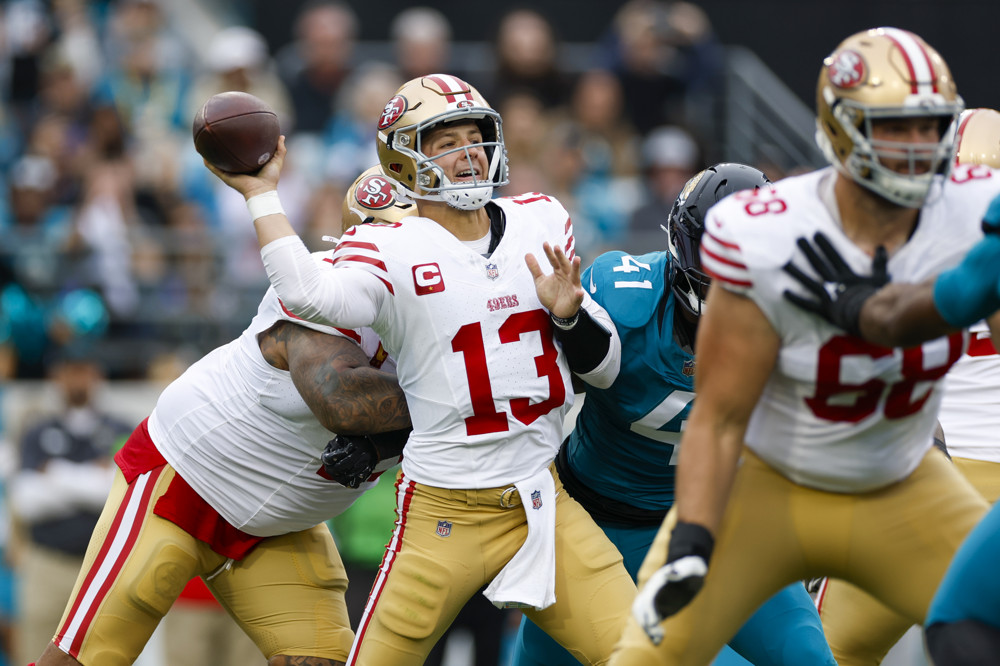
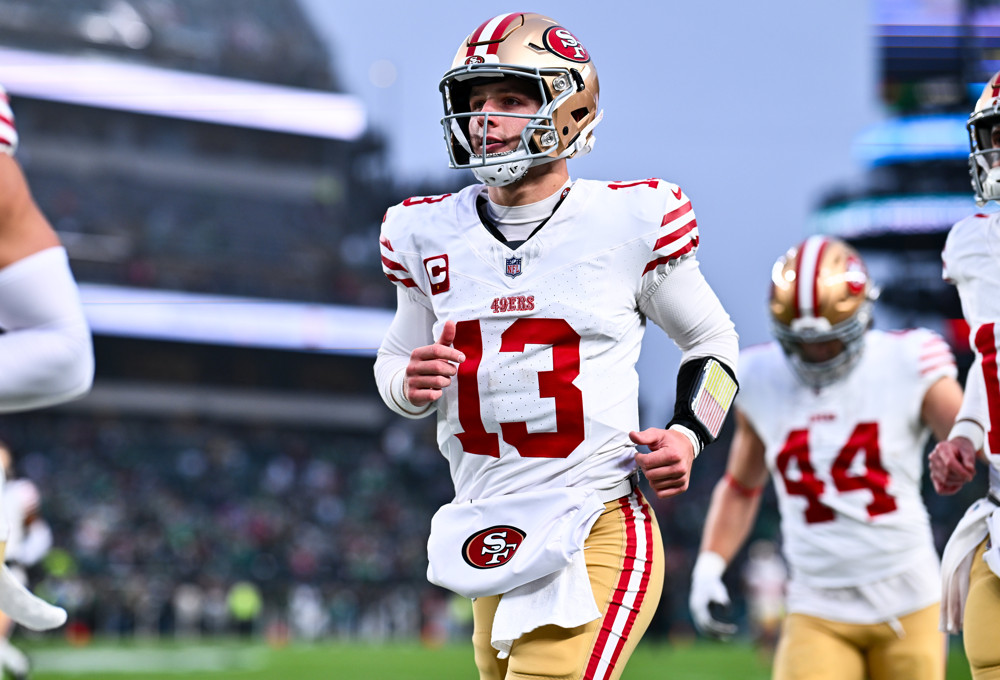
    As of this moment, Brock Purdy has the best odds to win MVP at -200. Mr. Irrelevant has had a meteoric rise to being Shanahan’s second MVP-caliber quarterback this decade, and is now the preferred candidate among 49ers fans, aging sportswriters, and Disney adults. And as fun as that narrative arc may be, it should be met with some skepticism (as we pointed out last week). Let’s go even deeper in our analysis today.

    Americans love a good sports underdog story – which is really just a toxic masculinity fairytale, if you think about it – but hate participation trophies, and MVP awards are not participation trophies. They’re given to outstanding players with impressive production who considerably elevate their team, and although Purdy has outplayed his draft slot, he does not fit that bill. But, any good-faith attempt to reconcile his production with his individual skill is met with circular references back to his stats, so let’s dig into those.

    His dropbacks have indeed been very efficient from an EPA perspective, let’s just get that out of the way. A positive play rate of 55% is comfortably first in the league, and, if the season ended today, 0.26 EPA/dropback would be the second-best season in the SIS era behind only 2016 Matt Ryan, which is very interesting considering who called plays for them. He would even rank first in EPA/dropback and yards/attempt this year if you took out his throws past the line of scrimmage, as originally pointed out by Steven Ruiz of The Ringer.

    But, these numbers belong to the 49ers passing offense as a whole, and not just Purdy. There are a lot of good players on that unit. Trent Williams, Christian McCaffrey, and Deebo Samuel are All-Pros, and Brandon Aiyuk – who is currently 2nd in first down percentage, 2nd in yards/route run and 3rd in Total Points/route behind only Tyreek Hill and Samuel – should join them come awards season. Furthermore, they have a pretty good young guard tandem in Aaron Banks and Spencer Burford; Kyle Juszcyk is as valuable as fullbacks can possibly be in the modern NFL; and, to top it all off, they have arguably the best offensive coach in the league in Kyle Shanahan.

    The 49ers do not need, and have never needed, Purdy to be a Top 10 quarterback, and he isn’t. They just need him to not screw things up, and he hasn’t.

    There’s a lot of mythmaking surrounding Purdy’s game, but it is fair to say that he’s accurate. He’s 80th percentile in xOnTgt +/- among qualifying quarterbacks with at least 200 attempts, which is pretty good. But, all this fluff about how he’s such a good processor and manages the game so well is just flat-out embellishment.

    His turnover-worthy throw rate (3.5%) is pretty bad – 26th percentile – and he doesn’t get the ball out particularly quickly, either. His expected snap to throw +/- (xSTT+/-), which approximates how quickly the quarterback should throw the ball based on his drop (among other factors), is 47th percentile. It’s not horrible, but it’s also not great.

    The fairest comparison here might be another Shanahan-adjacent quarterback in Tua Tagovailoa, who ranks third in xSTT+/- at a full two-tenths of a second faster than Purdy. In fact, you could make the case that Tua predetermines throws and shoots first and asks questions later, but even then, his turnover-worthy throw rate (3%) is 47th percentile – a bit better than Purdy’s.

    However, you don’t need to be an elite processor when you get to make so many gimme throws. Purdy’s attempts have been contested at the second-lowest rate in the league this year at 22%. And, if you’re wondering how that might affect his EPA numbers: contested throws are a terrible value proposition.

    The average EPA on such throws this season has been -0.38. Purdy, meanwhile, is averaging -0.09 EPA on those throws. So, not only does he get to make more easy throws, he’s losing about 25% of the value most quarterbacks do on the difficult throws he does make. That seems very fortunate!

    Some of that is probably just pure luck, but the 49ers receivers deserve a lot of credit in this regard. They rank 7th in contested catch percentage (39%) and 1st in both average yards after catch (6.9) and yards after contact (2.2). In fact, the difference between San Francisco and the next-best receiving corps in average yards after contact, is as big as the difference between the 2nd and 28th ranked teams. And if the season ended today, their average yards after catch would be the 3rd-best we’ve ever recorded, just behind the 2018 Chiefs and the 2018 49ers, and just ahead of the 2021, 2022, and 2019 49ers.

    Which brings us to the next point; a common rebuttal to the notion that Purdy is largely a beneficiary of an excellent playcaller and a star-studded supporting cast, is that Jimmy Garoppolo didn’t perform at this level. Interestingly enough, though, Jimmy G was actually never good.

    Among 49 quarterbacks with at least 500 attempts from 2020-2022, Garoppolo ranked 38th in turnover-worthy throw rate (4%), and 31st in On-Target Rate Over Expectation (xOnTgt +/-). He was also 30th in Passing Total Points/play while getting hit.

    Purdy is tougher and more willing to stand in against the rush, ranking 6th in passing Total Points/play while getting hit this season. He’s also more accurate, ranking 6th in xOnTgt +/-, and those are the big distinctions between the two. The difference we’re seeing is the difference between a warm body and Tom Brady’s sleep paralysis demon. That’s it.

    We could go on and on about splits. EPA/play on third downs is extremely volatile – with Patrick Mahomes being the only player who’s proven the ability to sustain high performance year-to-year – and Purdy’s 0.30 EPA/play on 3rd down is 12th out of 294 quarterbacks with at least 50 3rd-down attempts since 2016, just behind 2018 Nick Foles. His EPA/play on play action is the highest in the league since 2016 and 5.5 times the average EPA on play action during that span, and it’s already a cheat code.

    All this to say, Kyle Shanahan is doing parlor tricks again. Our wins above replacement (WAR) has Purdy 5th – just behind Tua Tagovailoa – at 2.7, and even that might be generous. He’s a decent player capable of functioning within an extremely efficient ecosystem, but that’s not what this award is about. It’s about recognizing players who stand out from all their peers – not just stand out from Jimmy Garoppolo.

  • Should Brock Purdy be NFL MVP? He’s Good But Not That Good

    Should Brock Purdy be NFL MVP? He’s Good But Not That Good

    It was unclear what the 49ers were going to do with Trey Lance prior to the season start, but they gave Brock Purdy a vote of confidence when they traded the former No. 3 overall pick to the Dallas Cowboys back in August.

    Fast forward to now, this turned out to be the right decision for the 49ers. Purdy has put up some impressive numbers and the 49ers have one of the best records in the NFL. The soon-to-be 24-year-old has put himself on the map, to say the least.

    In fact, he’s the betting favorite to win the NFL’s Most Valuable Player award. We still have a long way to go before the winner is announced, but it’s currently Purdy’s to lose.

    The real question is, would he deserve this honor? He’s been playing well enough to at least be in the MVP conversation, but are we sure that he is worthy enough to win and not some industry plant by the oddsmakers?

    As discussed in the latest episode of the Off the Charts Football Podcast, you can make the argument that he’s not even the most valuable player on his own team. It would be a disservice to give the award to Purdy when players like Trent Williams and Christian McCaffrey deserve recognition as well.

    Not only that, but Kyle Shanahan is one of the best offensive minds in the league. His play designs are so good that all Purdy pretty much has to do is not screw it up. When the play doesn’t go as designed, it’s typically McCaffrey, Brandon Aiyuk, Deebo Samuel, or George Kittle who picks up the slack.

    The 49ers rank as the number one team in receiving Total Points (105), our best measure of the pass catchers’ value alone, by a wide margin. That dynamic quartet deserves the most recognition for the team’s production, not Purdy exclusively.

    Also, Williams missed Weeks 7 and 8 for the 49ers and they ended up losing both games to the then 2-4 Vikings and 3-3 Bengals, respectively.

    San Francisco doesn’t have a great record solely because of its offense either. The 49ers’ defense ranks best in points allowed per game (15.8). It’s a lot easier to win in the NFL when you only have to muster up 16 points each week.

    For every statistical category that Purdy is excelling in, there appears to be one that offsets it.

    Category Purdy’s 2023 Stats NFL Rank
    Completion % 70.2% 1st
    On-Target % 75.3% 11th
    Adjusted Net Yards Per Attempt 9.9 1st
    Average Throw Depth 8.0 8th (tied)
    Passing EPA 93.7 1st (by a mile)
    Passing Total Points 100.3 5th

    Purdy is the league leader in completion percentage, ANY/A, and EPA. However, he ranks a little lower when it comes to on-target percentage, average throw depth, and Total Points.

    The latter statistics separate the quarterback from his receivers more than the former group. He rates well, but maybe not MVP level.

    In the end, the MVP award would need to be renamed if Purdy were to win. If you were to take Purdy out of the 49ers’ lineup and insert a replacement-level quarterback, this team is probably still a strong contender.

    I challenge you to apply that same way of thinking to the Chiefs, Cowboys, and even the Texans (and we’ve got an article coming about Dak Prescott). Their quarterbacks do a lot more for their teams with less supporting talent. They are players you win because of, not players you simply win with.

    Purdy is having a great year, but I wouldn’t say he’s the main reason for San Francisco’s success. The MVP award should be given to a player who carries his team to victory, not one whose teammates and coach are giving him a boost.

  • DaRon Bland’s Overall Production Makes Him A Strong DPOY Candidate

    DaRon Bland’s Overall Production Makes Him A Strong DPOY Candidate

    Two years ago, I wrote about Cowboys cornerback Trevon Diggs’ ridiculous start to the 2021 season, intercepting six passes in five games. Through that point in the season, he was an obvious Defensive Player of the Year candidate based on that productivity alone. But his value in totality didn’t add up to that, because he was performing very poorly on the other 99% of plays.

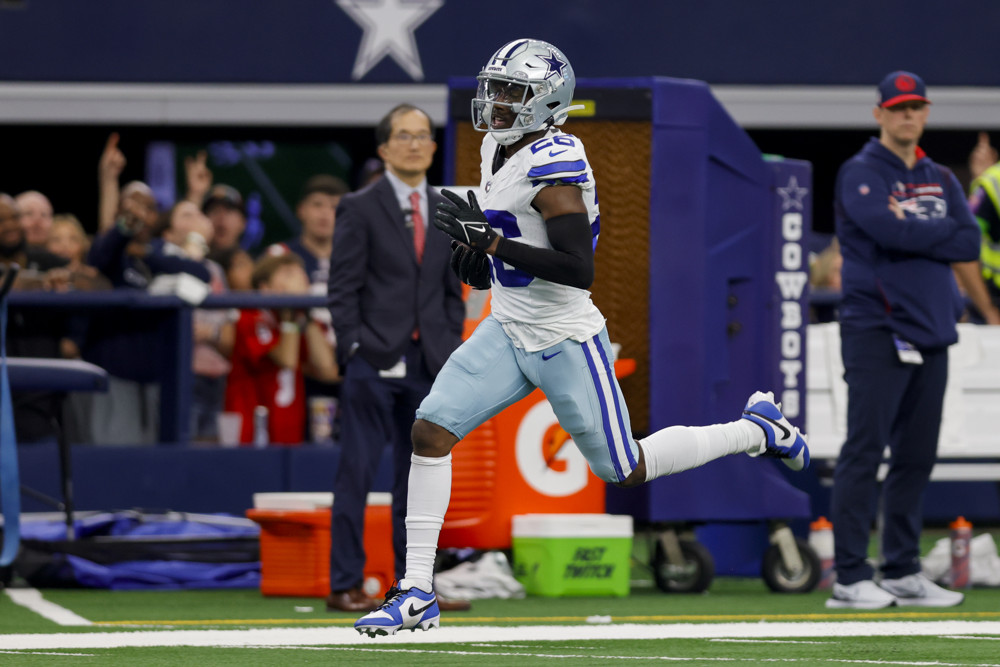
    This year, in Diggs’ absence, the Cowboys are again benefiting from a ridiculous turnover season, this time in the form of pick-six record holder DaRon Bland. But this time, that’s resulting in truly elite value (even if the stats that don’t care about interceptions aren’t transcendent). 

    DaRon Bland ranks, 2023 CB (min 30 targets)

    Rank (out of 77)
    Pass Coverage Total Points per play 1st
    Positive% Allowed 39th
    Deserved Catch % 16th
    Yards per Cover Snap T-68th

    Through Week 13, Bland has generated 61 Total Points, which puts him at the top of the list of non-quarterbacks. That’s 40 points—more than three points per game—above an average cornerback. Corners are admittedly more likely to have extreme seasons like this because of their ability to generate defensive touchdowns, but this total already puts him among the most productive non-quarterback seasons Total Points has seen (i.e. since 2016).

    When you think about how pick-sixes work from an Expected Points Added (EPA) perspective, this isn’t shocking. Each one turns a situation where the offense might expect a point or two into one where they’ve locked in negative-six, for a swing of more than a touchdown on average. Just those five plays basically account for the difference between Bland and an average corner.

    The bigger difference between Bland’s 2023 and Diggs’ 2021 is what the former is doing on the rest of his snaps. Diggs was outright bad when he wasn’t ending up with the football, which resulted in his overall numbers looking average.

    Trevon Diggs ranks, 2021 CB (min 45 targets)

    Rank (out of 72)
    Pass Coverage Total Points per play 43rd
    Positive% Allowed 48th
    Deserved Catch % 50th
    Yards per Cover Snap 72nd

    If we break down their Total Points contributions on interceptions versus other plays, we see that Bland has been more valuable regardless of the turnovers.

    Pass Coverage Total Points comparison

    Interceptions Other plays
    DaRon Bland, 2023 52 (on 8 plays) 6 (on 615 plays)
    Trevon Diggs, 2021 39 (on 11 plays) -16 (on 941 plays)

    Bland is generating more than six points per interception (and return), which is insane. That’s like if he scored eight 90-yard touchdowns as a receiver. 

    To put some more context on that production, here is a look at the value defensive backs have generated with interceptions versus other plays through 13 weeks of the last eight seasons. A few outstanding interception seasons are highlighted, including Xavien Howard’s 10-pick 2020.

    Bland blows everyone out of the water on interceptions because of all those touchdowns, blending that with middle-of-the-road production overall. This puts him solidly ahead of Diggs in both respects, and in line with Howard (plus some touchdowns tacked on top).

    We generally don’t see big turnover numbers from true shutdown corners, because the big play guys are often trying to jump routes and bait quarterbacks, which results in a lot of completions when they don’t get there. Bland is keeping his head above water when he doesn’t pick off the quarterback, though, which makes him a legit contender for Defensive Player of the Year.

  • Empirically quantifying the worst NFL one-and-dones

    Empirically quantifying the worst NFL one-and-dones

    Photo: John Byrum/Icon Sportswire

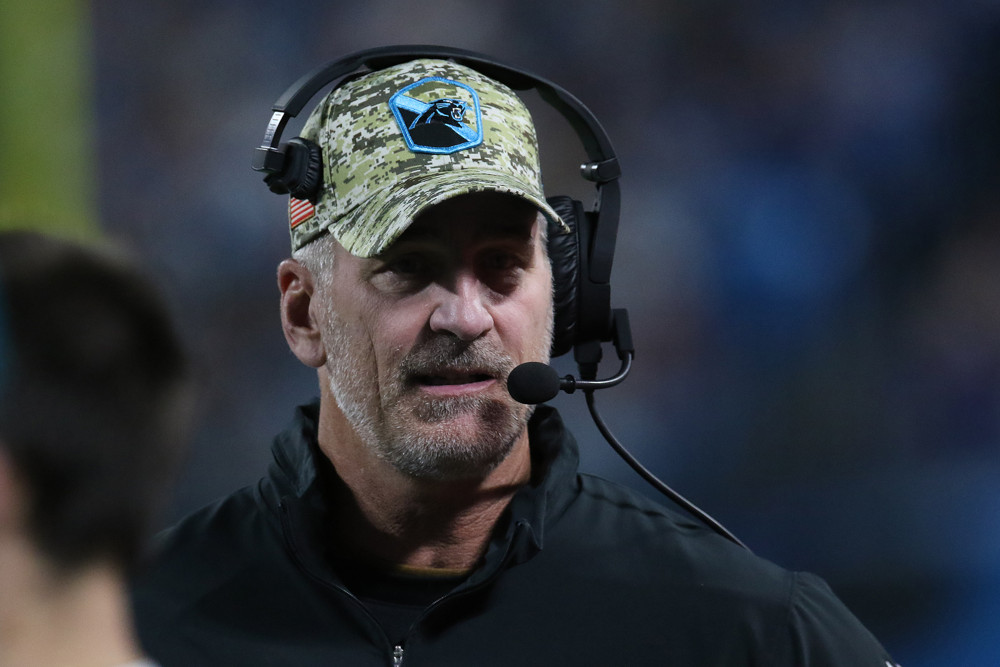
    In the last 10 years, 10 NFL head coaches have been fired in their first season. And Frank Reich, having served as the Panthers head coach for just 305 days, was the fastest among them to be fired. It’s the second-shortest tenure in NFL history, second to only Pete McCulley’s 9 games with San Francisco in 1978.

    To further contextualize how pissed off owner David Tepper must be, please note the general tyranny among the organizations on this list. Two franchises had back-to-back one-and-dones – the 49ers with Jim Tomsula and Chip Kelly, and the Texans with David Culley and Lovie Smith – and a third was responsible for two within 6 years of each other (the Browns). Even Nathaniel Hackett lasted four weeks longer than Reich; Urban Meyer, a full month. All told, there’s a lot of organizational dysfunction among the teams on that list, so this firing would have made the Roman emperor Commodus proud.

    This seems like more of an indictment on Tepper – who has seen five head coaches come and go since he bought the franchise in 2018 – than Reich, especially considering drafting Bryce Young was the former’s decision, but we just might be able to empirically measure how he stacks up against fellow one-and-dones.

    The contestants are:

    Coach Season Time on job Preseason Win Totals Record
    Frank Reich 2023 305 days 7 1-10
    Nathaniel Hackett 2022 333 days 10.5  4-11
    Lovie Smith 2022 335 days 4.5 3-13-1
    Urban Meyer 2021 336 days 6.5 2-11
    David Culley 2021 349 days 4 4-13
    Freddie Kitchens 2019 351 days 9 6-10
    Steve Wilks 2018 343 days 6 3-13
    Chip Kelly 2016 353 days 5.5 2-14

    One way to do this would be to compare the preseason win totals to the coach’s record. This is a bit fraught considering that some of these coaches didn’t even make it a full season (among other reasons), but it can give us some sense for performance relative to expectation. By this measuring stick, Reich and Hackett appear to be the worst, falling 6 games below their preseason Vegas win total odds.

    We can gauge this slightly more robustly using player-level Total Points to compare player performance before and after the coach arrived. This is likewise shaky because of factors like player development, scheme fit, and rookie production, but it’s still worth examining. It is, however, a wash. None of these teams manage to meaningfully distinguish themselves from the others in this regard, with the differences between the team-wide average Total Points/play being a few thousandths of a decimal point. It is worth noting, however, that the 2023 Panthers (0.04) and the 2021 Jaguars (0.04) were the most talented of these teams.

    Perhaps it may be better to just measure how bad they were on the field.

    Among these teams, Carolina has had the second-worst offense by EPA/play (-0.19). Only the 2018 Arizona team (-0.21) was worse, and the Cardinals famously replaced Josh Rosen after just one season. Rosen’s performance that year ranks 310th out of 321 quarterback seasons in passing Total Points/play, and Young currently isn’t too far above at 304th – he’s that bad. None of these offenses were any good, though. The best among them was Freddie Kitchens’ Browns (-0.06), whose unit ranked 23rd that year. 

    Defensively, Reich’s Panthers team was second only to the 2022 Broncos, allowing -0.04 EPA/play, but that’s not saying much considering this collection of teams features Kelly’s 49ers (0.06) and Meyer’s Jags (0.06), who were the 20th- and 21st-worst defenses of the last eight years, respectively. Considering some of the defensive players Reich inherited, this may not come as a surprise, but it’s also disconcerting that an offensive coach by trade was getting carried by the defensive side of the ball (to the extent that a 1-10 team can be carried, anyway).

    Reich’s fourth down decision-making is more directly in his purview, and while he’s had worse seasons by SIS’s fourth down model, he wasn’t particularly good this year. He ranked 120th out of 270 coach seasons since 2016, costing his team an average of -1% expected win probability (xWP) on fourth downs. Among the one-and-dones, only Meyer (188th), Smith (228th) and Hackett (267th) were worse.

    Speaking of win probability, the 2023 Panthers had the third-highest percentage of plays that fell between 40% and 60% win probability – more or less a coin flip– at 30%, so it could be said that his team was more competitive than most of the teams on this list. It’s not by much, though; the average across all these squads is 27%.

    In some aspects, Reich was worse than his one-and-done cohorts. He arguably had the most talented team of all the coaches on this list – which should induce cognitive dissonance among people who say Young has no talent around him – and he obviously failed to meet expectations, regardless of whether or not you believe those expectations were reasonable. 

    It’s not clear if things will get any better next year. Whereas teams like the Broncos and the Texans have seen immediate improvement this year, other teams had to wait years to get back above .500.

    One thing is for certain, though: Frank Reich signed a 4-year contract and will be just fine.

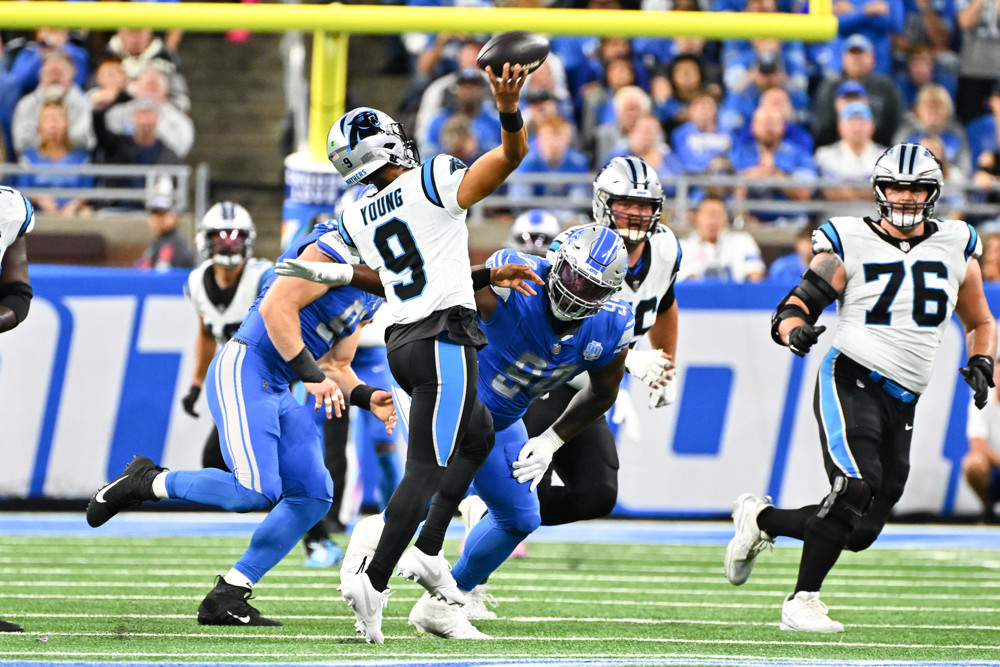
  • Bryce Young Was A College Legend But He’s Not A Good Fit For The Pros

    Bryce Young Was A College Legend But He’s Not A Good Fit For The Pros

    Thursday, the Carolina Panthers (2-6) and the Chicago Bears (1-7) will square off in one of the worst primetime matchups in recent memory. The only thing really on the line here is draft position, or it would be if Carolina hadn’t traded their pick to Chicago for the right to draft Bryce Young, who currently ranks 31st in Passing Total Points/snap, right below Tyson Bagent. That’s right – Young is arguably not even the best quarterback in a game where his counterpart is an undrafted rookie out of a Division II school in West Virginia. And, if you were curious: just ahead of those two is Mac Jones, whom Young lost a quarterback competition to in college, and who presumably will be out of work come 2024.

    The Bryce Young experiment has failed in Carolina. It would be one thing if Young was struggling early and had some bankable traits, but this is what happens when you take size outliers with no distinguishing qualities outside of collegiate production. Kyler Murray may be tiny, but at least he runs a 4.3 and can throw the football a country mile. What’s Young got up his sleeve? He was a ‘winner’ and a ‘playmaker’ in college? Okay, sure, but there are a lot of guys like that who never pan out in the NFL. Are we even working with any tangible traits here?

    Yes, his supporting cast is bad. Life in Carolina would not be easy for any quarterback, but he is not the only one who has to make the best of a bad situation. Zach Wilson, Jimmy Garoppolo, Josh Dobbs, Mac Jones, and Tyson Bagent have all, to varying degrees, played under suboptimal conditions this year, and they’ve all been more efficient than Young has. The No. 1 pick should be able to do better than this.

    Trevor Lawrence played on the Urban Meyer-led Jaguars in 2021 and struggled quite a bit as a rookie, but he wasn’t below replacement level through the first nine weeks of the season. He wasn’t being outperformed by a 36-year-old Andy Dalton on his fourth team in as many years. And since we’re talking about Dalton, his 58 attempts and 3 sacks have resulted in 79 more EPA than Young’s 252 throws and 26 sacks – entirely because Young is so far in the red.

    So, what the hell, man?

    The receivers aren’t great at getting open, sure. They’re 20th in our receiving Total Points metric as a group, and I’m certainly not gonna go to bat for a unit that’s led by Adam Thielen in the twilight of his career. But, they could be worse, and Dalton has the highest contested throw rate in the league among quarterbacks with 50+ attempts (37%) while Young has one of the lowest at 24%. Part of that is a function of aggressiveness, but why was Dalton able to perform better while a higher percentage of his attempts were contested?

    The answer is in all of our hearts, and it’s that Young is not as well-suited to the NFL as he was to the college game.

    This is not a Josh Allen rookie season we’re talking about. Young is listed at a generous 5’10”, 204 lbs., doesn’t have outstanding arm talent, and is not particularly fast or elusive. If your physical profile sets your floor, his is pretty low. This is a player who drew pre-draft comparisons to Drew Brees, and it’s clear he will have to win in other areas to succeed in the NFL. As of right now, that is very discouraging.

    He’s not seeing the pro game quickly at the moment. He has the fifth-highest expected snap-to-throw +/- time, with scramblers and Jimmy Garoppolo being the only players who get the ball out slower than him. And, in spite of that, he also has the second-lowest ADOT in the league. 63% of his throws travel 5 yards or less downfield, which is the second-highest rate in the league. Taking a long time to check the ball down or execute quick game concepts is not good. Some would even say it’s bad!

    Now, to his credit, his turnover-worthy throw rate is slightly better than average (he ranks 16th). But, as we saw on Sunday against the Colts, he’s not exactly playing mistake-free football, either. And, on that note, his interceptions have been ghoulishly bad. The only quarterbacks whose picks have hemorrhaged more EPA are Sam Howell (who has no object permanence) and Mac Jones (who, as a reminder, beat Young out in college when Young came in as the No. 1 recruit).

    When he finally throws the ball, he hasn’t been particularly accurate. He ranks 32nd in the league in expected on-target over expectation (xOnTgt +/-) at -5%, which is well below average and weighed down by his abhorrent xOnTgt +/- on contested throws (-23%). On throws to open targets, he ranks 22nd. 

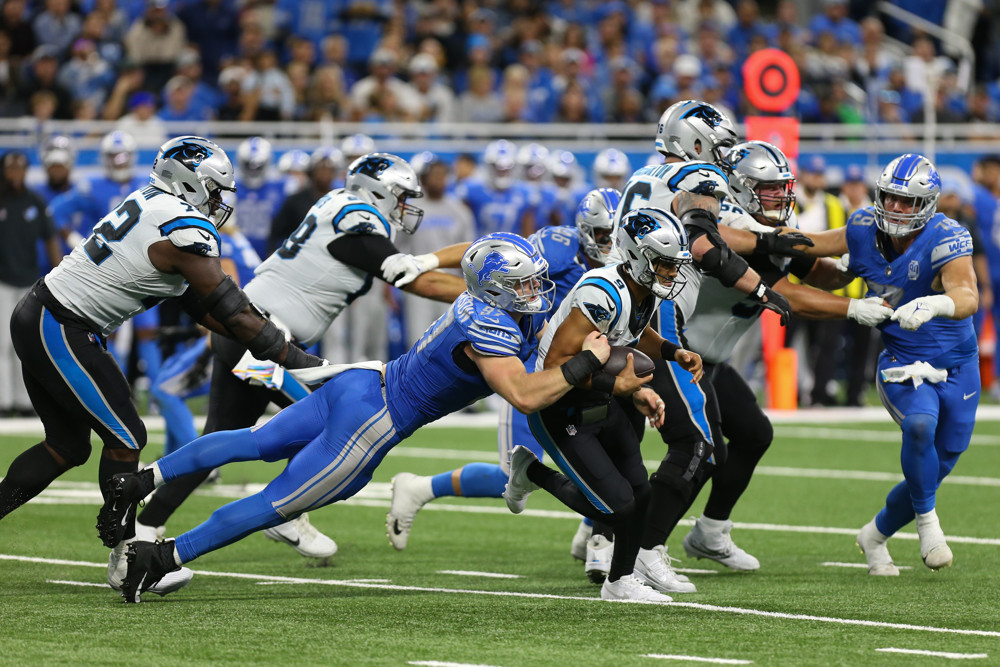
    He hasn’t, however, thrown the ball a lot because he’s not been navigating the rush well. He’s been sacked at the 8th-highest rate in the league and he has the 6th-worst sack-to-pressure ratio (i.e. a lot of hurries turn into sacks against him). A good part of that is his offensive line, which is 27th in blown block rate on pass plays, but he has ownership of this, too.

    So, we’re talking about a player who takes a long time to get the ball out, who checks it down a lot, whose pocket presence isn’t great, who isn’t a run threat, who doesn’t have the arm talent to access tight windows or make circus throws, but can deliver the ball accurately at a slightly below average rate if the pocket is clean and his receivers get open.

    That’s not a No. 1 pick.

    That’s not a franchise quarterback.

    That’s terrible.

    All due respect to Bryce Young – he’s a Heisman winner and a legend of the sport. People will remember him for decades to come. He’s immortal. But, this is the NFL. Everybody was good in college, and none of that matters now. On Sundays, he’s a historic size outlier with average traits swimming upstream. I hope he proves me wrong. The NFL is a much better spectator sport when the quarterback play is good, and recently it seems we’re losing more than we’re gaining. I guess we’ll always have college.

  • Are the Lions For Real? A Resounding ‘Maybe’

    Are the Lions For Real? A Resounding ‘Maybe’

    The Lions are off to their best start in over a decade, and while that’s not saying much, there are plenty of reasons for their fans to be excited. At 6-2, they hold a two-game lead in the division and should cruise into the postseason if their remaining slate of games is to be believed; They have the 4th-easiest remaining strength of schedule by current opponent win percentage (42%), and the easiest by opponent defensive EPA. So, barring a complete meltdown, they should crack double-digit wins (which hasn’t happened since 2014), win the NFC North for the first time ever and return to the playoffs after a six-year drought. And if you don’t know any Lions fans, rest assured: that would be a very big deal for them.

    But, people outside of the fanbase don’t care a whole lot about that. Sure, the head coach is adorable and watching a cursed franchise succeed gives most well-adjusted sports fans – if there is such a thing – the warm fuzzies, but people will never be satisfied and they’ll always want more, and that’s why most of us die with regrets. So, the existential question at hand becomes: are the Lions a legit contender?

    The answer is a resounding ‘maybe.’

    We’ve already covered the back half of their schedule, but it’s also worth noting that most of the teams they’ve played so far have, by NFL standards, sucked. Sure, they beat the Chiefs by a point when Kansas City 1) did not have Travis Kelce, 2) did not have Chris Jones, and 3) dropped 17% of their passes en route to one of the worst offensive performances in the Patrick Mahomes era, but, outside of that, do they really have a signature win? Ending the Baker Mayfield Comeback Player of the Year story arc? Sending Josh McDaniels – who was fired at 1 AM eastern time the day after the trade deadline, by the way – to hell? To borrow a college football term, they ain’t played nobody.

    Furthermore, their games against the current NFC West and AFC North division leaders – the only teams on their schedule with winning records – both resulted in losses. The Seattle game at least could have gone either way, but the Baltimore game was a snuff film. That said, teams are entitled to learning experiences (i.e. horrible losses) and you can only beat who you play, so none of this is sufficient to pass judgment. It is, however, relevant because it muddies the waters a bit.

    We could go a lot of different directions from here, but let’s start with Jared Goff. He’s received a lot of praise for his recent performance and is 4th in the league in passing yards, but his advanced statistical profile paints a very distinct picture of him as a game manager type.

    He is by no means a playmaker; his expected on target rate +/- (xOnTgt+/-) – which measures whether or not a throw was accurate relative to factors like depth of target – is poor on both contested throws (-5%, 26th) and throws made off-platform or outside the pocket (-2%, 24th). He is, however, a relatively smooth operator from within structure.

    He currently has the fifth-lowest turnover-worthy throw rate at 1.6%(a career best for him and about half his average in his last three Rams seasons), and he’s getting the ball out quickly with an expected snap to throw +/- of -0.2 seconds, which ranks 4th. Goff also manages the pocket well and doesn’t take a lot of sacks; he has the 4th-lowest sack rate in the league at 5% and the 7th-lowest pressure rate at 31%.

    That is an unexciting, albeit useful player, and offensive coordinator Ben Johnson has done an excellent job of tailoring the passing game to Goff’s strengths, and that actually doesn’t entail a lot of play action like it did when Goff was in LA. They’re largely a dropback team and – like almost every NFL offense – they run just about every concept under the sun, but they have their preferred flavors. They spam the outside vertical stretch concepts (e.g. Smash), the intermediate high-lows (e.g. Dagger), and the weakside choice plays that Goff does so well on. Johnson has also designed a diverse screen game that they call upon often; the team has called the 5th-most screens in the NFL this year at an average of about 5 per game.

    And all that has gone a surprisingly long way. Despite his limitations, Goff is 8th in passing Total Points/play and 5th in positive play rate (49%).

    There are less talented, more mistake-prone quarterbacks with better statistical output (see: Tua Tagovailoa, Brock Purdy), but we haven’t yet stumbled upon the ‘quarterbacks don’t matter’ variant of hobbyist wage suppression masquerading as analytics, so it’s fair to wonder if you can win a Super Bowl with someone like Goff – especially when he doesn’t have the Space Jam supporting casts of the aforementioned, generic Shanahan quarterbacks.

    He does have some pieces at his disposal, though. Amon-Ra St. Brown ranks 10th in Points Earned/Play (0.07), 8th in YPRR, and 8th in YAC, but he is a bit of an underneath merchant; his average depth of target (ADoT) ranks 127th out of 169 WRs/TEs with at least 10 targets. They’d surely like to be getting more downfield production out of 2022 first rounder Jameson Williams, but Josh Reynolds is picking up the slack with a league-best 96% first down catch rate, and Sam LaPorta is developing nicely.

    The offensive line deserves its flowers, as well. Despite some injuries to that unit, they rank 11th in Blocking Points Earned/snap, and have gotten some excellent performance from their bookends. Right tackle Penei Sewell ranks 2nd in pass blocking Points Earned/snap, and left tackle Taylor Decker ranks 3rd in run Blocking Points Earned/snap. This is an athletic unit that can successfully execute a big menu of moving parts gap runs, and it stands to reason that the run game can improve from 10th in EPA/play and 13th in positive play rate if both the offensive line and the running backs can get healthy.

    The defense has been serviceable as well this year. After a disastrous start to 2022 in which they were on pace to be the worst defense of the SIS era – yes, even worse than the 2020 unit led by Matt Patricia – they leveled out in the second half and have carried that into this season. They rank 11th in EPA/play allowed and they’ve seen encouraging growth from some of their younger players.

    Rookie slot corner Brian Branch appears to be a star-in-the-making; he ranks 5th in Coverage Points Saved/play among corners with 10+ targets and 3rd in Run Defense Points Saved/play among all players with 50+ run down snaps. Second-year edge Aidan Hutchinson has likewise taken a leap and leads the league in pressures and ranks 20th in pressure rate +/-. Third-year corner Jerry Jacobs has also had something of a breakout year and ranks 12th among corners in Points Saved/play, though his historical performance might suggest he’s due for regression.

    They have a few complementary pieces along the defensive line – Charles Harris is 20th in pressure rate among DL, and Alim McNeill is a pretty good pass rusher for a nose tackle – but the aforementioned players constitute the bulk of this team’s passing game impact. They do not, for example, have a linebacker who ranks better than 50th in Coverage Points Saved/play. If defense is a weak-link system, and it is, then there are reasons to be concerned about a Detroit back 7 that is mired by injuries to the secondary and shoddy coverage from its linebackers.

    Their run defense has been good, but weird. They rank 11th in positive play rate and 2nd in explosive play rate, but 28th in stuff rate and 26th in broken/missed tackle rate. They don’t allow many positive runs, much less big ones, but they also don’t generate many negative plays and they also miss a lot of tackles. To their credit, they are a swarming unit so we might allow for some broken and missed tackles, but it’s fair to wonder if this holds up over the course of the season.

    At the end of the day, this team feels like more than the sum of its parts. That’s a credit to Dan Campbell and the rest of the coaching staff, and it bodes well for the franchise that he was able to turn things around relatively quickly. That said, there are other NFC teams with more star power than them, and they’re pretty firmly outside of the triumvirate of leading NFC contenders (San Francisco, Philadelphia, Dallas). A Super Bowl is obviously the ceiling here, but it’s pretty unlikely within the distribution of their probabilities. Are they a contender? Maybe as a dark horse, and that’s fine. For younger Lions fans, this could be the best the team’s been in their lifetime. They haven’t won a playoff game since before I was born, and this looks like the year they’ll do it, Super Bowl be damned.

  • Vikings Defense: More Heat, Same Results

    Vikings Defense: More Heat, Same Results

    The Minnesota Vikings currently sit 0-3, despite Kirk Cousins leading the NFL in passing yards and touchdown passes. Their defense was a sieve last year, and they completely changed personnel and brought in a new defensive coordinator to try and prevent a repeat. Brian Flores has a radically different defensive scheme than his predecessor Ed Donatell, but the results are more of the same.

    There are 3 big differences

    1)Personnel usage. Donatell used a Dime+ package (6 or more defensive backs) a meager 1% of the time last season, while Flores is using a Dime+ package 28% of the time.

    2)Pre-snap look. Donatell used a two-high shell (showing 2 safeties at the deepest level) 67% of the time, while Flores is using a two-high shell only 23% of the time.

    3)Blitz Rate (plays with more than 4 rushers). Donatell had a 22% blitz rate, while Flores has a 64% blitz rate. The last 3 games have the highest average number of rushers per play since the beginning of 2020.

    Donatell did send a little more heat towards the end of 2022, but nearly all of that upwards tail along the average line in 2022 is due to the 2023 Vikings. The Vikings defense sent an astounding average of roughly 5.5 rushers per play against the Chargers. The results? The Chargers went 41/48 (85%) for 454 yards, 4 TDs, 0 INTs, and only 1 sack. Oof.

    This begs the question of whether the increased blitz rate generated more pressure?

    The Vikings standard pressure rate has been steadily declining since early 2021 and has not been impressive so far in 2023. The Vikings rank 31st (next-to-last) in the NFL in Pressure Rate this season and rank 30th in Pass Rushing Total Points Above Average.

    The pressure isn’t the only underwhelming stat as the defense currently ranks 27th in points allowed and 27th in yards allowed. The Vikings are just 1 of 3 teams allowing 250+ passing yards a game and 120+ rushing yards per game. One of the more surprising stats is their lack of improvement in man coverage.

    Despite a “man coverage-heavy” perception around Flores, the Vikings haven’t increased their use of man coverage significantly (23% to 27%), and the opposing offenses are actually finding more success against the 2023 Vikings man coverage compared to last season. Opposing offenses have a Success Rate of 55% this season against Minnesota’s man coverage (ranks 31st), compared to 44% last season (20th).

    A fairly-comprehensive defensive personnel overhaul took place in the offseason, but in order for that to be successful, the players next up need to step up. Akayleb Evans has played almost every defensive snap for the Vikings this season, but hasn’t played very well, giving up multiple touchdowns, a QB Rating Against of 136, and -1.4 Total Points Above Replacement. The rest of the highly-valued additions over the last 2 seasons have barely seen the field (stud Ivan Pace Jr. was undrafted and has been a rare bright spot).

    Below is the number of defensive snaps each player has had in each game this season.

    Player Buccaneers Eagles Chargers Total Defensive Snaps
    Mekhi Blackmon 15 14 18 47
    Brian Asamoah 2 14 0 16
    Jaquelin Roy 0 0 9 9
    Marcus Davenport 0 4 0 4
    Lewis Cine 0 0 0 0
    Jay Ward 0 0 0 0
    Andrew Booth Jr. 0 0 0 0

    While injuries have factored in, the majority of the bench-riding time has been because the players have not performed well. It’s very hard to look at the Vikings 2022 and 2023 draft classes and pronounce them “immediately impactful.” While it is too early to fully evaluate the 2022 draft class (and way too early to evaluate the 2023 draft class), the Vikings surely were hoping for more impact from their defensive players.

    The Vikings offense isn’t blameless by any means. The turnovers have been an absolute backbreaker, injuries along the offensive line have caused problems, and red-zone struggles have stalled the Vikings as well, but the defense continues to be a massive issue, and their draft capital wasn’t maximized. Jordan Addison is doing exactly what was expected of him, a nice piece to the offense, but he hasn’t transformed them into an offensive juggernaut. Joey Porter Jr. on the other hand, has looked impressive with the Steelers in his playing time and would’ve helped shore up the cornerback position.

    The season is long, and there is still time, but with playing 2 of the best teams in football in the next 4 weeks, followed by a trip to Lambeau, the Vikings are entering a crucial stretch in their schedule. If they limp through the next stretch, their season will be in real danger with a difficult final month to the season to look forward to. The preseason prediction of 9-8 without a playoff appearance looks more and more destined if the performance on the field doesn’t improve.

  • Looking For Hope in The Ravens … But Will We Find It?

    Looking For Hope in The Ravens … But Will We Find It?

    The NFL is a what-have-you-done-for-me-lately league, and Lamar Jackson winning the MVP in 2019 feels like it was forever ago. Three NFL seasons is a lifetime for most players, and since then, Jackson has finished 17th, 21st, and 20th in passing EPA/play. That was more than enough to get former offensive coordinator Greg Roman fired, and lots of people, myself included, were bullish on his successor, Todd Monken. And through three games, the results have been middling. 

    Lamar ranks 16th in passing Total Points/play after finishing in the bottom half three years running, and the Ravens rank 13th in offensive EPA/play (-0.04). In short, the new-look Baltimore offense hasn’t looked quite as good as we thought it would coming into the year.

    If you’re a fan of Lamar, it was easy to get excited about the offense this year, even beyond the coordinator change. The receiving group, on paper, is the best it’s been in years. They used a first round pick on Boston College WR Zay Flowers, and they brought a still-effective Odell Beckham, Jr. into the fold. But, this group has been beset by injuries.

    Tight end Mark Andrews missed Week 1 with a quad injury, and now Rashod Bateman and Beckham are dealing with hamstring and ankle injuries, respectively. The team has averaged 0.15 EPA/play with all four of them on the field, but they’ve played just 13 snaps together so far. And at the end of the day, the Ravens receiving corps hasn’t performed as well to start as last year’s rendition did, as they rank 25th in receiving Total Points/play in contrast to a 2022 unit that ranked 2nd through Week 3.

    Lamar also ranked 6th in passing Total Points/play during that span, so this year’s start shouldn’t seem as meaningful as it maybe does, especially in light of the injury issues they’re having. The offensive design is better than it was last year, but that’s a low bar and there are still a few spacing issues in the passing game from time-to-time. Furthermore, this is still not a particularly balanced offense.

    They are balanced in the traditional sense that they skew closer towards a 50/50 run-pass split than most NFL offenses, but that’s generally suboptimal and their hit chart (essentially, what part of the field the ball goes to) is eerily similar to last year’s. In 2022, about 40% of their plays were outside runs; this year, that number is 41%. 35% of their plays last year were short passes (under 10 yards); it’s about a third of plays this year. In both 2022 and 2023 thus far, only 5% of their plays have been passes to the intermediate area of the field. The nuts and bolts – the X’s and O’s – have changed, as have the players who represent them, but philosophically, it’s the same stuff.

    Hit 2022 2023
    Outside Run 40% 41%
    Inside Run 14% 16%
    Short Outside 14% 13%
    Short Middle 21% 20%
    Intermediate 5% 5%
    Deep Middle 4% 2%
    Deep Outside 2% 3%

    Arguably the biggest manifestation of the changes thus far is that Lamar is getting the ball out a lot faster this year than he was last year. His average snap to throw time has dropped nearly a full half-second, and his Expected Snap to Throw +/- is hovering at around league average – that is, he’s getting the ball out more or less when he’s supposed to, per the design of the play. Not Tom Brady fast, not Bryce Young slow, and that’s fine!

    But, that’s what’s so unsettling about all this. The story of the Baltimore offense the past four years has been the story of Lamar Jackson. They have, more or less, only gotten as far as he’s been able to drag them. There have been systemic improvements so far, but this isn’t a unit reborn. 

    It feels like we’ve been here before with the Ravens. In reality, there’s no place for – I don’t know if you could even call it this – superstition in quantitative football analysis, but it just seems like we’re approaching boy-who-cried-wolf territory in regards to hyping the Baltimore offense. Even if the coordinator change proves to be little more than addition by subtraction, I am hopeful that the skill players can get healthy and that these small improvements are enough to allow Lamar to regain his MVP form. The Ravens face a big test this weekend in a Browns unit led by an absolute monster, as well as the No. 1 defense that features an early DPOY favorite in Myles Garrett. An offseason of excitement has been tempered by reality, as reality often does, but an impressive road performance against a divisional rival that allows -0.37 EPA/play on defense would be a dream come true.